

In The Media
Jessica Tuchman Mathews
{
  "authors": [
    "Jessica Tuchman Mathews"
  ],
  "type": "legacyinthemedia",
  "centerAffiliationAll": "dc",
  "centers": [
    "Carnegie Endowment for International Peace"
  ],
  "collections": [],
  "englishNewsletterAll": "menaTransitions",
  "nonEnglishNewsletterAll": "",
  "primaryCenter": "Carnegie Endowment for International Peace",
  "programAffiliation": "MEP",
  "programs": [
    "Middle East"
  ],
  "projects": [],
  "regions": [
    "North America",
    "United States",
    "Iraq",
    "Afghanistan"
  ],
  "topics": [
    "Military",
    "Foreign Policy"
  ]
}
Source: Getty
President Bush’s announcement that 8,000 troops will be withdrawn from Iraq by February 2009 reflects the extreme fragility of the current situation, and a recognition that the gains made to date could quickly unravel. Jessica Mathews discusses the reasons for and consequences of the withdrawal timetable.
Source: Southern California Public Radio

Although conditions have improved, the troop surge of January 2007 has not met its primary goal – to facilitate political reconciliation among Iraq’s warring factions. Noting that Saddam Hussein’s overthrow created a power vacuum, and that the American troop presence is blocking a potentially inevitable power competition, Mathews questioned whether sustainable political progress is achievable under these conditions. The continued lack of political reconciliation makes it appear that the United States’ presence in Iraq is only delaying a power struggle.
Asked how best to marginalize the Taliban in Afghanistan, Mathews responded that the only solution is a large-scale, determined development program, strong enough to make the achievements necessary to show Afghans that they have more to gain by supporting the government and opposing the Taliban and al Qaeda. The flourishing poppy trade and the active sanctuary Taliban and al Qaeda operatives enjoy in Pakistan’s Northwest Frontier Province further complicate an already-forbidding situation, making it essential that the war in Afghanistan receive the focus and resources necessary for success.

Distinguished Fellow
Mathews is a distinguished fellow at the Carnegie Endowment for International Peace. She served as Carnegie’s president for 18 years.
Recent Work
Jessica Tuchman Mathews
Jessica Tuchman Mathews
Carnegie does not take institutional positions on public policy issues; the views represented herein are those of the author(s) and do not necessarily reflect the views of Carnegie, its staff, or its trustees.

As the U.S. stumbles in its war with Iran, we are likely to see an acceleration of its disengagement from the region.

Michael Young
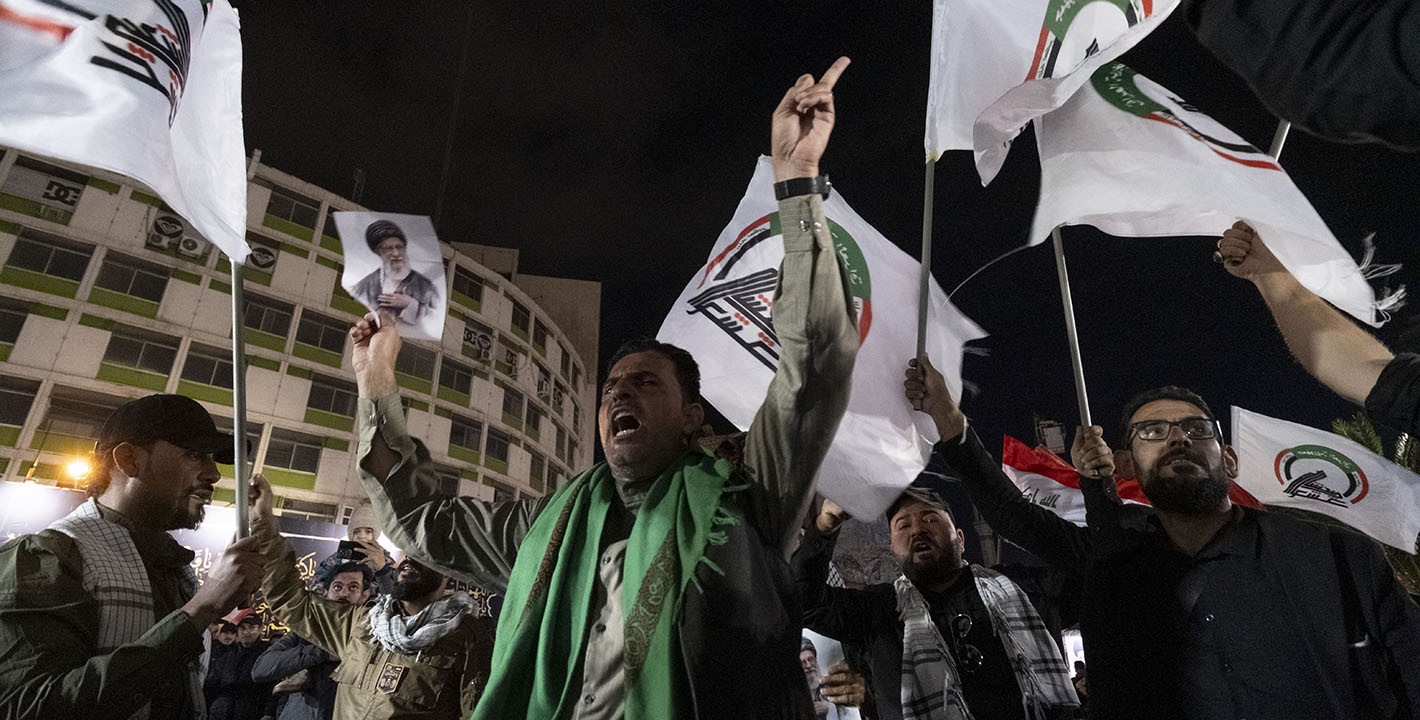
The Zaidi government’s objective to collect weapons is constrained by regional conflict, but it can take certain measures at home.
Ali Al-Mawlawi

Huawei pushed hard to enter the Egyptian data centers market, until the Americans made a better offer.

Angie Omar

Middle Eastern states should welcome an accelerated U.S. disengagement from their region.
Michael Young

In an interview, former ambassador Charles Freeman assesses the Trump administration’s war against Iran.
Michael Young