

Paper
Adam Baczko, Gilles Dorronsoro, Arthur Quesnay
{
  "authors": [
    "Gilles Dorronsoro"
  ],
  "type": "legacyinthemedia",
  "centerAffiliationAll": "dc",
  "centers": [
    "Carnegie Endowment for International Peace"
  ],
  "collections": [],
  "englishNewsletterAll": "ctw",
  "nonEnglishNewsletterAll": "",
  "primaryCenter": "Carnegie Endowment for International Peace",
  "programAffiliation": "SAP",
  "programs": [
    "South Asia"
  ],
  "projects": [],
  "regions": [
    "North America",
    "United States",
    "South Asia",
    "Afghanistan",
    "Pakistan"
  ],
  "topics": [
    "Security",
    "Military",
    "Foreign Policy"
  ]
}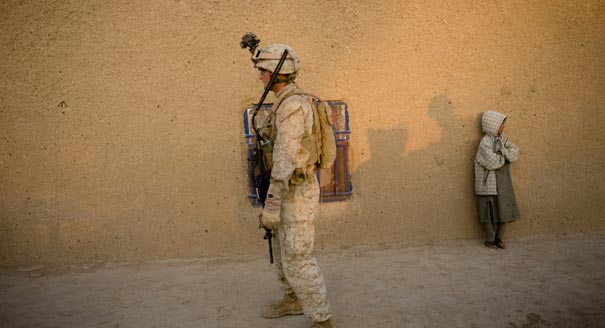
Source: Getty
Obama’s Afghanistan strategy makes two welcome changes to existing strategy: It limits U.S. objectives to fighting al-Qaeda stationed in Pakistan, and it focuses on training the Afghan army, who will ultimately lead the war.
Source: The Washington Post

But these hopeful signs are tempered by real challenges. Sending $1.5 billion annually to Pakistan may help stabilize the country, but it won't eradicate al-Qaeda's activities on the border. Sending hundreds of American civilians to assist the Afghan government, as Obama suggests, may weaken Afghan state institutions. Already undermined by the American tendency to work directly with provincial governors and autonomous nongovernmental organizations, the Afghan state may now also face a nationalist backlash by a population that sees its institutions as not only ineffective but controlled by foreign forces.
Finally, Obama's proposal for negotiating with the Taliban is based on the false notion that the insurgency is largely made up of paid fighters who can be bought off. In fact, the Taliban have limited but real social support, and it is doubtful it can be split.
Former Nonresident Scholar, South Asia Program
Dorronsoro’s research focuses on security and political development in Afghanistan. He was a professor of political science at the Sorbonne in Paris and the Institute of Political Studies of Rennes.
Recent Work
Adam Baczko, Gilles Dorronsoro, Arthur Quesnay
Gilles Dorronsoro
Carnegie does not take institutional positions on public policy issues; the views represented herein are those of the author(s) and do not necessarily reflect the views of Carnegie, its staff, or its trustees.

In an interview, Ian Lustick and Eli Clifton discuss their new book on why a prominent ally has so much influence in America.

Michael Young

As the U.S. stumbles in its war with Iran, we are likely to see an acceleration of its disengagement from the region.
Michael Young

Huawei pushed hard to enter the Egyptian data centers market, until the Americans made a better offer.

Angie Omar

Middle Eastern states should welcome an accelerated U.S. disengagement from their region.
Michael Young

In an interview, former ambassador Charles Freeman assesses the Trump administration’s war against Iran.
Michael Young