

Commentary
Michael Pettis
{
  "authors": [
    "Michael Pettis"
  ],
  "type": "legacyinthemedia",
  "centerAffiliationAll": "dc",
  "centers": [
    "Carnegie Endowment for International Peace"
  ],
  "collections": [],
  "englishNewsletterAll": "asia",
  "nonEnglishNewsletterAll": "",
  "primaryCenter": "Carnegie Endowment for International Peace",
  "programAffiliation": "AP",
  "programs": [
    "Asia"
  ],
  "projects": [],
  "regions": [
    "North America",
    "United States",
    "East Asia",
    "China"
  ],
  "topics": [
    "Economy",
    "Trade",
    "Foreign Policy"
  ]
}
Source: Getty
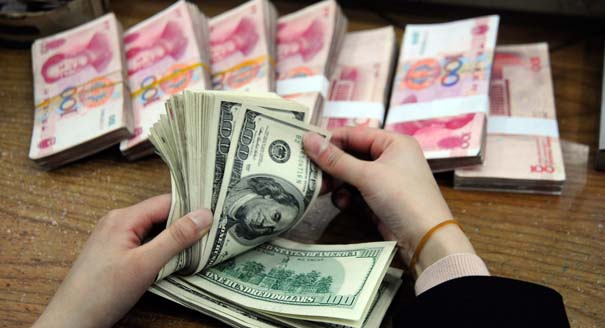
Despite recent Chinese criticism of low U.S. interest rates, changing these rates in either direction would have adverse effects on China’s economy, underscoring the deep imbalances in the global financial system.
Source: The New York Times

PETTIS: The criticism by China’s top bank regulator, Liu Mingkang, of too-low U.S. interest rates indicates how terribly confused the debate has become. Low U.S. interest rates and the expected depreciation of the American dollar encourage investors to borrow dollars and invest in Asia, where it may be encouraging additional investment in China, a country that is already drowning in too much investment.
But low interest rates in the U.S. will help reverse the sharp fall in U.S. consumption that has been catastrophic for China’s export sector.
China’s overinvestment problem was created as part of the imbalance that had Chinese overproduction feeding American overconsumption for many years. China’s huge stimulus is likely to increase production even further at the expense of domestic consumption, putting even more pressure on China to sell its excess capacity to American consumers.
So which hurts China, lower or higher U.S. interest rates? Unfortunately, both. That is the problem with imbalances getting out of hand. They are never easy to fix.

Nonresident Senior Fellow, Carnegie China
Michael Pettis is a nonresident senior fellow at the Carnegie Endowment for International Peace. An expert on China’s economy, Pettis is professor of finance at Peking University’s Guanghua School of Management, where he specializes in Chinese financial markets.
Recent Work
Michael Pettis
Michael Pettis
Carnegie does not take institutional positions on public policy issues; the views represented herein are those of the author(s) and do not necessarily reflect the views of Carnegie, its staff, or its trustees.

In an interview, Ian Lustick and Eli Clifton discuss their new book on why a prominent ally has so much influence in America.

Michael Young

As the U.S. stumbles in its war with Iran, we are likely to see an acceleration of its disengagement from the region.
Michael Young

Huawei pushed hard to enter the Egyptian data centers market, until the Americans made a better offer.

Angie Omar

Middle Eastern states should welcome an accelerated U.S. disengagement from their region.
Michael Young

In an interview, former ambassador Charles Freeman assesses the Trump administration’s war against Iran.
Michael Young