• Research
  • Diwan
  • About
  • Experts
Carnegie Middle East logoCarnegie lettermark logo
LebanonIran
{
  "authors": [
    "Stephen Tankel"
  ],
  "type": "legacyinthemedia",
  "centerAffiliationAll": "dc",
  "centers": [
    "Carnegie Endowment for International Peace"
  ],
  "collections": [],
  "englishNewsletterAll": "",
  "nonEnglishNewsletterAll": "",
  "primaryCenter": "Carnegie Endowment for International Peace",
  "programAffiliation": "SAP",
  "programs": [
    "South Asia"
  ],
  "projects": [],
  "regions": [
    "Afghanistan",
    "Pakistan"
  ],
  "topics": [
    "Security"
  ]
}
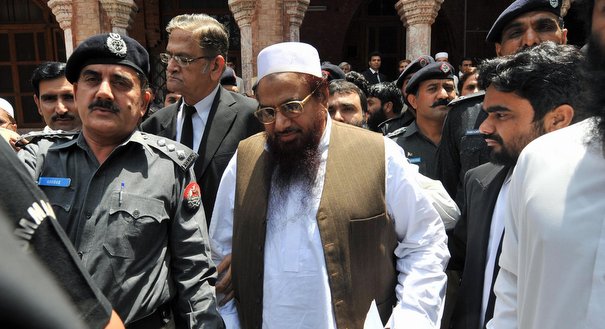
Source: Getty

In The Media

Lashkar-e-Taiba in Perspective

The Pakistani militant group Lashkar-e-Taiba (LeT) has had operational interests in Afghanistan since 2006, and the potential for collaboration between LeT, al-Qaeda, and various pro-Taliban elements is increasing.

Link Copied
By Stephen Tankel
Published on Apr 26, 2010

Source: Foreign Policy

Lashkar-e-Taiba in PerspectiveIn 2006, the Pakistani militant group Lashkar-e-Taiba entered the Afghan theater, necessitating its increased presence in Pakistan’s North-West Frontier Province and Federally Administered Tribal Areas. The group is often mentioned during discussions of the Punjabi Taliban, militants from Punjabi jihadi groups, who arrived in large numbers at approximately the same time. But these militants follow the Deobandi school of Islam and are close to the Afghan and Pakistani Taliban. Lashkar is also a Punjabi group, but its Ahl-e Hadith faith and close relationship with the Pakistani military establishment have contributed to a historically rocky relationship with Deobandi militant groups and other pro-Taliban elements.

Sharing physical space in the NWFP/FATA and operational interests in Afghanistan has created the opportunity for increased conflict and collaboration with al-Qaeda and the various pro-Taliban elements there. As collaboration increases, so too does Lashkar’s threat to Pakistan and the West.
 
This paper is divided into four sections. The first assesses Lashkar’s historical relations with the different actors operating in the NWFP/FATA. The second discusses the nature of Lashkar’s expansion in the area from roughly 2006 onward. The third explores its collaboration and conflicts with other groups operating there, and the nature of its involvement in anti-Western and anti-Pakistan activities emanating from the region. The paper concludes with a brief assessment of Lashkar’s threat to the West, particularly the impact of its presence in the NWFP/FATA.

About the Author

Stephen Tankel

Former Nonresident Scholar, South Asia Program

Tankel was a nonresident scholar at the Carnegie Endowment, where his research focuses on insurgency, terrorism, and the evolution of nonstate armed groups.

    Recent Work

  • Q&A
    Restoring Trust: U.S.-Pakistan Relations

      Stephen Tankel

  • Q&A
    LeT’s Global Rise

      Stephen Tankel

Stephen Tankel
Former Nonresident Scholar, South Asia Program
Stephen Tankel
SecurityAfghanistanPakistan

Carnegie does not take institutional positions on public policy issues; the views represented herein are those of the author(s) and do not necessarily reflect the views of Carnegie, its staff, or its trustees.

More Work from Malcolm H. Kerr Carnegie Middle East Center

  • people watching smoke rising at sunrise from rooftops
    Commentary
    Emissary
    Bombing Campaigns Do Not Bring About Democracy. Nor Does Regime Change Without a Plan.

    Just look at Iraq in 1991.

      Marwan Muasher

  • Commentary
    Carnegie Politika
    Baku Proceeds With Caution as Ethnic Azeris Join Protests in Neighboring Iran

    Baku may allow radical nationalists to publicly discuss “reunification” with Azeri Iranians, but the president and key officials prefer not to comment publicly on the protests in Iran.

      Bashir Kitachaev

  • Commentary
    Diwan
    Beirut Can Do More on Tom Barrack’s Proposal

    In addressing Hezbollah’s disarmament, the Lebanese state must start by increasing its own leverage.

      Michael Young
  • Commentary
    Diwan
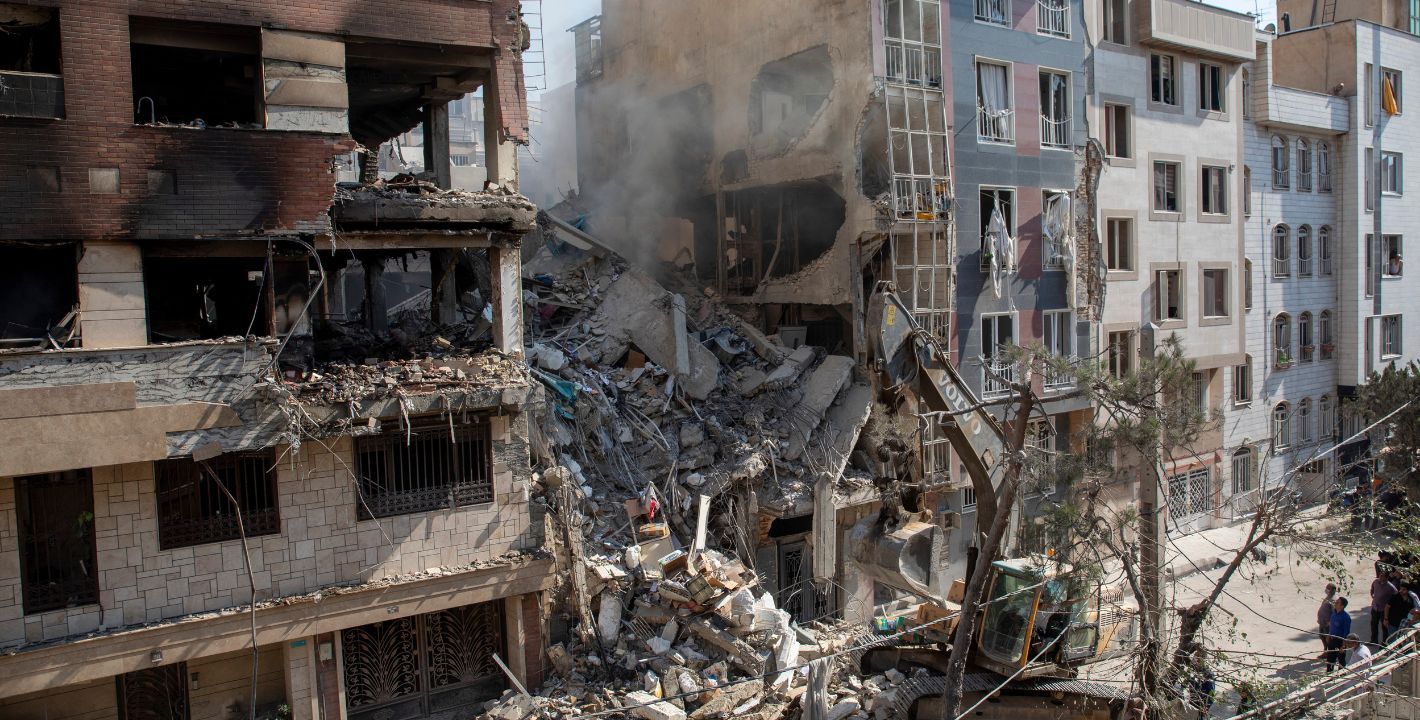
    Iran After the Battle

    The country’s political and military establishment is still debating how to interpret the recent war’s outcome.
      • Nicole Grajewski Profile Picture

      Nicole Grajewski

  • Commentary
    Diwan
    The United States Has Attacked Iran’s Nuclear Facilities

    Spot analysis from Carnegie scholars on events relating to the Middle East and North Africa.

      Mohanad Hage Ali

Get more news and analysis from
Malcolm H. Kerr Carnegie Middle East Center
Carnegie Middle East logo, white
  • Research
  • Diwan
  • About
  • Experts
  • Projects
  • Events
  • Contact
  • Careers
  • Privacy
  • For Media
Get more news and analysis from
Malcolm H. Kerr Carnegie Middle East Center
© 2026 Carnegie Endowment for International Peace. All rights reserved.