


Commentary
Middle Eastern states should welcome an accelerated U.S. disengagement from their region.
Michael Young
{
  "authors": [],
  "type": "pressRelease",
  "centerAffiliationAll": "dc",
  "centers": [
    "Carnegie Endowment for International Peace"
  ],
  "collections": [
    "U.S. Nuclear Policy",
    "Korean Peninsula"
  ],
  "englishNewsletterAll": "ctw",
  "nonEnglishNewsletterAll": "",
  "primaryCenter": "Carnegie Endowment for International Peace",
  "programAffiliation": "NPP",
  "programs": [
    "Nuclear Policy"
  ],
  "projects": [],
  "regions": [
    "United States",
    "Israel",
    "India",
    "Pakistan",
    "South Korea",
    "China",
    "Russia",
    "United Kingdom",
    "France"
  ],
  "topics": [
    "Foreign Policy",
    "Nuclear Policy",
    "Nuclear Energy"
  ]
}
REQUIRED IMAGE
In Prague, President Obama declared America’s commitment to seeking a world free of nuclear weapons. Obama’s vision has been misinterpreted by the right and the left and, more importantly, key countries have not done enough to help achieve progress. George Perkovich analyzes, country by country, reactions to Obama’s nuclear agenda.
WASHINGTON, Apr 5—A year ago in Prague President Obama declared America’s commitment to seeking a world free of nuclear weapons. Obama’s vision has been misinterpreted by the right and the left and, more importantly, key countries have not done enough to help achieve progress, concludes a new paper by George Perkovich that analyzes, country by country, reactions to Obama’s nuclear agenda.
The landmark speech presented an agenda for nuclear disarmament, nonproliferation, and counterterrorism. Upcoming events—the results of the Nuclear Posture Review, the Nuclear Security Summit in Washington, the Non-Proliferation Treaty (NPT) Review Conference in New York, and the ratification of the new START treaty between the United States and Russia—will show whether other leaders in the United States and around the world are willing to join Obama.
Key Conclusions
We have a “talented president ready to lead a long-term campaign to remove the existential threats posed by nuclear weapons, but as yet lacking sufficient colleagues and followers to make it happen,” writes Perkovich. “To get from here to there—from today’s world to one without nuclear weapons—requires a collection of leaders willing to do the unglamorous, complicated work of strengthening cooperation and rules one year at a time.”
###
NOTES
Carnegie does not take institutional positions on public policy issues; the views represented herein are those of the author(s) and do not necessarily reflect the views of Carnegie, its staff, or its trustees.

Middle Eastern states should welcome an accelerated U.S. disengagement from their region.

Michael Young

In an interview, former ambassador Charles Freeman assesses the Trump administration’s war against Iran.
Michael Young

By failing to address Palestinian representation, the current process is bound to lead to just another temporary arrangement.

Nathan J. Brown

Morocco and Algeria, each in its own way, are having to navigate the global economic fallout of the U.S.-Israeli military campaign against Iran.

Yasmine Zarhloule
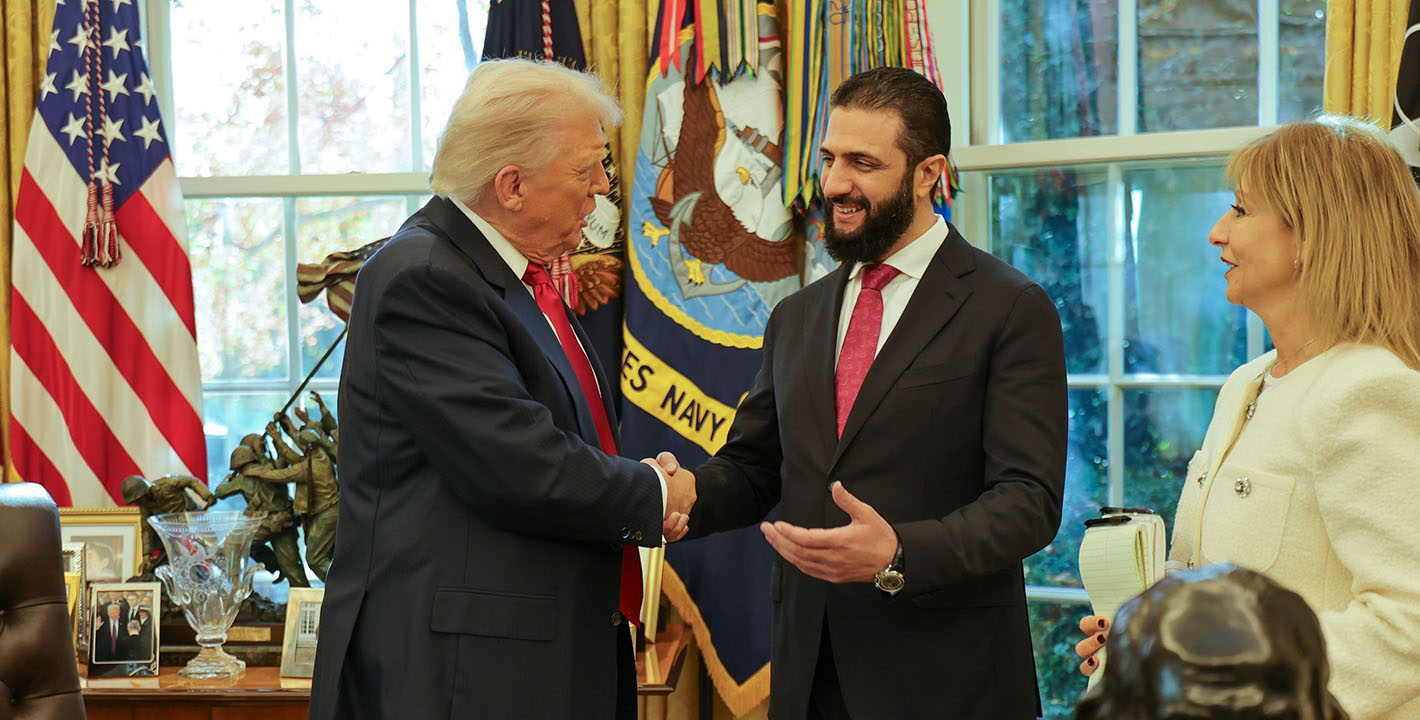
Any move by the United States to make good on Trump’s suggestion that Washington persuade Damascus to confront Hezbollah militarily would have catastrophic consequences.

Kheder Khaddour