

Paper
Adam Baczko, Gilles Dorronsoro, Arthur Quesnay
{
  "authors": [
    "Gilles Dorronsoro"
  ],
  "type": "legacyinthemedia",
  "centerAffiliationAll": "dc",
  "centers": [
    "Carnegie Endowment for International Peace",
    "Carnegie Europe"
  ],
  "collections": [],
  "englishNewsletterAll": "ctw",
  "nonEnglishNewsletterAll": "",
  "primaryCenter": "Carnegie Endowment for International Peace",
  "programAffiliation": "SAP",
  "programs": [
    "South Asia"
  ],
  "projects": [],
  "regions": [
    "North America",
    "United States",
    "South Asia",
    "Afghanistan",
    "Asia"
  ],
  "topics": [
    "Security",
    "Military",
    "Foreign Policy"
  ]
}
Source: Getty
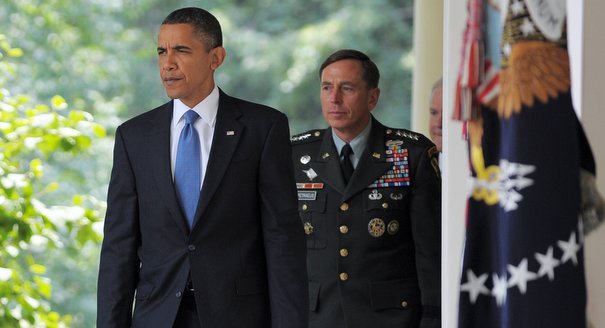
The selection of General David Petraeus offers a window to analyze the grim realities in Afghanistan and start implementing the most effective way forward.
Source: The Washington Post

On the ground, the situation looks unwinnable, and the United States will not be able to reverse the trajectory of the war in the next year. America and its partners decided -- sensibly -- not to go through with a major military offensive in Kandahar this summer. Officials in the area are highly corrupt, there is little trust in government or judiciary, and there is virtually no chance for success without a reliable local partner.
With security and political stability across Afghanistan continuing to deteriorate, U.S. strategy needs to be rethought. The coalition faces the risk of an endless engagement with an unsustainable cost and intolerable loss of life that cannot be won militarily.
President Hamid Karzai is in decline and the Taliban is gaining strength, so Washington's best option is to begin negotiations with the Taliban. Patraeus should begin by scaling back military offensives and reducing coalition casualties. This winter the coalition should declare a cease-fire and start negotiating with the Taliban.
Without a military solution, negotiating with the Taliban is the only option. A negotiated agreement can pave the way for a unity government and hopefully stabilize the country. The arrival of Petraeus offers a window to analyze the grim realities and start implementing the most effective way forward.
Former Nonresident Scholar, South Asia Program
Dorronsoro’s research focuses on security and political development in Afghanistan. He was a professor of political science at the Sorbonne in Paris and the Institute of Political Studies of Rennes.
Recent Work
Adam Baczko, Gilles Dorronsoro, Arthur Quesnay
Gilles Dorronsoro
Carnegie does not take institutional positions on public policy issues; the views represented herein are those of the author(s) and do not necessarily reflect the views of Carnegie, its staff, or its trustees.

As the U.S. stumbles in its war with Iran, we are likely to see an acceleration of its disengagement from the region.

Michael Young

Huawei pushed hard to enter the Egyptian data centers market, until the Americans made a better offer.

Angie Omar

Middle Eastern states should welcome an accelerated U.S. disengagement from their region.
Michael Young

In an interview, former ambassador Charles Freeman assesses the Trump administration’s war against Iran.
Michael Young

By failing to address Palestinian representation, the current process is bound to lead to just another temporary arrangement.

Nathan J. Brown