

Commentary
The party’s domestic and regional roles have changed, so Lebanon should devise a disarmament strategy that encompasses this.
Michael Young
{
  "authors": [],
  "type": "pressRelease",
  "centerAffiliationAll": "dc",
  "centers": [
    "Carnegie Endowment for International Peace",
    "Carnegie China"
  ],
  "collections": [
    "U.S. Nuclear Policy"
  ],
  "englishNewsletterAll": "ctw",
  "nonEnglishNewsletterAll": "",
  "primaryCenter": "Carnegie Endowment for International Peace",
  "programAffiliation": "NPP",
  "programs": [
    "Nuclear Policy"
  ],
  "projects": [],
  "regions": [
    "United States",
    "East Asia",
    "China"
  ],
  "topics": [
    "Nuclear Policy",
    "Nuclear Energy"
  ]
}
REQUIRED IMAGE
China is increasingly factored into U.S. nuclear strategy and Washington has expressed a desire to enhance strategic stability with Beijing. In a new paper, Lora Saalman examines the challenges and opportunities China sees in pursuing strategic stability with the United States.
BEIJING, March 2—China is increasingly factored into U.S. nuclear strategy and Washington has expressed a desire to enhance strategic stability with Beijing. In a new paper, Lora Saalman examines the challenges and opportunities China sees in pursuing strategic stability with the United States. While Beijing is wary of offering greater transparency over its nuclear weapons without a U.S. commitment to limit its military ambitions in return, China can also build a relationship with the United States based on mutual vulnerability—diminishing the possibility of either side using nuclear coercion or aggression.
Key Recommendations:
“It is clear that Washington needs to match its rhetoric on nuclear disarmament with concrete proposals and measures that will build confidence between the United States and China,” Saalman writes. “And Beijing needs to become an active participant in shaping bilateral strategic relations. Without these steps, it will be nearly impossible for a nuclear relationship that is clearly defined by strategic ambiguity today to shift to one of strategic trust—and ultimately strategic stability.”
NOTES
Click here to read the full paper online
Lora Saalman is an associate in the Nuclear Policy Program at the Carnegie Endowment based at the Carnegie-Tsinghua Center for Global Policy. Under the auspices of a Stanton Nuclear Security Fellowship, Saalman’s research focuses on Chinese nuclear weapon and nonproliferation policies and Sino–Indian strategic relations, linking the work of Carnegie’s programs in Beijing and Washington.
The Carnegie Nuclear Policy Program is an internationally acclaimed source of expertise and policy thinking on nuclear industry, nonproliferation, security, and disarmament. Its multinational staff stays at the forefront of nuclear policy issues in the United States, Russia, China, Northeast Asia, South Asia, and the Middle East.
The Carnegie–Tsinghua Center for Global Policy is a joint U.S.-China research center based at Tsinghua University in Beijing, China. The Center brings together senior scholars and experts from the United States and China for collaborative research on common global challenges that face the United States and China.
Press Contact: Karly Schledwitz, 202-939-2233, pressoffice@ceip.org
Carnegie does not take institutional positions on public policy issues; the views represented herein are those of the author(s) and do not necessarily reflect the views of Carnegie, its staff, or its trustees.
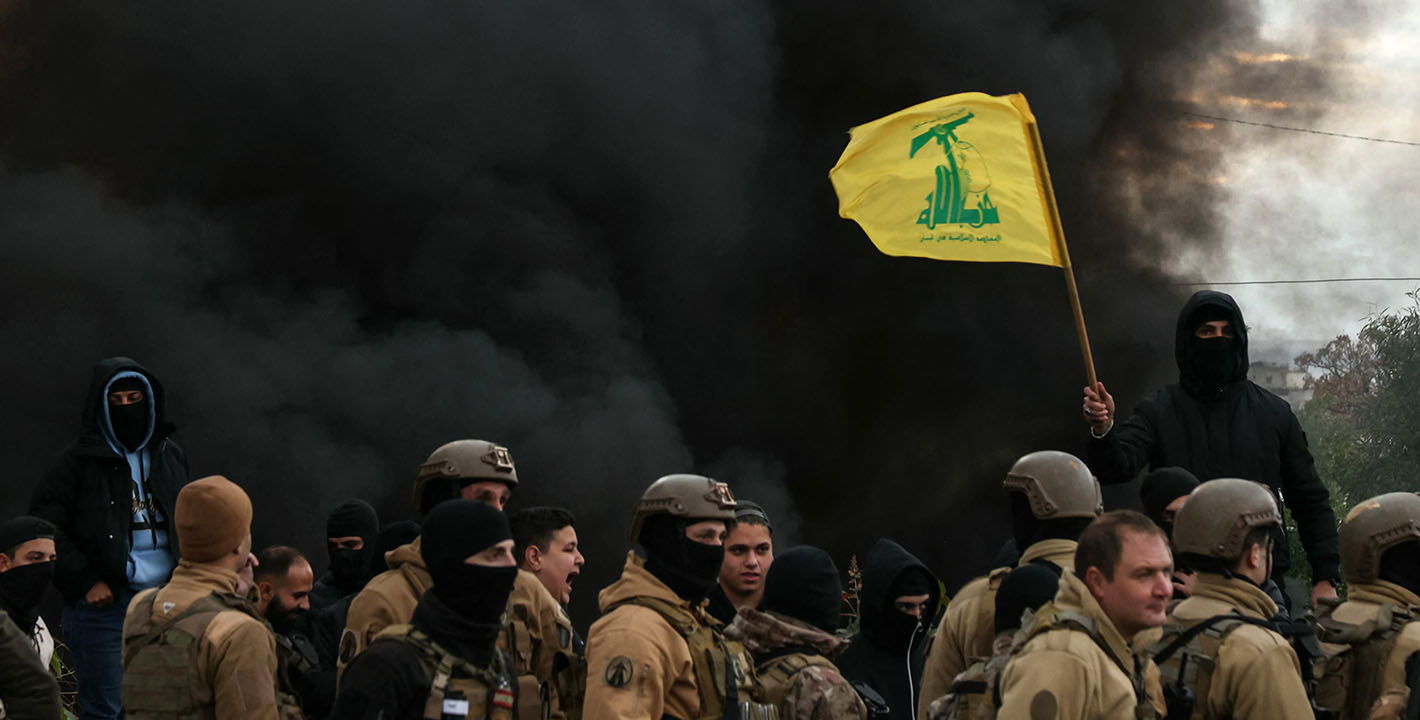
The party’s domestic and regional roles have changed, so Lebanon should devise a disarmament strategy that encompasses this.

Michael Young
In an interview, Marc Lynch discusses his new book decrying the post-1990 U.S.-dominated order in the Middle East.
Michael Young

Because perpetual conflict enhances control, offers economic benefits, and allows leaders to ignore popular preferences.

Angie Omar
A prerequisite of serious talks is that the country’s leadership consolidates majority national support for such a process.
Michael Young
In an interview, Jim Lamson discusses the ongoing regional conflict and sees an unclear picture when it comes to winners and losers.
Michael Young