• Research
  • Diwan
  • About
  • Experts
Carnegie Middle East logoCarnegie lettermark logo
PalestineSyria
{
  "authors": [
    "Amr Hamzawy"
  ],
  "type": "legacyinthemedia",
  "centerAffiliationAll": "",
  "centers": [
    "Carnegie Endowment for International Peace",
    "Malcolm H. Kerr Carnegie Middle East Center"
  ],
  "collections": [],
  "englishNewsletterAll": "",
  "nonEnglishNewsletterAll": "",
  "primaryCenter": "Carnegie Endowment for International Peace",
  "programAffiliation": "",
  "programs": [],
  "projects": [],
  "regions": [
    "Egypt"
  ],
  "topics": [
    "Political Reform"
  ]
}
Source: Getty

In The Media

Fear And Worry Are the Enemies of Egypt's Future

While those who voted against the recently passed constitutional amendments in Egypt may feel disheartened, they should continue to engage in political life in order to play a crucial role in enabling the transition to democracy to succeed.

Link Copied
By Amr Hamzawy
Published on Mar 30, 2011

Source: National

Fear And Worry Are the Enemies of Egypt's Future
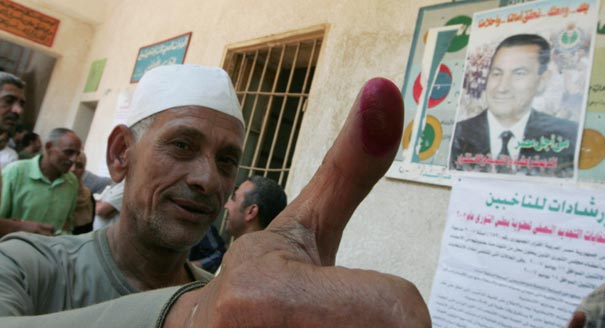
A majority of voters - more than 77 per cent - have backed Egypt's constitutional amendments this month after 41 million voters went to the polls. With 45 million registered to vote in the country, it was the highest elections turnout in Egypt's history.
 
Now, the national forces that worked for a "no" vote on these amendments and rejected the quick timetable and other related measures have no choice but to immediately prepare for Egypt's next challenge in the parliamentary elections.
 
The referendum has determined the mechanism by which the constitution will be changed and, with the next elections, Egypt will take a second great step towards democratic transition.
 
Many of those who voted against the amendments feel a mix of frustration, fear and worry today.
 
Their frustration results from the weakness of their voting bloc, which slightly exceeded 22 per cent of the vote. Their fear comes from the power of the religious forces that supported the amendments, which were passed by a majority of voters. And their worry stems from the fact that they must now face parliamentary elections without the tools for effective competition.
 
However, surrendering to this negative atmosphere - which is based more on exaggeration than on serious analysis - could have disastrous consequences.
 
The voting bloc that rejected the amendments is not a marginalised minority; it comprises almost one fourth of the 41 million voters who participated in the referendum. Nor were religious forces the only ones who supported the amendments. Indeed, those who voted "yes" should not be considered as a monolithic bloc; many citizens favoured the amendments for reasons that had nothing to do with the rhetoric of religious forces.
 
There is a worry among some Egyptians that the Muslim Brotherhood will dominate the parliamentary elections, giving them control of parliament and the constitutional assembly that will be charged with drafting the new charter.
 
Although reason for this concern exists, it must not interfere with the democratic process and political competition. It must not cause national forces to shun the elections instead of entering them and encouraging citizens to participate. The words "frustration", "fear" and "worry" will not produce a healthy, vibrant democracy.
 
Egypt has no time to surrender to this negative sentiment. The central discussion about the electoral regime must begin now and aim to craft a clear public preference among citizens for a regime that combines party lists and independent seats.
 
Egypt must also hold ongoing discussions between various national forces on the creation and announcement of political parties.
 
Discussions so far have focused on two options. The first is the search for parties that would unite leftists and liberals in support of democracy and the civil state. The second is the desire to form parties based on a clear political identity. This latter approach could split the votes of the constituencies that support democracy and a state built on civil institutions.
 
With the referendum complete, Egyptians must begin now to form unified parties that can quickly agree on candidates for the parliamentary elections and present them to their constituencies.
 
After elections, Egyptians should enter a second phase in the transition to democracy by forming political parties based on pure identity, especially if the first phase does not permit integrated party programmes to be drafted.
 
Organising politically into representative blocs will help to ensure that the transition to democracy succeeds. Otherwise, Egyptians may find themselves lapsing into a lethal mix of frustration, fear and worry that can undermine the entire project.

About the Author

Amr Hamzawy

Director, Middle East Program

Amr Hamzawy is a senior fellow and the director of the Carnegie Middle East Program. His research and writings focus on governance in the Middle East and North Africa, social vulnerability, and the different roles of governments and civil societies in the region.

    Recent Work

  • Commentary
    Iran Is Pushing Its Neighbors Toward the United States

      Amr Hamzawy

  • Paper
    U.S. Peace Mediation in the Middle East: Lessons for the Gaza Peace Plan
      • Sarah Yerkes

      Amr Hamzawy, Sarah Yerkes, Kathryn Selfe

Amr Hamzawy
Director, Middle East Program
Amr Hamzawy
Political ReformEgypt

Carnegie does not take institutional positions on public policy issues; the views represented herein are those of the author(s) and do not necessarily reflect the views of Carnegie, its staff, or its trustees.

More Work from Malcolm H. Kerr Carnegie Middle East Center

  • Commentary
    Diwan
    Has Sisi Found a Competent Military Entrepreneur?

    Mustaqbal Misr has expanded its portfolio with remarkable speed, but a lack of transparency remains.

      Yezid Sayigh

  • Research
    Arab Diaspora Business Communities in Egypt

    Arab diaspora business communities in Egypt often mirror the same systemic challenges facing Egyptian businesses.

      • +4

      Nur Arafeh, Yezid Sayigh, Qaboul al-Absi, …

  • Commentary
    Diwan
    Sisi the Supreme

    The president has blocked the emergence of new power centers within the Egyptian regime.

      Yezid Sayigh

  • Paper
    The Second Republic: Remaking Egypt Under Abdel-Fattah el-Sisi

    Egyptian President Abdel-Fattah el-Sisi is building a new republic defined by a social ethos of “nothing for free,” a new form of state capitalism, and hyperpresidential powers set within a military guardianship that secures his regime but leaves it unable to resolve political, economic, and social challenges.

      Yezid Sayigh

  • Commentary
    Diwan
    Saying No to Trump’s ‘Riviera’ Plan

    In an interview, Marwan Muasher discusses the Arab proposal to rebuild Gaza, and its repercussions.

      Ghida Tayara, Jasmine Khelil

Get more news and analysis from
Malcolm H. Kerr Carnegie Middle East Center
Carnegie Middle East logo, white
  • Research
  • Diwan
  • About
  • Experts
  • Projects
  • Events
  • Contact
  • Careers
  • Privacy
  • For Media
Get more news and analysis from
Malcolm H. Kerr Carnegie Middle East Center
© 2026 Carnegie Endowment for International Peace. All rights reserved.