

Q&A
Alper Coşkun, Amr Hamzawy
{
  "authors": [
    "Amr Hamzawy"
  ],
  "type": "commentary",
  "blog": "Emissary",
  "centerAffiliationAll": "dc",
  "centers": [
    "Carnegie Endowment for International Peace"
  ],
  "englishNewsletterAll": "menaTransitions",
  "nonEnglishNewsletterAll": "",
  "programAffiliation": "MEP",
  "programs": [
    "Middle East"
  ],
  "regions": [
    "Egypt",
    "Iran",
    "Middle East"
  ],
  "topics": [
    "Foreign Policy",
    "Domestic Politics",
    "Security",
    "Economy"
  ]
}
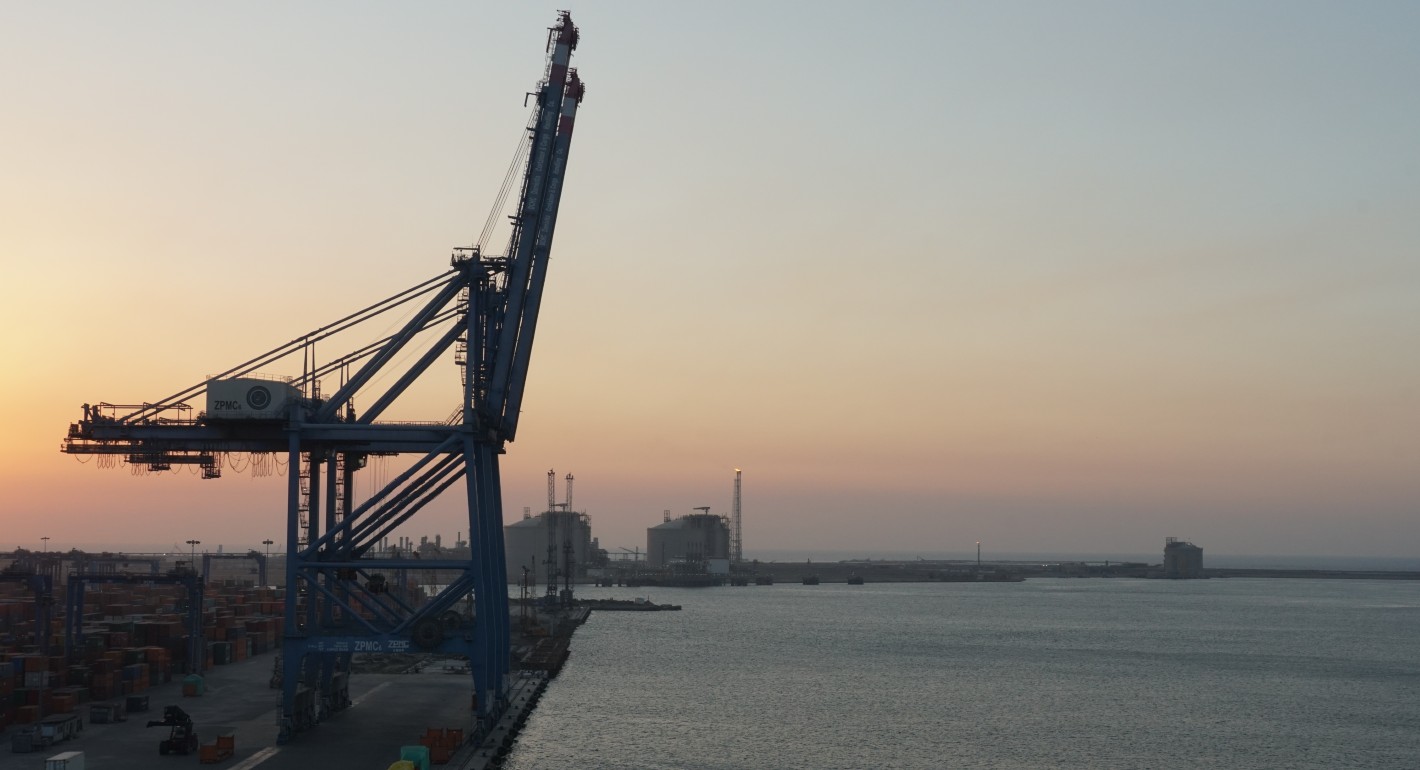
Egypt’s Damietta Port in 2022. (Photo by Lucia Gajdosikova/iStock)
The targeting of Damietta Port appears to be more than a mere security message.
Last week, Egypt’s Damietta Port was the target of a drone attack, allegedly directed by Iran—which would make it the first attack on the country by a foreign actor since 1973. This event should not be viewed as an isolated security incident or a limited assault on one of Egypt’s major economic facilities. Rather, it should be understood as a new episode in a widening regional war that threatens to draw Middle Eastern states into conflicts that are not necessarily of their own making or in service of their national interests. The Iran war has produced a highly volatile regional environment in which the likelihood increases that confrontations will spread from one arena to another and from one state to the next.
Seen from this angle, the targeting of Damietta Port appears to be more than a mere security message. It is an attempt to draw Egypt, even gradually, into the orbit of regional conflict—whether by pushing it toward military engagement or by imposing new security priorities on it that drain its resources and redirect its attention away from its core objectives: economic development, domestic stability, and the reinforcement of its regional standing as a power for peace and mediation.
Damietta Port carries an importance that goes beyond its status as one of Egypt’s principal commercial ports: It forms part of Egypt’s economic security architecture. The country’s ports are directly tied to Mediterranean trade flows and represent a key element in Cairo’s strategy to convert its geographic position into a regional hub for trade, energy, and logistics. Targeting it therefore sends messages that extend beyond Egypt’s borders, touching the confidence of investors and shipping companies—at a time when the region is already facing widespread disruption in the Red Sea and the Gulf that has negatively affected global trade in general and Suez Canal revenues specifically.
Egypt’s response to the drone attack on Damietta Port needs to combine two complementary areas of focus. The first is security and military: protecting critical infrastructure, especially in maritime and airspace domains, and strengthening local deterrence and defense systems to prevent future attacks without increasing spending on arms purchases. The second is political and strategic: refusing to be drawn into open warfare or to be turned into a direct party to a conflict whose causes and boundaries contradict Egyptian national interests.
The experience of past decades has shown that many wars in the Middle East began with limited incidents before turning into wide-ranging confrontations. In these wars, regional states paid human, economic, and political costs, while the underlying causes of conflict remained without sustainable resolution. Wisdom, therefore, dictates that Egypt should not allow itself to become part of the Iran war, because this war, at every stage, produces security for no one—it only further entrenches the logic of military adventurism, deepens mistrust between regional actors, and widens instability. U.S. military strikes, however precise, have failed to eliminate the sources of tension with Iran, while Iranian policies built on regional proxies and indirect responses have undermined regional security and prolonged conflicts. In both cases, state actors in the region—Egypt among them—bear a significant share of the economic and security costs of this confrontation.
One need only look at shipping conditions in the Red Sea and the Gulf over the past two years to grasp the scale of this cost. Transit traffic has declined at various points, insurance and shipping costs have risen, and international trade has been affected—all of which has reverberated through national economies. This includes Egypt’s, whose interests are closely tied to the security of the Suez Canal and the stability of maritime trade routes in the Middle East. The current escalation between the United States and Iran is threatening further risk and damage.
Egypt has, at various stages, championed this comprehensive understanding of regional security, proceeding from the conviction that the security of the Gulf, the Red Sea, the eastern Mediterranean, and the Suez Canal are interconnected and cannot be treated in fragmented fashion. Egypt’s interest, therefore, lies in working with Arab states and regional powers that seek stability to push toward more sustainable security arrangements—ones in which the likelihood of war recedes and reliance on diplomacy and mediation grows.
Prioritizing diplomacy, mediation, and collective security is Egypt’s best course to respond to the Damietta attack. Egypt, by virtue of its geographic position, political weight, and diplomatic experience, can champion regional efforts toward de-escalation and restore stability. The Iran war, however its forms and instruments shift, will not produce a safer or more stable Middle East. Instead, it will lead to further fragmentation and turmoil, more conflicts between state and nonstate actors, and increasing economic and human losses. Defending Egyptian interests requires a refusal to be drawn into this war while holding firm to the country’s role as a peaceful mediating power—one that works to contain conflicts rather than expand them and to build collective regional security rather than entrench divisions and blocs.
Policies and actions of regional middle powers are measured not only by their capacity to wage war, but also by their capacity to prevent it. Egypt remains in urgent need today of exercising precisely this kind of power: the power of deterrence when circumstances demand it, and the power of diplomacy and mediation when peace becomes the supreme national and regional matter of interest.
The latest from Carnegie scholars on the world’s most pressing challenges, delivered to your inbox.

Director, Middle East Program
Amr Hamzawy is a senior fellow and the director of the Carnegie Middle East Program. His research and writings focus on Egypt’s and other middle powers’ involvement in regional security in the Middle East, particularly through collective diplomacy and multilateral conflict resolution
Recent Work

Alper Coşkun, Amr Hamzawy

Sarah Yerkes, Natalie Triche, Amr Hamzawy
Carnegie does not take institutional positions on public policy issues; the views represented herein are those of the author(s) and do not necessarily reflect the views of Carnegie, its staff, or its trustees.
It signals a new era of tech diffusion and warfare.

Steve Feldstein

The conflict has sent economic and political shock waves through a country with no representation at the negotiating table—and Kenya is not alone.

Georgia Schaefer-Brown, Jane Munga
Despite the agreement’s uncertainty, it’s still a significant development in regional and nuclear policy.


Andrew Leber, Jane Darby Menton
By burying disagreements in imprecision, the new deal risks same fate as its predecessors.

James M. Acton
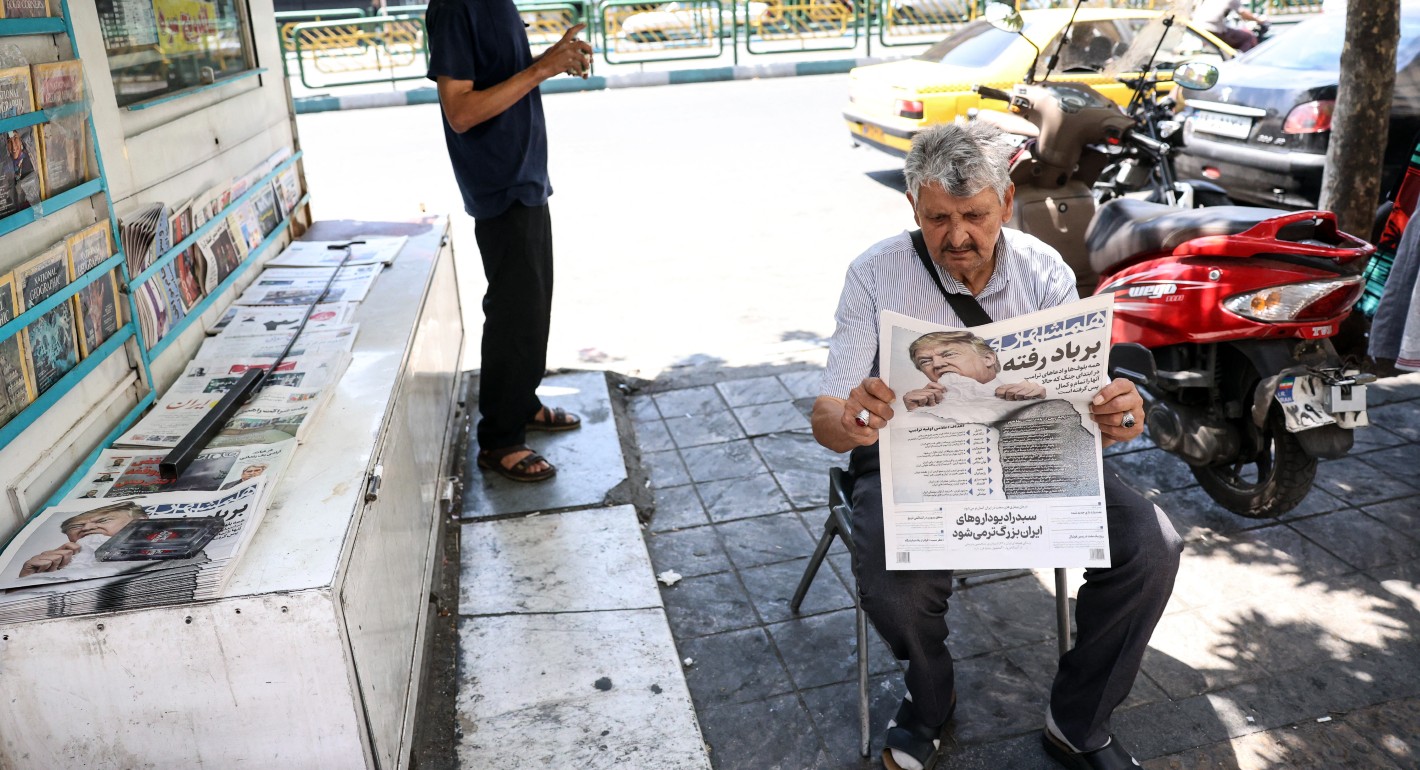
The United States and Israel may have unwittingly revived the Islamic Republic’s “zombie regime.”



Suzanne Maloney, Aaron David Miller, Karim Sadjadpour