

Commentary
Policy discussion is ignoring that the Palestinian national project is hollowed out and apartheid is a present danger.
Nathan J. Brown
{
  "authors": [
    "Francis Fukuyama"
  ],
  "type": "legacyinthemedia",
  "centerAffiliationAll": "",
  "centers": [
    "Carnegie Endowment for International Peace"
  ],
  "collections": [],
  "englishNewsletterAll": "",
  "nonEnglishNewsletterAll": "",
  "primaryCenter": "Carnegie Endowment for International Peace",
  "programAffiliation": "",
  "programs": [],
  "projects": [],
  "regions": [
    "North America",
    "United States"
  ],
  "topics": [
    "Political Reform"
  ]
}
Source: Getty
Despite the popular appeal of businesslike efficiency in government and a plethora of political bids by private sector executives, the American presidency requires completely different skills than those of a corporate executive.
Source: Financial Times

These individuals can, of course, make runs at office because they are independently wealthy. But they are also admired by many Americans for their entrepreneurial energy, toughness and bottom-line focus. Executives running multibillion-dollar companies do many of the same things a president does: set strategy, make budgets and manage large bureaucracies. But the successful business executives seem to do so with a ruthless efficiency that is rarely achieved in the public sector. Many Americans would love to see “Der Donald” screaming “You’re fired!” in the face of striking teachers or bureaucrats, or standing up to foreign bullies in a similar way.
But while this yearning for businesslike efficiency is understandable, it betrays a failure to understand the nature of the American presidency, and how completely different the skills required for the latter position are from those of a corporate executive.
An American chief executive exercises authoritarian powers of which a politician could only dream. The chief executive is held accountable for performance, but only upwards to a board of directors who in turn delegate huge amounts of discretion to the boss. The chief executive does not have to share power with other authority figures; indeed, forced marriages between powerful chief executives do not last long and almost always end badly. The chief executive can hire, fire, make mergers and acquisitions or divest himself of entire divisions at will, without the board looking over his shoulder and seeking to micromanage every step. And there is a single bottom line, the corporation’s profitability, which is easily measurable at every moment in time.
An American president, by contrast, occupies an office which is weak by design, limited by the framers of the constitution by checks and balances that prevent the exercise of strong power. The president shares powers with Congress, which is often in the hands of the other party. He is downwardly accountable to voters on many levels, who distrust politicians and are loathe to delegate authority to the executive. A recent example is opposition to Barack Obama’s plan to set up an independent review board to control Medicare costs, which many argue usurps Congress’s oversight role. This is as if a corporate board demanded to be able to individually review a chief executive’s cost-cutting decisions, which in the private sector would be seen as intolerable micromanagement.
Finally and most importantly, there is no clearly measurable bottom line in presidential performance. Government is mandated to pursue a host of often contradictory aims by the voters: the latter want both expansive services and low taxes; some see universal healthcare as an inalienable right, while others regard it as a wasteful boondoggle.
These differences in executive authority mean that the skills required of a president are very different from those of a chief executive. The former is like a herder of cats, who must cajole, inspire, beg, deal and above all use the bully pulpit of the presidency to create consensus behind policies. Yelling “You’re fired!” at a hostile Congress, or a sceptical press, or public sector workers protected by civil service rules is not going to get a president very far.
Indeed, the evolved corporate governance model of contemporary American business is far closer to east Asian authoritarian rule than it is to anything that comes out of an American democratic tradition. Both corporate America and Asian government are ruthlessly meritocratic; their accountability goes only upwards and not downwards; and they are measured largely by their economic performance and not by their ability to satisfy a broad range of interest groups pursuing divergent ends.
It is worth pondering the enormous divergence that has opened up between private and public sector governance in the early 21st century. The trend in the former has been towards flatter organisations that entail the delegation of ever-larger amounts of authority to well-educated managers. There is accountability, but also a high degree of trust required in this process. The public sector, by contrast, has become encumbered by ever-increasing layers of rules that are there not because the bureaucrats want them, but because the American public does not trust government to act on its behalf. The very populists who complain about the inefficiency of big government would be the first to decry the kind of delegation of authority that is routine both in the corporate world and in Asian government.
So those who would like to see an effective corporate executive as president – hopefully not a blowhard like Donald Trump, but a business leader who has built a lasting organisation – are bound to be disappointed when that person struggles against the limitations of presidential authority. And should the country’s rules ever be changed so it could be run like a corporation, Americans will be surprised to find themselves living in China or Singapore rather than in the US of A.
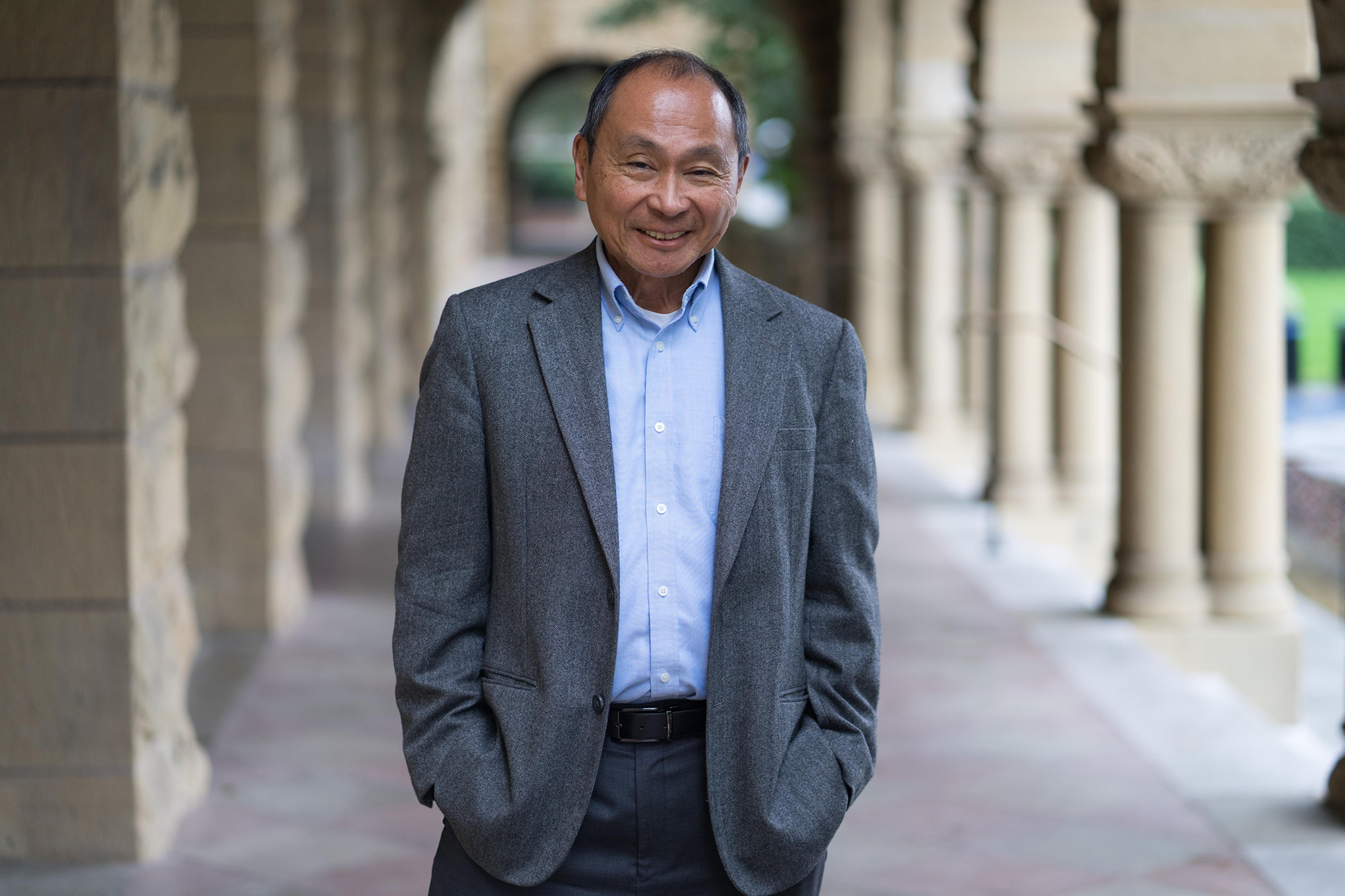
Nonresident Scholar, Democracy, Conflict, and Governance Program
Francis Fukuyama is a nonresident scholar in Carnegie’s Democracy, Conflict, and Governance Program, where his research focuses on democratization and international political economy.
Carnegie does not take institutional positions on public policy issues; the views represented herein are those of the author(s) and do not necessarily reflect the views of Carnegie, its staff, or its trustees.
Policy discussion is ignoring that the Palestinian national project is hollowed out and apartheid is a present danger.

Nathan J. Brown
As negotiations with Iran and Lebanon continue, chaos is at the heart of the Netanyahu government’s calculations.

Michael Young
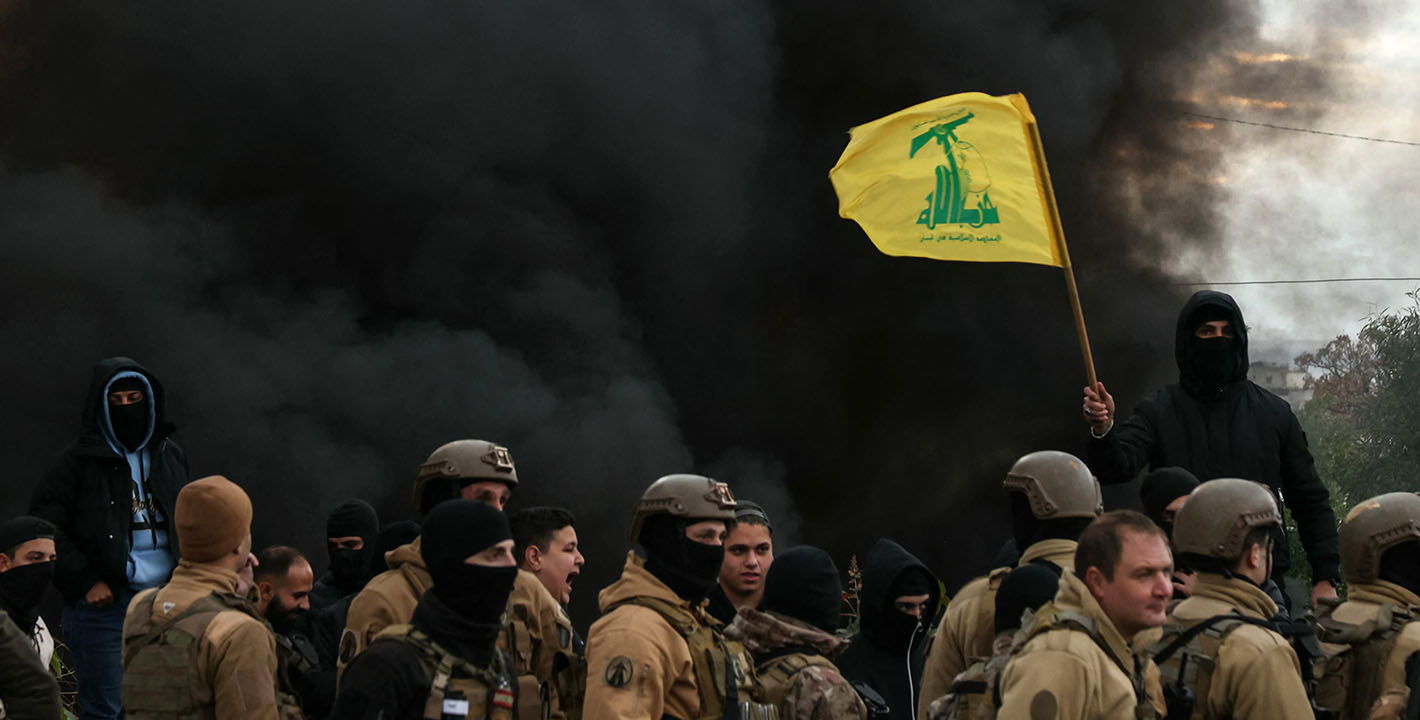
The party’s domestic and regional roles have changed, so Lebanon should devise a disarmament strategy that encompasses this.
Michael Young

In an interview, Marc Lynch discusses his new book decrying the post-1990 U.S.-dominated order in the Middle East.
Michael Young

Because perpetual conflict enhances control, offers economic benefits, and allows leaders to ignore popular preferences.

Angie Omar