

Paper
Lora Saalman
{
  "authors": [
    "Lora Saalman"
  ],
  "type": "other",
  "centerAffiliationAll": "dc",
  "centers": [
    "Carnegie Endowment for International Peace",
    "Carnegie China"
  ],
  "collections": [
    "U.S. Nuclear Policy"
  ],
  "englishNewsletterAll": "ctw",
  "nonEnglishNewsletterAll": "",
  "primaryCenter": "Carnegie Endowment for International Peace",
  "programAffiliation": "NPP",
  "programs": [
    "Nuclear Policy"
  ],
  "projects": [],
  "regions": [
    "North America",
    "United States",
    "East Asia",
    "China"
  ],
  "topics": [
    "Nuclear Policy",
    "Arms Control"
  ]
}
Source: Getty
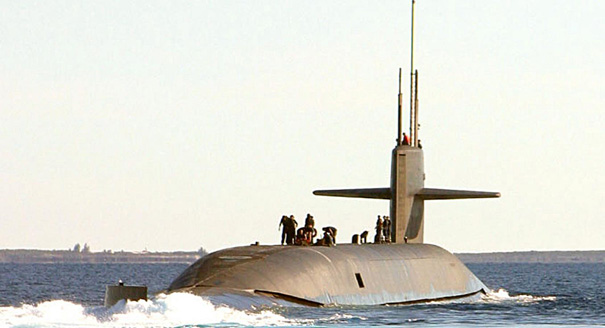
While strategic stability in China has traditionally reflected a concern for maintaining balance, the discussion has broadened in the past years to include concerns over issues such as nuclear terrorism and disarmament.
Source: Asian Institute for Policy Studies
Carnegie's Beijing-based associate Lora Saalman spoke at The Asian Institute for Policy Studies' panel on the U.S. Nuclear Posture Review. Saalman pointed out that strategic stability in China is a concept that has a lot to do with balance. Between 2000 and 2003, discussions in China focused mostly on the imbalance between China, the United States, and Russia. Today the discussions in China focus less on the strategic imbalance between China and the United States and more on the Nuclear Non-Proliferation Treaty, nuclear terrorism, disarmament, as well as extended deterrence.

Former Nonresident Associate, Nuclear Policy Program
Saalman was a nonresident associate in the Nuclear Policy Program at the Carnegie Endowment for International Peace. Her research focuses on China’s nuclear and strategic policies toward India, Russia, and arms control.
Recent Work
Lora Saalman
Lora Saalman
Carnegie does not take institutional positions on public policy issues; the views represented herein are those of the author(s) and do not necessarily reflect the views of Carnegie, its staff, or its trustees.

In an interview, Rozina Ali discusses her new book on the rise and manifestations of Islamophobia in the United States.

Michael Young

In an interview, Ian Lustick and Eli Clifton discuss their new book on why a prominent ally has so much influence in America.
Michael Young

As the U.S. stumbles in its war with Iran, we are likely to see an acceleration of its disengagement from the region.
Michael Young

Middle Eastern states should welcome an accelerated U.S. disengagement from their region.
Michael Young

In an interview, former ambassador Charles Freeman assesses the Trump administration’s war against Iran.
Michael Young