

Paper
Maria Fantappie
{
  "authors": [
    "Maria Fantappie"
  ],
  "type": "legacyinthemedia",
  "centerAffiliationAll": "",
  "centers": [
    "Carnegie Endowment for International Peace",
    "Malcolm H. Kerr Carnegie Middle East Center"
  ],
  "collections": [],
  "englishNewsletterAll": "",
  "nonEnglishNewsletterAll": "",
  "primaryCenter": "Malcolm H. Kerr Carnegie Middle East Center",
  "programAffiliation": "",
  "programs": [],
  "projects": [],
  "regions": [
    "Levant"
  ],
  "topics": [
    "Political Reform"
  ]
}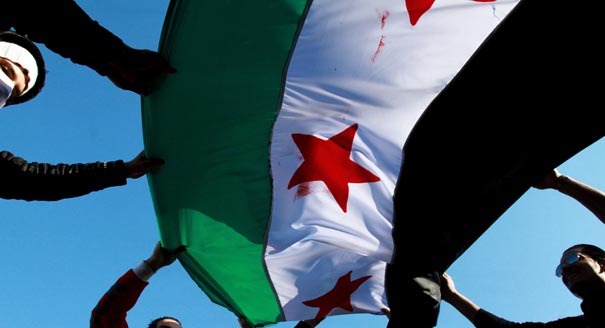
Source: Getty
Enticed by concessions offered by the Syrian regime and conflicted by their allegiances to other Kurdish parties in the region, the Syrian Kurdish parties have yet to find their place in the on-going revolution.
Source: National

As protests began gaining momentum, few Kurdish parties took part. This was similar to events in 2004, when instead of supporting thousands protesting in Al Qamishly, the Kurdish Democratic Progressive Party (PDKS) and the Kurdish Democratic Party of Syria (KDPS) chose to compromise with the regime. This year, when demonstrations started in Al Qamishly and spread through Al Hasakah province in eastern Syria, both parties denounced the violent response of Syrian security forces, but did not call on their members to protest. The Kurdish Democratic Union Party (PYD) went so far as to discourage activists from taking to the street in Aleppo province.
Only the Future Movement openly called for the fall of the regime. And the assassination of its leader, Meshaal Tammo, about a week ago reflected the struggle within the Syrian Kurdish political scene.
In spite of their reputation as the most organised opposition to the regime, Kurdish parties in Syria have weak roots in their community's social fabric. The parties are divided over promoting a Syrian Kurdish agenda or following the orders of leaders abroad. Some operate within Syria as satellites of other Kurdish parties in the region, including the PDKS and the KDPS, which directly report to Massoud Barzani's and Jalal Talabani's parties in Iraqi Kurdistan. The PYD is the Syrian branch of Turkey's Kurdistan Workers Party (PKK).
In past months, most Kurdish Syrian parties have shifted between the regime and the opposition in a "wait and see" attitude. Rather than represent the demands and interests of protesters, they risk becoming tools of domestic and foreign agendas.
An attempt to unify under the Kurdish Patriotic Movement - a coalition including 12 Kurdish parties - failed in March. The parties' demands fluctuated as much as their stance: some called for cultural rights and recognition of Kurds as a nation within a unified Syria, while others propose self-administration and, at the greatest extreme, self-government.
The Syrian regime could further divide the Kurdish political parties to maintain its rule. In recent months, it has offered increasing concessions to appease demonstrators, and to co-opt the PDKS, KDPS and PYD. For the first time since 1972, more than 50,000 Kurds have obtained Syrian nationality, giving them access to government employment, state subsidies and the right to register property. With a decree easing the process of registering land in border areas, there has been a construction boom.
And Kurdish parties could be further divided by Turkey's ambition to solve its lingering domestic issue with the PKK by sponsoring Kurdish parties that are willing to integrate into the political system. Regardless of the results of the Syrian revolution, Turkey aims to control the demands of the Kurdish parties, to promote Kurdish groups that oppose armed struggle and to undermine the PYD.
By hosting Syrian opposition meetings on its soil, Turkey has ensured that Kurdish demands are limited to the "recognition of cultural rights" if parties want to sit at the table. The Syrian Muslim Brotherhood, Turkey's ally in the opposition, has contested the demands of the Future Movement, which argued that Syria should no longer be considered an exclusively Arab nation.
Meanwhile, the PKK - recently under attack by Turkish and Iranian shelling in Iraq's Qandil Mountains - could encourage its allies in the PYD to strike a deal. If Turkey tries forcefully to topple the regime in Damascus, Syria would not hesitate in supporting the PYD to consolidate its base within Syrian territory as a buttress against Turkey and at the expense of the other Kurdish parties. An alliance with the regime already seems to be under way as the PYD has been helping to repress demonstrations. This could be a first step to consolidate a political force and establish a strategic base in Afrin, which sits on Syria's border with Turkey.
The question is whether the other Kurdish parties can unite. Following the assassination of the Future Movement's Tammo, Al Qamishly saw its biggest demonstration since March. Kurdish young people particularly have joined protests, seeing no contradiction between their aspirations and those of their Arab compatriots.
Confronted with continued divisions, the Kurdish Syrian parties are now planning a national meeting. On this occasion, they must champion the demands of the youth: shape a Kurdish Syrian strategy, find common agreement over a clear set of demands that promote Kurdish national rights and support democratic change in Syria. These should not be seen as competing priorities, but as objectives that strengthen each other.
But if they continue to prioritise their parochial allegiances, they will remain trapped in the regional game as mere pawns deployed by one side or the other in the revolution. That would be at the expense of both a democratic Syria and Kurdish national rights.
Former Visiting Scholar, Carnegie Middle East Center
Maria Luisa Fantappie is Head of the Mediterranean, Middle East and Africa Programme at IAI. She served as Special Adviser at the Centre for Humanitarian Dialogue in Geneva (2020-2023) and at the International Crisis Group (2012-2020), engaging at the highest level of policy in Europe, the United States and across MENA (Iraq, Jordan, Saudi Arabia, Iran, Qatar, Oman and United Arab Emirates).
Recent Work
Maria Fantappie
Maria Fantappie
Carnegie does not take institutional positions on public policy issues; the views represented herein are those of the author(s) and do not necessarily reflect the views of Carnegie, its staff, or its trustees.
Any move by the United States to make good on Trump’s suggestion that Washington persuade Damascus to confront Hezbollah militarily would have catastrophic consequences.
Kheder Khaddour
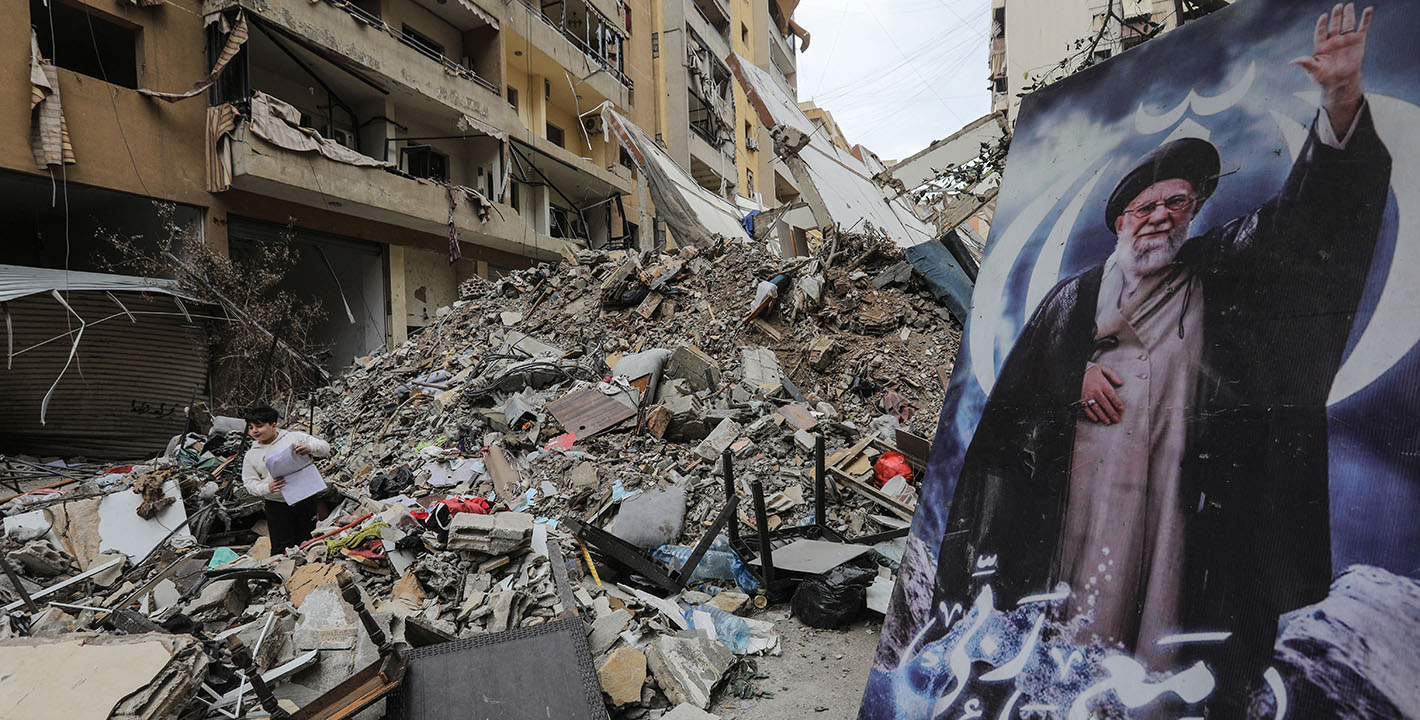
As talks begin between Washington and Tehran, Beirut has an opening to advance a regional plan for the party’s disarmament.

Michael Young
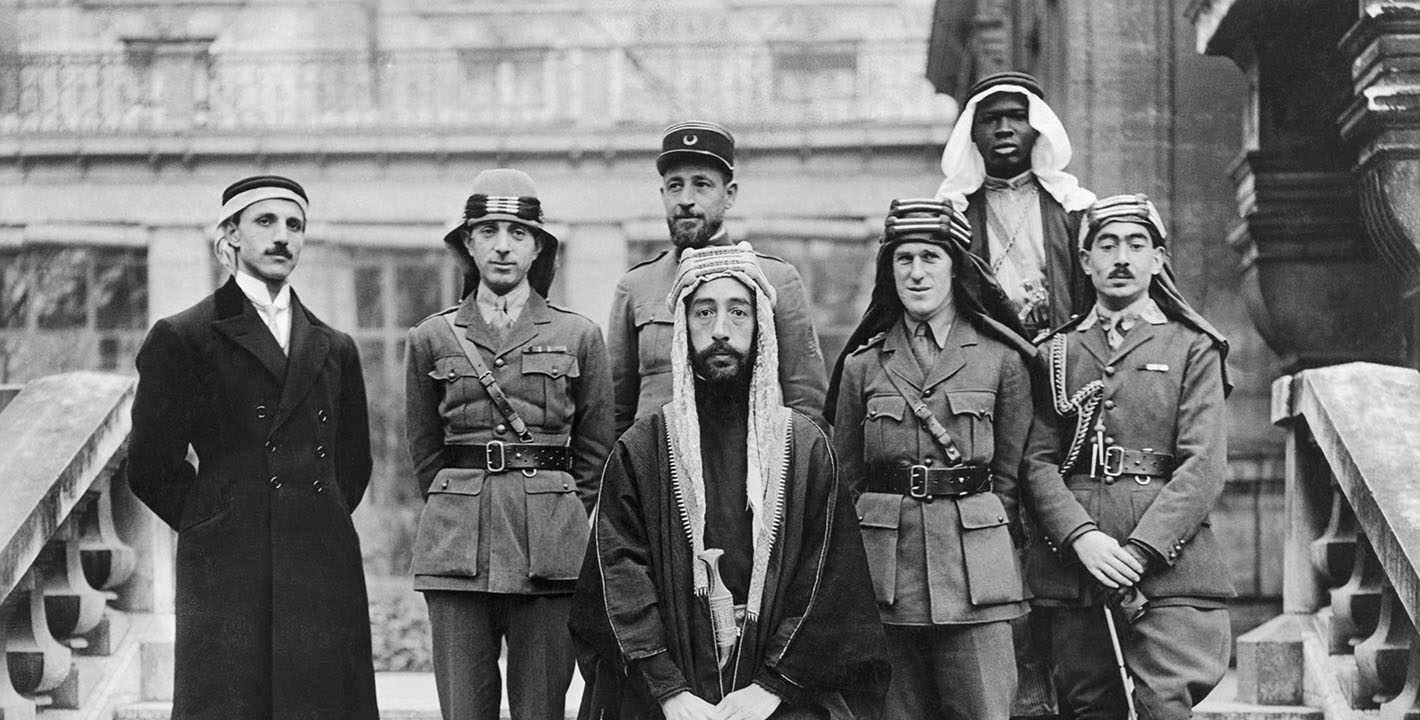
In an interview, Elizabeth Thompson recalls how the country formulated a liberal constitution in 1920, before being denied by France and Britain.
Michael Young
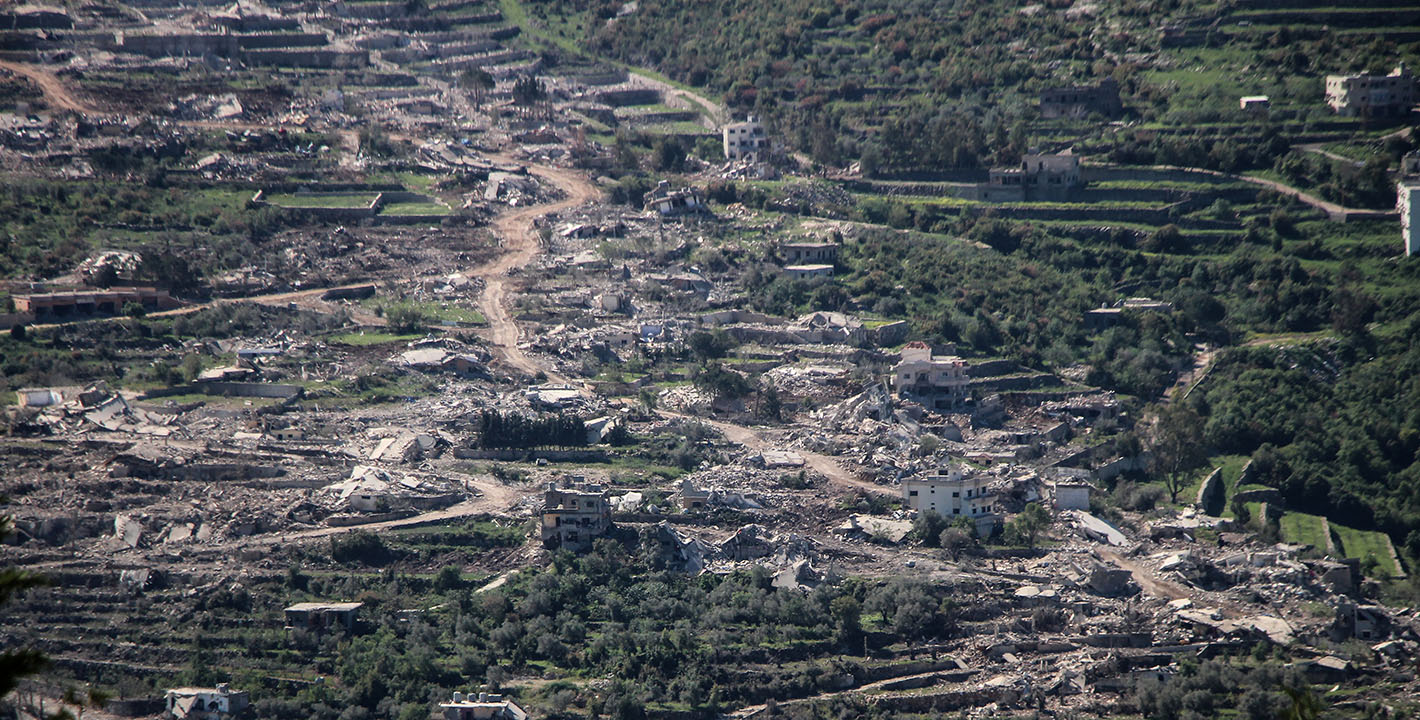
As negotiations with Iran and Lebanon continue, chaos is at the heart of the Netanyahu government’s calculations.
Michael Young
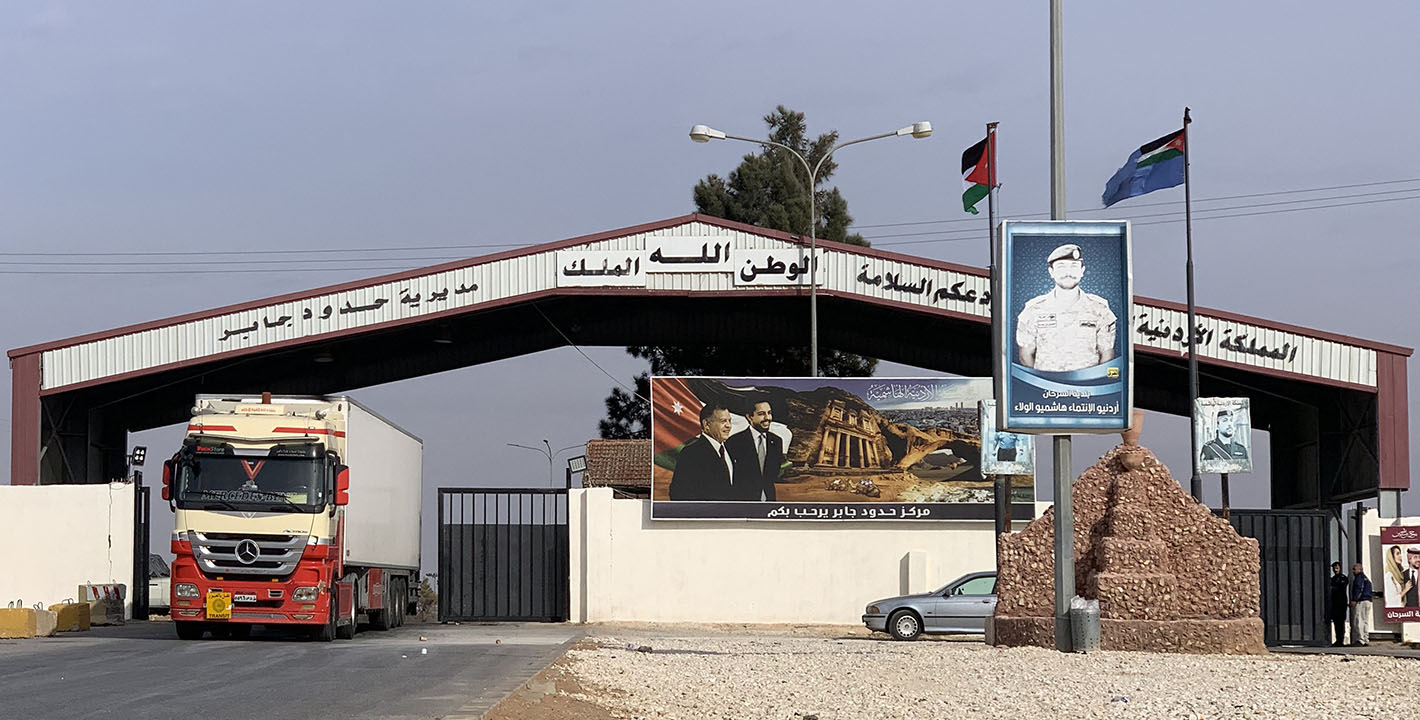
Trade statistics show why Amman has more reason than Damascus to welcome the improvement in bilateral commerce.

Armenak Tokmajyan