• Research
  • Diwan
  • About
  • Experts
Carnegie Middle East logoCarnegie lettermark logo
LebanonIran
{
  "authors": [
    "Sinan Ülgen"
  ],
  "type": "legacyinthemedia",
  "centerAffiliationAll": "",
  "centers": [
    "Carnegie Endowment for International Peace",
    "Carnegie Europe"
  ],
  "collections": [
    "Turkey’s Transformation"
  ],
  "englishNewsletterAll": "",
  "nonEnglishNewsletterAll": "",
  "primaryCenter": "Carnegie Europe",
  "programAffiliation": "",
  "programs": [],
  "projects": [],
  "regions": [
    "Middle East",
    "Europe",
    "Türkiye"
  ],
  "topics": []
}
Source: Getty

In The Media
Carnegie Europe

Turkey and Syria

The overriding concern for Turkish policy makers is to prevent Syria’s implosion and descent into civil war.

Link Copied
By Sinan Ülgen
Published on Feb 7, 2012

Source: BBC World News

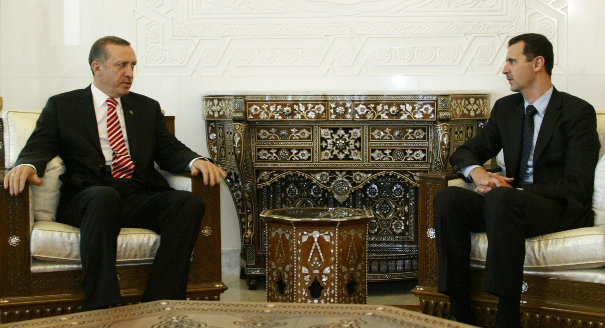
In a recent interview on the BBC’s World News Today, Carnegie’s Sinan Ülgen commented on Turkey’s role in the evolving situation in Syria. Highlighting the dismay in Ankara at the vetoing of a United Nations Security Council resolution on Syria, Ülgen stressed that the overriding concern for Turkish policy makers is to prevent the country’s implosion and descent into civil war. As such, he continued, Ankara has opted for a radical departure from its established foreign policy by promoting the idea of regime change in Damascus and lending overt support to the Assad regime’s main opponents, the Syrian National Council and Free Syrian Army. Turkish Foreign Minister Ahmet Davutoğlu’s February visit to Washington, Ülgen concluded, could provide an opportunity for Turkey and the United States to re-assess and strengthen support to the opposition.

About the Author

Sinan Ülgen

Senior Fellow, Carnegie Europe

Sinan Ülgen is a senior fellow at Carnegie Europe in Brussels, where his research focuses on Turkish foreign policy, transatlantic relations, international trade, economic security, and digital policy.

    Recent Work

  • Research
    Reforming European Security: A Turkish Perspective
      • +5

      Alper Coşkun, Fatih Ceylan, Tacan İldem, …

  • Paper
    From Trade Dependence to Geopolitical Leverage: The EU in an Era of Weaponized Interdependence

      Sinan Ülgen

Sinan Ülgen
Senior Fellow, Carnegie Europe
Sinan Ülgen
Middle EastEuropeTürkiye

Carnegie does not take institutional positions on public policy issues; the views represented herein are those of the author(s) and do not necessarily reflect the views of Carnegie, its staff, or its trustees.

More Work from Malcolm H. Kerr Carnegie Middle East Center

  • Commentary
    Diwan
    The Mecca Agreement Unpacked

    The accord represents a pivotal moment in the region to avert a security vacuum in the Gulf.

      Azeema Cheema, Mohanad Hage Ali

  • Commentary
    Diwan
    Years of Fire

    In an interview, Jason Burke discusses his sweeping account of the “revolutionists” who so shaped the 1970s and early 1980s.

      Michael Young
  • Commentary
    Diwan
    The West’s Climate Colonialism in the Greater Middle East

    There is a disturbing structural parallel between the old global energy economy and the new green transition.

      • Angie Omar

      Angie Omar

  • Commentary
    Diwan
    World Cup 2026: A Middle East and North Africa Primer

    This will be the region’s most representative tournament, amid broad changes in its footballing landscape.

      Issam Kayssi

  • people watching smoke rising at sunrise from rooftops
    Commentary
    Emissary
    Bombing Campaigns Do Not Bring About Democracy. Nor Does Regime Change Without a Plan.

    Just look at Iraq in 1991.

      Marwan Muasher

Get more news and analysis from
Malcolm H. Kerr Carnegie Middle East Center
Carnegie Middle East logo, white
  • Research
  • Diwan
  • About
  • Experts
  • Projects
  • Events
  • Contact
  • Careers
  • Privacy
  • For Media
Get more news and analysis from
Malcolm H. Kerr Carnegie Middle East Center
© 2026 Carnegie Endowment for International Peace. All rights reserved.



