

Other
Michael D. Swaine
{
  "authors": [
    "Michael D. Swaine"
  ],
  "type": "legacyinthemedia",
  "centerAffiliationAll": "dc",
  "centers": [
    "Carnegie Endowment for International Peace"
  ],
  "collections": [],
  "englishNewsletterAll": "asia",
  "nonEnglishNewsletterAll": "",
  "primaryCenter": "Carnegie Endowment for International Peace",
  "programAffiliation": "AP",
  "programs": [
    "Asia"
  ],
  "projects": [],
  "regions": [
    "East Asia",
    "China"
  ],
  "topics": [
    "Political Reform",
    "Security",
    "Military"
  ]
}
Source: Getty
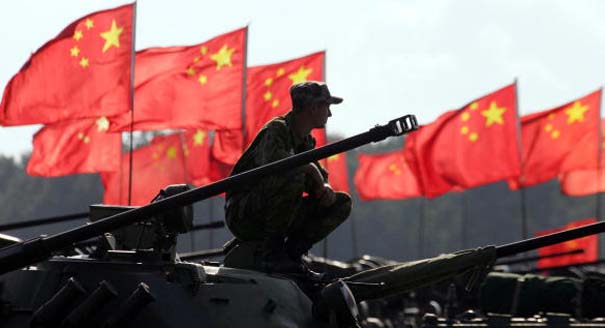
Although the People's Liberation Army exerts relatively little influence over Chinese decision-making, it plays a somewhat larger role during crises, when senior leaders often rely on the military for intelligence and implementation.
Source: China Leadership Monitor

Hence, many of the observations herein are tentative and certainly subject to future clarification and correction. Nonetheless, enough is known about certain aspects of the role of the PLA in foreign political-military crises to draw an overall picture of the decision process, and to identify significant gaps or gray areas in our knowledge.
This essay covers seven areas of relevance to the military‘s role in crisis decision making.
Within each area, the more general features of the crisis decision making structure and process often provide the larger context and background for our assessment of the military‘s role and presence. Some of this analysis is drawn from the analysis of the military‘s role in foreign policy presented in CLM 36. And, as with that essay, this study will also conclude with a summary and overall assessment.

Former Senior Fellow, Asia Program
Swaine was a senior fellow at the Carnegie Endowment for International Peace and one of the most prominent American analysts in Chinese security studies.
Recent Work
Michael D. Swaine
Michael D. Swaine
Carnegie does not take institutional positions on public policy issues; the views represented herein are those of the author(s) and do not necessarily reflect the views of Carnegie, its staff, or its trustees.

The armed forces champion a form of capitalism that is generating revenue, but its reliance on rent faces diminishing returns, leaving the country with massive sunk costs and deferred returns, deepening dependency on external borrowing.

Yezid Sayigh

Just look at Iraq in 1991.

Marwan Muasher

Baku may allow radical nationalists to publicly discuss “reunification” with Azeri Iranians, but the president and key officials prefer not to comment publicly on the protests in Iran.

Bashir Kitachaev
In addressing Hezbollah’s disarmament, the Lebanese state must start by increasing its own leverage.

Michael Young
The country’s political and military establishment is still debating how to interpret the recent war’s outcome.

Nicole Grajewski