

Article
Deborah Gordon, Stephen D. Ziman
{
  "authors": [
    "Deborah Gordon"
  ],
  "type": "questionAnswer",
  "centerAffiliationAll": "dc",
  "centers": [
    "Carnegie Endowment for International Peace",
    "Carnegie Europe"
  ],
  "collections": [],
  "englishNewsletterAll": "ctw",
  "nonEnglishNewsletterAll": "",
  "primaryCenter": "Carnegie Endowment for International Peace",
  "programAffiliation": "SCP",
  "programs": [
    "Sustainability, Climate, and Geopolitics"
  ],
  "projects": [
    "Carnegie Oil Initiative"
  ],
  "regions": [
    "North America",
    "United States"
  ],
  "topics": [
    "Climate Change"
  ]
}
Source: Getty
As supplies of conventional crude oil plateau, new breeds of petroleum resources are increasingly being tapped to fuel global demand.
As supplies of conventional crude oil plateau, new breeds of petroleum resources are increasingly being tapped to fuel global demand. Tom Carver interviews Deborah Gordon about the environmental impact of these unconventional oils and the future oil market.
CARVER: What is meant by unconventional oil?
GORDON: What’s interesting is that the feedstock for oil is becoming everything between coal and gas. So you’re going to have some petroleum feedstocks that go into oil but that look more like coal. And then there are some that are still liquid, and some that actually are going to be more gas-like. That is what is changing: oil is becoming everything between coal and gas.
We’ve lived the twentieth century—the first part of our oil mobility future—with crude oil that mostly came from the Middle East, and prior to that from the United States, and it pretty much looked like one thing. It was a certain range of liquid fuel. These unconventional oils are changing not only from conventional oil, but from each other. So each and every one of them is different from oil as we know it today, and from each other.CARVER: Are these unconventional oils all equally carbon intensive?
No. This is a great way to differentiate them. When you hear the word “heavy,” or when you hear that it is a “heavy oil,” or a “heavy hydrocarbon,” that means more carbon. Heavy oils have more carbon, which is the waste that makes carbon dioxide, and they have less hydrogen, which is fuel. Light oils get the most money on the market. They have more hydrogen fuel and less carbon.
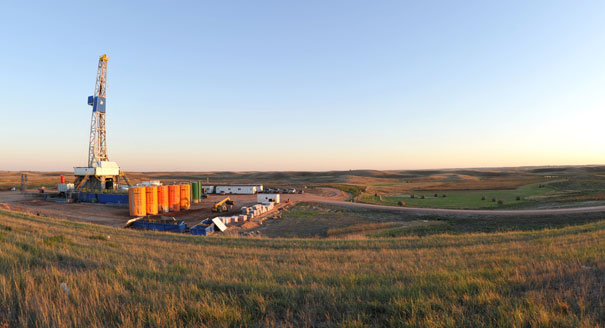
So the heavier the oil—for example the bitumen in Canada is extra heavy—the more carbon. Whereas the shale oils from the United States—from, say North Dakota—are going to be more like conventional oil, which are not light and not heavy; they are a certain medium.
CARVER: How big of a proportion of total oil are unconventional oils going to be?
GORDON: Everything about the change in the nature of oil is going to be moderated through the market place. So when the price of oil is high, we are going to look for alternatives. And that’s what we’ve been going through the last few years where the price of oil was over $100 a barrel up to almost $150 a barrel a few years ago. That started to turn things on, and then everything started to change at that price.
Now the price of oil is in the high $80s, and so things will dampen out. So, in terms of these unconventionals, their future has to do with the price of oil. That will determine it. The higher the price of conventional oil, the more alternatives we’ll get, and the more unconventional oils will turn on. The lower the price, the fewer unconventionals will turn on. But we do know that conventional oil has peaked. Oil in and of its own accord will not go away.
CARVER: How much impact are these oils going to have on the environment?
GORDON: What we really need to learn to do is deal with all different types of oils. We haven’t done that for the last hundred years. We’ve learned to deal with a system of one type of crude oil, and we’ve managed our system. We’ve set up rules around crude oil. They’re not carbon rules, but they’re still rules. We have a lot of environmental regulations around oil.
The thing is that now oil is changing in so many different ways, and we don’t have a gauge or rules for dealing with that. So what we want to do is figure out which of these new oils has the highest carbon and keep those in the ground the longest, and then use the new oils that are more gas-like, or more conventional-like. We might use unconventional means of taking them out of the ground, but they’re more like oil. We should use those. So we need new rules to differentiate what we take out of the ground, and what we keep in the ground.

Former Director and Senior Fellow, Energy and Climate Program
Gordon was director of Carnegie’s Energy and Climate Program, where her research focuses on oil and climate change issues in North America and globally.
Recent Work
Deborah Gordon, Stephen D. Ziman
Deborah Gordon, Smriti Kumble, David Livingston
Carnegie does not take institutional positions on public policy issues; the views represented herein are those of the author(s) and do not necessarily reflect the views of Carnegie, its staff, or its trustees.

As the U.S. stumbles in its war with Iran, we are likely to see an acceleration of its disengagement from the region.

Michael Young

Huawei pushed hard to enter the Egyptian data centers market, until the Americans made a better offer.

Angie Omar

Middle Eastern states should welcome an accelerated U.S. disengagement from their region.
Michael Young

In an interview, former ambassador Charles Freeman assesses the Trump administration’s war against Iran.
Michael Young

By failing to address Palestinian representation, the current process is bound to lead to just another temporary arrangement.

Nathan J. Brown