

Article
Thomas Carothers
{
  "authors": [
    "Thomas Carothers"
  ],
  "type": "legacyinthemedia",
  "centerAffiliationAll": "dc",
  "centers": [
    "Carnegie Endowment for International Peace",
    "Malcolm H. Kerr Carnegie Middle East Center"
  ],
  "collections": [
    "Arab Awakening"
  ],
  "englishNewsletterAll": "democracy",
  "nonEnglishNewsletterAll": "",
  "primaryCenter": "Carnegie Endowment for International Peace",
  "programAffiliation": "DCG",
  "programs": [
    "Democracy, Conflict, and Governance"
  ],
  "projects": [],
  "regions": [
    "Middle East",
    "Syria",
    "Russia",
    "Levant"
  ],
  "topics": [
    "Security",
    "Foreign Policy"
  ]
}
Source: Getty
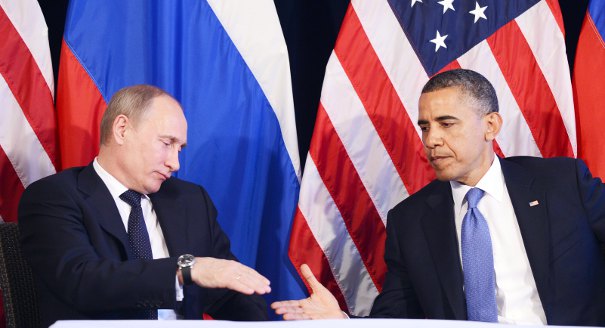
A Russia-brokered deal, which seeks to eliminate Syria’s chemical weapons, provides the Obama administration with breathing room but fails to solve the fundamental issues driving the Syrian conflict.
Source: CBC
Speaking to CBC News, Ahmed Rashid and Carnegie's Thomas Carothers discussed the prospect of a deal to secure and remove Syria's chemical weapons stockpiles. Carothers argued that the deal, brokered by Russia, provided the Obama administration with some breathing room but fails to solve the fundamental issues driving the conflict in Syria. Turning to Russian intentions in negotiating the deal, Carothers and Rashid contended that Russia hopes to solidify the Syrian position. Carothers suggested that the best-case outcome is that with international officials on the ground, the Syrian government will be more wary of perpetrating atrocities, and some potential exists to move toward a ceasefire. The interviewees also discussed Vladimir Putin's New York Times op-ed, which Rashid believed will be favorably interpreted in Russia, and which Carothers viewed, despite some spurious statements, as a potentially successful appeal to Americans for international stability and order.

Harvey V. Fineberg Chair for Democracy Studies; Senior Fellow, Democracy, Conflict, and Governance Program
Thomas Carothers, a senior fellow in the Carnegie Endowment for International Peace’s Democracy, Conflict, and Governance Program, is a leading expert on comparative democratization and international support for democracy.
Recent Work
Thomas Carothers
Thomas Carothers
Carnegie does not take institutional positions on public policy issues; the views represented herein are those of the author(s) and do not necessarily reflect the views of Carnegie, its staff, or its trustees.
The Zaidi government’s objective to collect weapons is constrained by regional conflict, but it can take certain measures at home.
Ali Al-Mawlawi

Huawei pushed hard to enter the Egyptian data centers market, until the Americans made a better offer.

Angie Omar

The accord represents a pivotal moment in the region to avert a security vacuum in the Gulf.


Azeema Cheema, Mohanad Hage Ali

In an interview, Jason Burke discusses his sweeping account of the “revolutionists” who so shaped the 1970s and early 1980s.

Michael Young
In an interview, Sohaib Jawhar analyzes the profound changes in the ties between the neighboring countries.
Michael Young