

In The Media
Lilia Shevtsova
{
  "authors": [
    "Lilia Shevtsova"
  ],
  "type": "legacyinthemedia",
  "centerAffiliationAll": "",
  "centers": [
    "Carnegie Endowment for International Peace",
    "Carnegie Russia Eurasia Center"
  ],
  "collections": [],
  "englishNewsletterAll": "",
  "nonEnglishNewsletterAll": "",
  "primaryCenter": "Carnegie Russia Eurasia Center",
  "programAffiliation": "",
  "programs": [],
  "projects": [],
  "regions": [
    "North America",
    "United States",
    "Russia"
  ],
  "topics": [
    "Foreign Policy"
  ]
}
Source: Getty
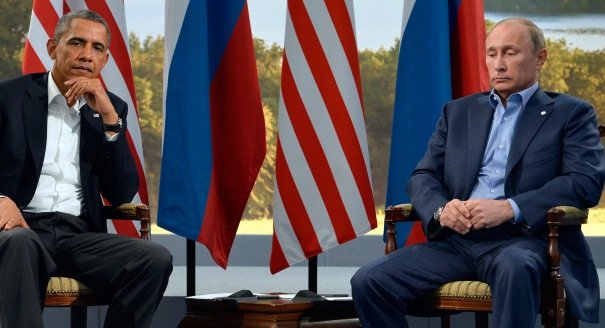
The West and the United States should revisit their policy toward Russia and attempt to find an approach that goes beyond cynical deal-making and false friendship.
Source: American Interest
In the course of history, there have been many problems that could not be solved given the tools available at the time. Such insoluble problems are generally related to a civilizational impasse of some kind. Relations between Russia and the West—and to an even greater degree between Russia and the United States—exemplify one of these kinds of problems. U.S-Russian relations show that neither side has been able to successfully manage the relics of the bipolar system that collapsed along with the Soviet Union. The problem is further complicated by the fact that Russia has not been able to deal with its own post-Soviet problems.
This has been demonstrated by the U.S.-Russian divergence on the Syrian crisis, which evolved into a real spat. The fact that Moscow and Washington have started to look for a common exit solution in Syria through working on the plan to place the Assad’s chemical toxins under international control does not liquidate neither reasons that brought Syrian drama nor the triggers that provoked the recent chill in U.S.- Russian relations. One should not be deceived by the face-saving attempts that both sides have gotten engaged in, for different reasons and with different expectations. Developments concerning the US-Russian relationship over the past few months only confirm how different the Kremlin and White House views of the world are, and how different their approaches to dealing with the challenges the world is facing today. Actually, Vladimir Putin's recent op-ed in the New York Times, "A Plea for Caution from Russia", is a proof of theses differences on the ideological, civilizational level.The Syrian rift has only made the problems in U.S.-Russian relations more apparent, leaving no room for illusions about the model on which the relationship is based. Just as in Soviet times, both mutual nuclear containment (based on the paradigm of mutually assured destruction) and pragmatic cooperation remain on the agenda for U.S-Russian relations. This model rejects the notion of relations based on mutual trust. Whenever one side or another needs to take care of tactical issues, it resorts to cooperation rhetoric and imitation partnership. The United States loses this game more often than not. Imitation is Russia’s strong suit, and the Kremlin is better at it than any of the Western democracies, but the United States also loses because its involvement in the imitation project undermines its moral stand; the Kremlin stopped caring about morals long ago. ...
Read the full text of this article in the American Interest.

Former Senior Associate, Russian Domestic Politics and Political Institutions Program, Moscow Center
Shevtsova chaired the Russian Domestic Politics and Political Institutions Program at the Carnegie Moscow Center, dividing her time between Carnegie’s offices in Washington, DC, and Moscow. She had been with Carnegie since 1995.
Recent Work
Lilia Shevtsova
Lilia Shevtsova
Carnegie does not take institutional positions on public policy issues; the views represented herein are those of the author(s) and do not necessarily reflect the views of Carnegie, its staff, or its trustees.

Middle Eastern states should welcome an accelerated U.S. disengagement from their region.

Michael Young

In an interview, former ambassador Charles Freeman assesses the Trump administration’s war against Iran.
Michael Young

By failing to address Palestinian representation, the current process is bound to lead to just another temporary arrangement.

Nathan J. Brown

Morocco and Algeria, each in its own way, are having to navigate the global economic fallout of the U.S.-Israeli military campaign against Iran.

Yasmine Zarhloule
Any move by the United States to make good on Trump’s suggestion that Washington persuade Damascus to confront Hezbollah militarily would have catastrophic consequences.

Kheder Khaddour