

Q&A
- +1
Sheena Chestnut Greitens, Oriana Skylar Mastro, Yukon Huang, …
{
  "authors": [
    "Yukon Huang"
  ],
  "type": "legacyinthemedia",
  "centerAffiliationAll": "dc",
  "centers": [
    "Carnegie Endowment for International Peace",
    "Carnegie China"
  ],
  "collections": [],
  "englishNewsletterAll": "asia",
  "nonEnglishNewsletterAll": "",
  "primaryCenter": "Carnegie China",
  "programAffiliation": "AP",
  "programs": [
    "Asia"
  ],
  "projects": [],
  "regions": [
    "East Asia",
    "China"
  ],
  "topics": [
    "Economy"
  ]
}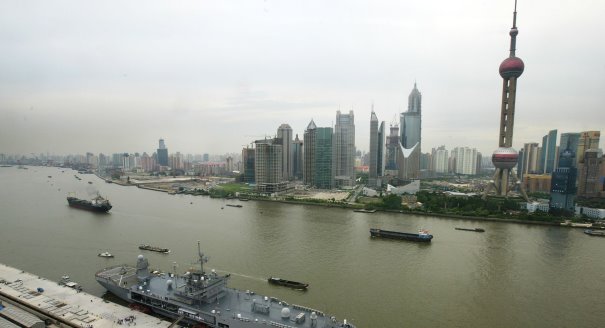
Source: Getty
Much of China’s explosive debt growth has been driven by the development of a private land market over the past decade, making the surge in debt a sign of financial deepening rather than instability.
Source: Financial Times
Some market watchers, shaken by the eye-popping increases in China’s debt indicators, have concluded that a financial crisis is imminent. After all, countries whose debt ratios have risen by similar magnitudes in just a few years have all crashed soon after. China, they say, seen as no different.
Yet when analysts drill into the balance sheets of borrowers and banks, they find little evidence of impending disaster. Government debt ratios are not high by global standards and are backed by valuable assets at the local level. Household debt is a fraction of what it is in the west, and it is supported by savings and rising incomes. The profits and cash positions of most firms for which data are available have not deteriorated significantly while sovereign guarantees cushion the more vulnerable state enterprises. The consensus, therefore, is that China’s debt situation has weakened but is manageable.
Why are the views from detailed sector analysis so different from the red flags signalled by the broader macro debt indicators? The answer lies in the role that land values play in shaping these trends.Take the two most pressing concerns: rising debt levels as a share of gross domestic product and weakening links between credit expansion and GDP growth. The first relates to the surge in the ratio of total credit to GDP by about 50-60 percentage points over the past five years, which is viewed as a strong predictor of an impending crash. Fitch, a rating agency, is among those who see this as the fallout from irresponsible shadow-banking which is being channelled into property development, creating a bubble. The second concern is that the “credit impulse” to growth has diminished, meaning that more and more credit is needed to generate the same amount of GDP, which reduces prospects for future deleveraging.
Linking these two concerns is the price of land including related mark-ups levied by officials and developers. But its significance is not well understood because China’s property market emerged only in the late 1990s, when the decision was made to privatise housing. A functioning resale market only began to form around the middle of the last decade. That is why the large stimulus programme in response to the Asia financial crisis more than a decade ago did not manifest itself in a property price surge, whereas the 2008-9 stimulus did.
Over the past decade, no other factor has been as important as rising property values in influencing growth patterns and perceptions of financial risks. The weakening impact of credit on growth is largely explained by the divergence between fixed asset investment (FAI) and gross fixed capital formation (GFCF). Both are measures of investment. FAI measures investment in physical assets including land while GFCF measures investment in new equipment and structures, excluding the value of land and existing assets. This latter feeds directly into GDP, while only a portion of FAI shows up in GDP accounts.
Until recently, the difference between the two measures did not matter in interpreting economic trends: both were increasing at the same rate and reached about 35 per cent of GDP by 2002-03. Since then, however, they have diverged and GFCF now stands at 45 per cent of GDP while the share of FAI has jumped to 70 per cent.
Overall credit levels have increased in line with the rapid growth in FAI rather than the more modest growth in GFCF. Most of the difference between the ratios is explained by rising asset prices. Thus a large share of the surge in credit is financing property related transactions which explains why the growth impact of credit has declined.
Is the increase in property and underlying land prices sustainable, or is it a bubble? Part of the explanation is unique to China. Land in China is an asset whose market value went largely unrecognised when it was totally controlled by the State. Once a private property market was created, the process of discovering land’s intrinsic value began, but establishing such values takes time in a rapidly changing economy.
The Wharton/NUS/Tsinghua Land Price Index indicates that from 2004-2012, land prices have increased approximately fourfold nationally, with more dramatic increases in major cities such as Beijing balanced by modest rises in secondary cities. Although this may seem excessive, such growth rates are similar to what happened in Russia after it privatised its housing stock. Once the economy stabilised, housing prices in Moscow increased six fold in just six years.
Could investors have overshot the mark in China? Possibly, but the land values should be high given China’s large population, its shortage of plots that are suitable for construction and its rapid economic growth. Nationally, the ratio of incomes to housing prices has improved and is now comparable to the levels found in Australia, Taiwan and the UK. In Beijing and Shanghai prices are similar to or lower than Delhi, Singapore and Hong Kong.
Much of the recent surge in the credit to GDP ratio is actually evidence of financial deepening rather than financial instability as China moves toward more market-based asset values. If so, the higher credit ratios are fully consistent with the less alarming impressions that come from scrutiny of sector specific financial indicators.

Senior Fellow, Asia Program
Huang is a senior fellow in the Carnegie Asia Program where his research focuses on China’s economy and its regional and global impact.
Recent Work


Sheena Chestnut Greitens, Oriana Skylar Mastro, Yukon Huang, …


Yukon Huang, Isaac B. Kardon, Matt Sheehan

The armed forces champion a form of capitalism that is generating revenue, but its reliance on rent faces diminishing returns, leaving the country with massive sunk costs and deferred returns, deepening dependency on external borrowing.

Yezid Sayigh

In an interview, Ishac Diwan looks at the merits and flaws in the draft legislation distributing losses from the financial collapse.

Michael Young
Mustaqbal Misr has expanded its portfolio with remarkable speed, but a lack of transparency remains.
Yezid Sayigh

Arab diaspora business communities in Egypt often mirror the same systemic challenges facing Egyptian businesses.

Nur Arafeh, Yezid Sayigh, Qaboul al-Absi, …

Largely characterized thus far by a single-minded focus on extractivism, Riyadh must commit to greater equitability in its approach to investment and development deals with Sudan, Ethiopia, and Eritrea.

Hesham Alghannam