

Commentary
Middle Eastern states should welcome an accelerated U.S. disengagement from their region.
Michael Young
{
  "authors": [
    "Lina Khatib",
    "Ellen Lust"
  ],
  "type": "other",
  "centerAffiliationAll": "dc",
  "centers": [
    "Carnegie Endowment for International Peace",
    "Malcolm H. Kerr Carnegie Middle East Center"
  ],
  "collections": [
    "Arab Awakening"
  ],
  "englishNewsletterAll": "menaTransitions",
  "nonEnglishNewsletterAll": "",
  "primaryCenter": "Malcolm H. Kerr Carnegie Middle East Center",
  "programAffiliation": "MEP",
  "programs": [
    "Middle East"
  ],
  "projects": [],
  "regions": [
    "Egypt",
    "Gulf",
    "Levant",
    "Maghreb",
    "Middle East",
    "North Africa"
  ],
  "topics": [
    "Political Reform"
  ]
}
Source: Getty
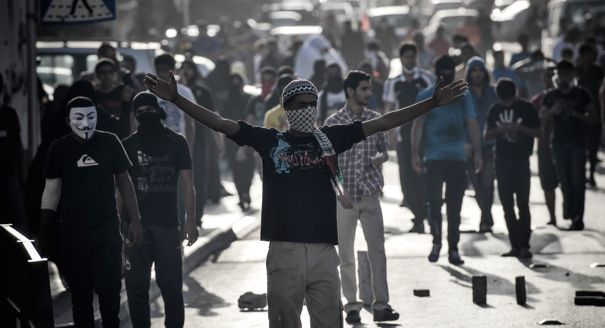
The three years since 2011 have witnessed enormous changes in activism across the Arab world, but the full story of the Arab Spring has yet to be written.
Source: Project on Middle East Democracy
The three years since 2011 have witnessed enormous changes in activism across the Arab world. Heady days of demonstrations have given way to frustration, as activists from Morocco to Yemen struggle to define a way forward in complex, difficult, and often violent contexts. Khatib and Lust’s new book, Taking to the Streets: The Transformation of Arab Activism explores many of the challenges that activists face today. Their analysis aims not only to provide a better understanding of past events, but also to help establish expectations that better prepare activists, policymakers, and observers to anticipate and engage in the future.
From a series of country-specific cases, this policy brief analyzes three trends: the role of institutional structures and regime type in shaping activist behavior, changing contexts and new modes of activism, and the heightened influence of regional actors.This policy brief was originally published by Project on Middle East Democracy.
Former Director, Middle East Center
Khatib was director of the Carnegie Middle East Center in Beirut. Previously, she was the co-founding head of the Program on Arab Reform and Democracy at Stanford University’s Center on Democracy, Development, and the Rule of Law.
Ellen Lust
Carnegie does not take institutional positions on public policy issues; the views represented herein are those of the author(s) and do not necessarily reflect the views of Carnegie, its staff, or its trustees.

Middle Eastern states should welcome an accelerated U.S. disengagement from their region.

Michael Young

The accord represents a pivotal moment in the region to avert a security vacuum in the Gulf.


Azeema Cheema, Mohanad Hage Ali

In an interview, Jason Burke discusses his sweeping account of the “revolutionists” who so shaped the 1970s and early 1980s.
Michael Young

The armed forces champion a form of capitalism that is generating revenue, but its reliance on rent faces diminishing returns, leaving the country with massive sunk costs and deferred returns, deepening dependency on external borrowing.

Yezid Sayigh

Morocco and Algeria, each in its own way, are having to navigate the global economic fallout of the U.S.-Israeli military campaign against Iran.

Yasmine Zarhloule