

Commentary
Sarah Chayes
{
  "authors": [
    "Sarah Chayes"
  ],
  "type": "legacyinthemedia",
  "centerAffiliationAll": "dc",
  "centers": [
    "Carnegie Endowment for International Peace",
    "Malcolm H. Kerr Carnegie Middle East Center"
  ],
  "collections": [
    "Anti-Corruption"
  ],
  "englishNewsletterAll": "democracy",
  "nonEnglishNewsletterAll": "",
  "primaryCenter": "Carnegie Endowment for International Peace",
  "programAffiliation": "DCG",
  "programs": [
    "Democracy, Conflict, and Governance"
  ],
  "projects": [],
  "regions": [
    "Middle East",
    "Syria",
    "Southern, Eastern, and Western Africa",
    "Eastern Europe",
    "Ukraine",
    "Levant"
  ],
  "topics": [
    "Political Reform",
    "Democracy"
  ]
}
Source: Getty
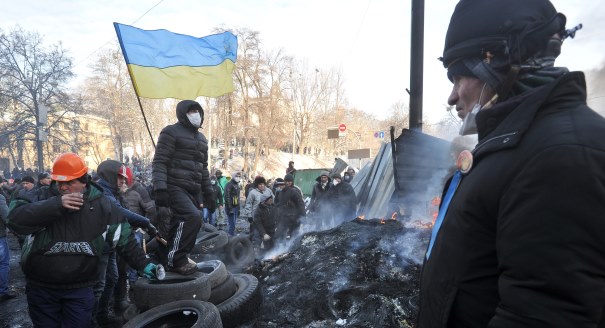
Government corruption is an important factor in the rise of violent extremism. Syria, Ukraine, and Nigeria are important contemporary examples.
Source: WBEZ’s Worldview
Speaking on WBEZ’s Worldview, Carnegie’s Sarah Chayes discussed the link between corruption and national security. She explained that “corruption can be a very significant driver of a variety of different international security threats. And then when something major breaks out, often the situation spins out of control.”
Former Senior Fellow, Democracy, Conflict, and Governance Program
Sarah Chayes is internationally recognized for her innovative thinking on corruption and its implications. Her work explores how severe corruption can help prompt such crises as terrorism, revolutions and their violent aftermaths, and environmental degradation.
Recent Work
Sarah Chayes
Carnegie does not take institutional positions on public policy issues; the views represented herein are those of the author(s) and do not necessarily reflect the views of Carnegie, its staff, or its trustees.

Huawei pushed hard to enter the Egyptian data centers market, until the Americans made a better offer.

Angie Omar

The accord represents a pivotal moment in the region to avert a security vacuum in the Gulf.


Azeema Cheema, Mohanad Hage Ali

In an interview, Jason Burke discusses his sweeping account of the “revolutionists” who so shaped the 1970s and early 1980s.

Michael Young
In an interview, Sohaib Jawhar analyzes the profound changes in the ties between the neighboring countries.
Michael Young
There is a disturbing structural parallel between the old global energy economy and the new green transition.
Angie Omar