• Research
  • Diwan
  • About
  • Experts
Carnegie Middle East logoCarnegie lettermark logo
LebanonIran
{
  "authors": [
    "David Livingston",
    "World Energy Council’s Future Energy Leaders"
  ],
  "type": "other",
  "centerAffiliationAll": "dc",
  "centers": [
    "Carnegie Endowment for International Peace"
  ],
  "collections": [],
  "englishNewsletterAll": "ctw",
  "nonEnglishNewsletterAll": "",
  "primaryCenter": "Carnegie Endowment for International Peace",
  "programAffiliation": "SCP",
  "programs": [
    "Sustainability, Climate, and Geopolitics"
  ],
  "projects": [],
  "regions": [
    "North America",
    "South America"
  ],
  "topics": [
    "Climate Change"
  ]
}
Source: Getty

Other

Alternative Transport Fuels: Consumer Attitudes in Latin America and the Caribbean

Consumers in Latin America and the Caribbean are sending a strong signal to decisionmakers that a transition to an alternative transport fuel future is not only warranted, but desirable.

Link Copied
By David Livingston and World Energy Council’s Future Energy Leaders
Published on Oct 21, 2014

Source: World Energy Council

Demand-side solutions are increasingly recognised as fundamental to securing a sustainable energy future. However, a lack of empirical research around consumer perspectives presents a challenge to identifying which demand-side solutions could have most traction and how best they should be implemented. To begin addressing this issue, the World Energy Council’s community of Future Energy Leaders (FELs) conducted a global survey of more than 2,500 respondents providing insight into consumer attitudes and behaviours associated with alternative transport fuels.

With particular relevance for policymakers, vehicle manufacturers, fuel providers and urban planners, these findings demonstrate the level of appetite – and need – for policies that promote the uptake of alternative transport fuels in different countries and regions.

This report provides a deep-dive analysis of the survey results from the Latin American and the Caribbean (LAC) region. The analysis supports the following key findings:

  • Consumers in the LAC region do care about the type of transport fuel they use. They say they are willing to pay more, on a monthly basis, for alternative transport fuels that have lower greenhouse gas emissions than conventional transport fuels.
     
    • 73% of respondents say they are willing to pay more for alternative transport fuels with lifetime greenhouse gas benefits over fossil fuels.
  • Consumers in the region are more familiar with the energy–water–food nexus than consumers in other parts of the world. However, there is demand for more information on the quantifiable impacts of decisions associated with this dimension.
     
    • 63% of respondents are familiar with the energy–water–food nexus (compared to 44% of global respondents).
  • Consumers in the region do not think that the transition to alternative transport fuels is happening fast enough. A lack of government support is cited as the main reason for this lethargy.
     
    • 69% of respondents do not think their country is transitioning to an alternative transport fuel future at an appropriate rate.
  • A plurality of consumers in the LAC region predicts that natural gas will be the most significant contributor to the alternative transport fuel mix in the next 5–10 years.
     
    • 38% of respondents in the LAC region think that natural gas will be the most significant contributor to the transport fuel mix in the next 5–10 years. This significantly contrasts with consumer views in Asia, Europe and North America which identify electric vehicles as the most important contributor.
  • Consumers in the region are generally aware of alternative transport fuels, but they lack the practical understanding required to enable them to modify their behaviours and decisions.
     
    • 81% of respondents in the region are familiar with alternative transport fuels.
       
    • 53% of respondents do not know whether their personal vehicles can utilise alternative transport fuels.
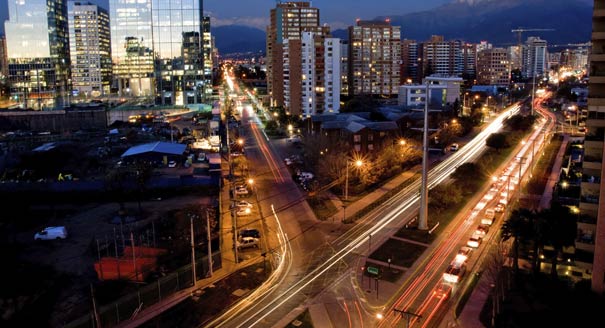
  • Consumers' main reason for travel occurs over short distances (under 50km). In urban contexts, the provision of better, more accessible, public transportation that utilises alternative fuels, could help to reduce demand for personal travel as well as the level of greenhouse gas emissions.
     
    • 78% of respondents travel under 50km for their main reason of transport.

This report shows that awareness of, and willingness to pay for, alternative transport fuels is relatively high in the LAC region. Consumers are sending a strong signal to decision makers that a transition to an alternative transport fuel future is not only warranted, but desirable.

Whilst awareness and willingness to pay is relatively high, potential solutions are less well defined. The findings of this report suggest a range of potential actions that could improve the uptake of alternative transport fuels. Solutions will need to be regionally and nationally tailored and should be undertaken by a range of stakeholders including policymakers, urban planners, vehicle manufacturers and transport fuel providers.

The FEL Taskforce believe that the recommendations identified in this report (a selection is noted below) will serve as a catalyst to speed-up the necessary transition to an alternative transport fuel future - and thus contribute to energy trilemma goals.

  • Decision makers within public and private institutions, should note the high demand for products, investments and policies that encourage and enable greater uptake of alternative transport fuels
     
  • There is a clear role for decision makers to work together to inform and communicate to the public, the quantifiable impacts of policies or projects that have an energy-water-food nexus dimension
     
  • Governments should look to remove distortions in the market that discourage the uptake of alternative transport fuels; research and transparency around the true fiscal cost of fossil fuel subsidies is required
     
  • Urban planners and governments are challenged to continue to prioritise urban transportation infrastructure that takes cars off the road and reduces fuel use

Read the full report on the World Energy Council website.

About the Authors

David Livingston

Former Associate Fellow, Energy and Climate Program

Livingston was an associate fellow in Carnegie’s Energy and Climate Program, where his research focuses on emerging markets, technologies, and risks.

World Energy Council’s Future Energy Leaders

Authors

David Livingston
Former Associate Fellow, Energy and Climate Program
World Energy Council’s Future Energy Leaders
Climate ChangeNorth AmericaSouth America

Carnegie does not take institutional positions on public policy issues; the views represented herein are those of the author(s) and do not necessarily reflect the views of Carnegie, its staff, or its trustees.
More Work from Malcolm H. Kerr Carnegie Middle East Center

  • Commentary
    Diwan
    Women, Water, and Adaptation in Ait Khabbash

    The burden of environmental degradation is felt not only through physical labor but also emotional and social loss.

      Yasmine Zarhloule, Ella Williams

  • Article
    Raining Stones: Deir al-Kahf’s Bedouins and the Impact of Climate

    For settled descendants of nomadic or seminomadic communities on Jordan’s periphery, the future looks uncertain as government employment is declining, natural resources are dwindling, temperatures are rising, and traditional cross-border ties are restricted.

      Armenak Tokmajyan, Laith Qerbaa

  • Article
    Between Marginalization and Climate Change: The Resilience of Morocco’s Ait Khabbash

    For the traditionally nomadic Amazigh pastoralists in the Draa-Tafilalet region, environmental change has exacerbated long-standing inequities, forcing the community to adapt, which has laid bare the blind spots of state-centered climate policy frameworks.

      Yasmine Zarhloule, Ella Williams

  • Commentary
    Diwan
    Who Dominates the Global Oil Industry?

    In an interview, Adam Hanieh looks at heavyweights past and present.

      Yezid Sayigh

  • Several Iraqi men in traditional attire sit cross legged on a rug.
    Article
    In Iraq and Yemen, Climate Activism Requires Both Defiance and Adaptation

    In fragmented political contexts, climate activism is a way to contest both ecological harm and the structures of violence and neglect that allow it to persist.

      Issam Kayssi, Mohanad Hage Ali

Get more news and analysis from
Malcolm H. Kerr Carnegie Middle East Center
Carnegie Middle East logo, white
  • Research
  • Diwan
  • About
  • Experts
  • Projects
  • Events
  • Contact
  • Careers
  • Privacy
  • For Media
Get more news and analysis from
Malcolm H. Kerr Carnegie Middle East Center
© 2026 Carnegie Endowment for International Peace. All rights reserved.