

Paper
Ariel (Eli) Levite, Toby Dalton
{
  "authors": [
    "Ariel (Eli) Levite"
  ],
  "type": "other",
  "centerAffiliationAll": "dc",
  "centers": [
    "Carnegie Endowment for International Peace"
  ],
  "collections": [
    "U.S. Nuclear Policy"
  ],
  "englishNewsletterAll": "ctw",
  "nonEnglishNewsletterAll": "",
  "primaryCenter": "Carnegie Endowment for International Peace",
  "programAffiliation": "NPP",
  "programs": [
    "Nuclear Policy"
  ],
  "projects": [],
  "regions": [
    "North America",
    "United States"
  ],
  "topics": [
    "Nuclear Policy",
    "Nuclear Energy"
  ]
}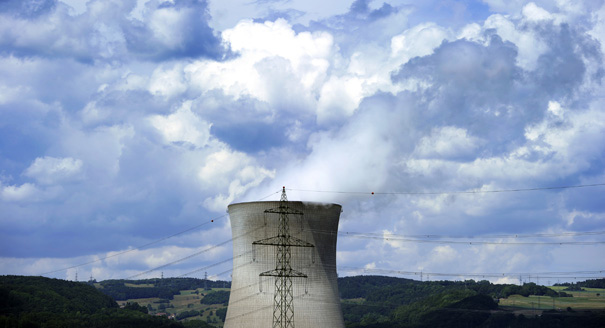
Source: Getty
The realization that nuclear technology is, at its core, dual-use in nature occurred early on in the nuclear age, and it has been fundamental to every effort to harness the positive potential widely believed to be inherent in nuclear technology, while minimizing its risks.
Source: The Limits of Secure Nuclear Tolerance, Moscow, National Institute of Corporate Reform
The realization that nuclear technology is, at its core, dual-use in nature occurred early on in the nuclear age, and it has been fundamental to every effort to harness the positive potential widely (though by no means universally) believed to be inherent in nuclear technology, while minimizing its risks.
Every plan unveiled since the mid-1940s to deal with the promotion of nuclear energy has in one way or another tried to address this complexity. Yet overtime this complex reality has only become more sobering.While it has long been recognized that multiple paths may lead to nuclear weapons acquisition, it is widely believed that the diversity of these paths has grown considerably over the years, largely as a result of the accumulation and dissemination of the nuclear knowledge, experience, and capabilities necessary to acquire nuclear weapons, as well as the diminution of the costs associated with such processes.
Alternative explanations for engaging in many activities indispensable for realizing nuclear weapons aspirations abound, be they in the conventional military domain, peaceful nuclear or scientific pursuits, or even nuclear military realms other than weapons.

Senior Fellow, Nuclear Policy Program, Technology and International Affairs Program
Levite was the principal deputy director general for policy at the Israeli Atomic Energy Commission from 2002 to 2007.
Recent Work

Ariel (Eli) Levite, Toby Dalton
Ariel (Eli) Levite, Toby Dalton
Carnegie does not take institutional positions on public policy issues; the views represented herein are those of the author(s) and do not necessarily reflect the views of Carnegie, its staff, or its trustees.

In an interview, Rozina Ali discusses her new book on the rise and manifestations of Islamophobia in the United States.

Michael Young

In an interview, Ian Lustick and Eli Clifton discuss their new book on why a prominent ally has so much influence in America.
Michael Young

As the U.S. stumbles in its war with Iran, we are likely to see an acceleration of its disengagement from the region.
Michael Young

Middle Eastern states should welcome an accelerated U.S. disengagement from their region.
Michael Young

In an interview, former ambassador Charles Freeman assesses the Trump administration’s war against Iran.
Michael Young