

Commentary
Judy Dempsey
{
  "authors": [
    "Judy Dempsey"
  ],
  "type": "legacyinthemedia",
  "centerAffiliationAll": "dc",
  "centers": [
    "Carnegie Endowment for International Peace",
    "Carnegie Europe"
  ],
  "collections": [],
  "englishNewsletterAll": "ctw",
  "nonEnglishNewsletterAll": "",
  "primaryCenter": "Carnegie Europe",
  "programAffiliation": "EP",
  "programs": [
    "Europe"
  ],
  "projects": [],
  "regions": [
    "Europe",
    "Western Europe",
    "Germany",
    "Iran"
  ],
  "topics": [
    "EU",
    "Security"
  ]
}
Source: Getty
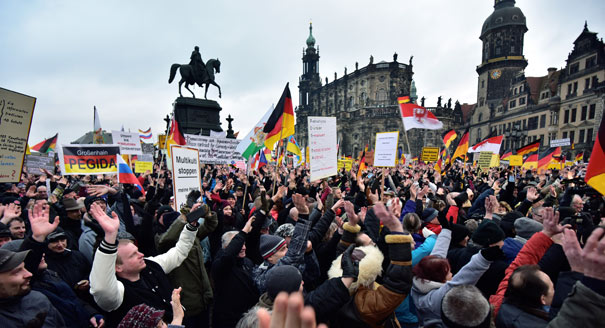
The Pegida movement has awoken Germany, but Islamophobia is a Europe-wide phenomenon whose roots lie in the alienation of citizens from politics.
Source: Deutsche Welle
Speaking to Deutsche Welle’s Quadriga, Judy Dempsey argued that the Pegida movement of “Patriotic Europeans against the Islamization of the West” has awoken German society.“The public space is changing in Germany,” warned Judy Dempsey. “Germany is not unique. . . . There is the fear of the other, the fear of the foreigner. . . . This is a European phenomenon.” In fact, Germany is only the latest country in Europe to tap into the surrounding atmosphere of Islamophobia.
As for the underlying causes of this surge, Dempsey explained that one of the problems is that “with the bureaucratization of politics and globalization, the feeling of identity between politicians and citizens is widening.” The mainstream political parties “haven’t adapted to the postmodernization of Europe, to globalization, and to [the need to] adapt policies and politics to society and its citizens.” The question of alienation between the state, political parties, and society is one of Europe’s biggest problems today.

Nonresident Senior Fellow, Carnegie Europe
Judy Dempsey is a nonresident senior fellow at Carnegie Europe
Recent Work
Judy Dempsey
Judy Dempsey

As the U.S. stumbles in its war with Iran, we are likely to see an acceleration of its disengagement from the region.

Michael Young

Middle Eastern states should welcome an accelerated U.S. disengagement from their region.
Michael Young

In an interview, former ambassador Charles Freeman assesses the Trump administration’s war against Iran.
Michael Young

Morocco and Algeria, each in its own way, are having to navigate the global economic fallout of the U.S.-Israeli military campaign against Iran.

Yasmine Zarhloule
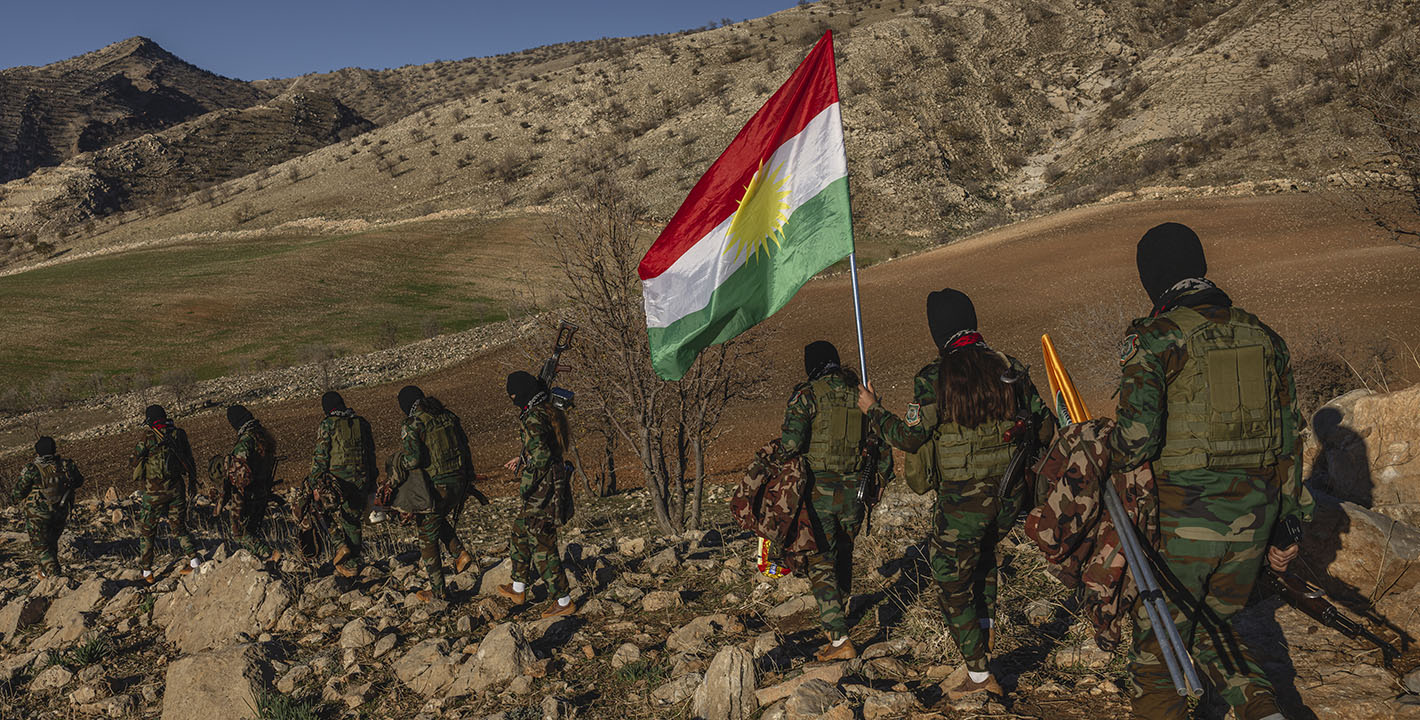
Following its deal with the United States, Iran may act against Iraq-based dissidents.
Wladimir van Wilgenburg