

Commentary
Maha Yahya
{
  "authors": [
    "Maha Yahya"
  ],
  "type": "other",
  "centerAffiliationAll": "dc",
  "centers": [
    "Carnegie Endowment for International Peace",
    "Malcolm H. Kerr Carnegie Middle East Center"
  ],
  "collections": [
    "Arab Awakening"
  ],
  "englishNewsletterAll": "menaTransitions",
  "nonEnglishNewsletterAll": "",
  "primaryCenter": "Malcolm H. Kerr Carnegie Middle East Center",
  "programAffiliation": "MEP",
  "programs": [
    "Middle East"
  ],
  "projects": [],
  "regions": [
    "Egypt",
    "Gulf",
    "Levant",
    "Maghreb",
    "Middle East",
    "North Africa"
  ],
  "topics": [
    "Political Reform",
    "Economy"
  ]
}
Source: Getty
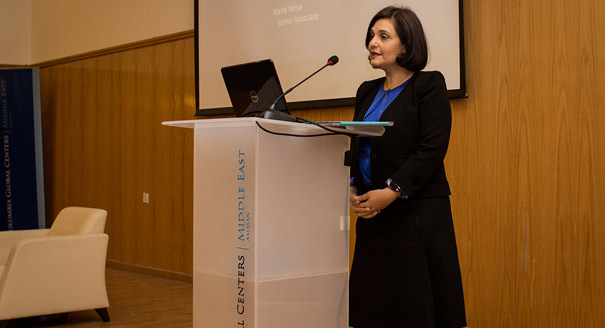
Four years after the start of the Arab revolutions, fundamental issues like polarization identities and economic inequities continue to destabilize the region.
Source: Columbia Global Centers | Middle East
Four years after the start of the Arab revolutions, “very little seems to have changed for the better. If anything, the world around us has exploded in Syria, Libya, Iraq, and Yemen,” said Professor Safwan Masri, EVP for Global Centers and Global Development at Columbia University, introducing Carnegie’s Maha Yahya.
Speaking at Columbia Global Centers | Middle East, Yahya discussed the overlapping and interlocking conditions that led up to the Arab uprisings and what has happened since, especially in light of issues like polarization identities and economic inequities. Yahya also shed light on the status of politics in the region and citizens’ demands.
This conference was recorded and hosted by Columbia Global Centers | Middle East.

Director, Malcolm H. Kerr Carnegie Middle East Center
Maha Yahya is director of the Malcolm H. Kerr Carnegie Middle East Center, where her research focuses on citizenship, pluralism, and social justice in the aftermath of the Arab uprisings.
Recent Work
Maha Yahya
Maha Yahya
Carnegie does not take institutional positions on public policy issues; the views represented herein are those of the author(s) and do not necessarily reflect the views of Carnegie, its staff, or its trustees.

The armed forces champion a form of capitalism that is generating revenue, but its reliance on rent faces diminishing returns, leaving the country with massive sunk costs and deferred returns, deepening dependency on external borrowing.

Yezid Sayigh

Morocco and Algeria, each in its own way, are having to navigate the global economic fallout of the U.S.-Israeli military campaign against Iran.

Yasmine Zarhloule
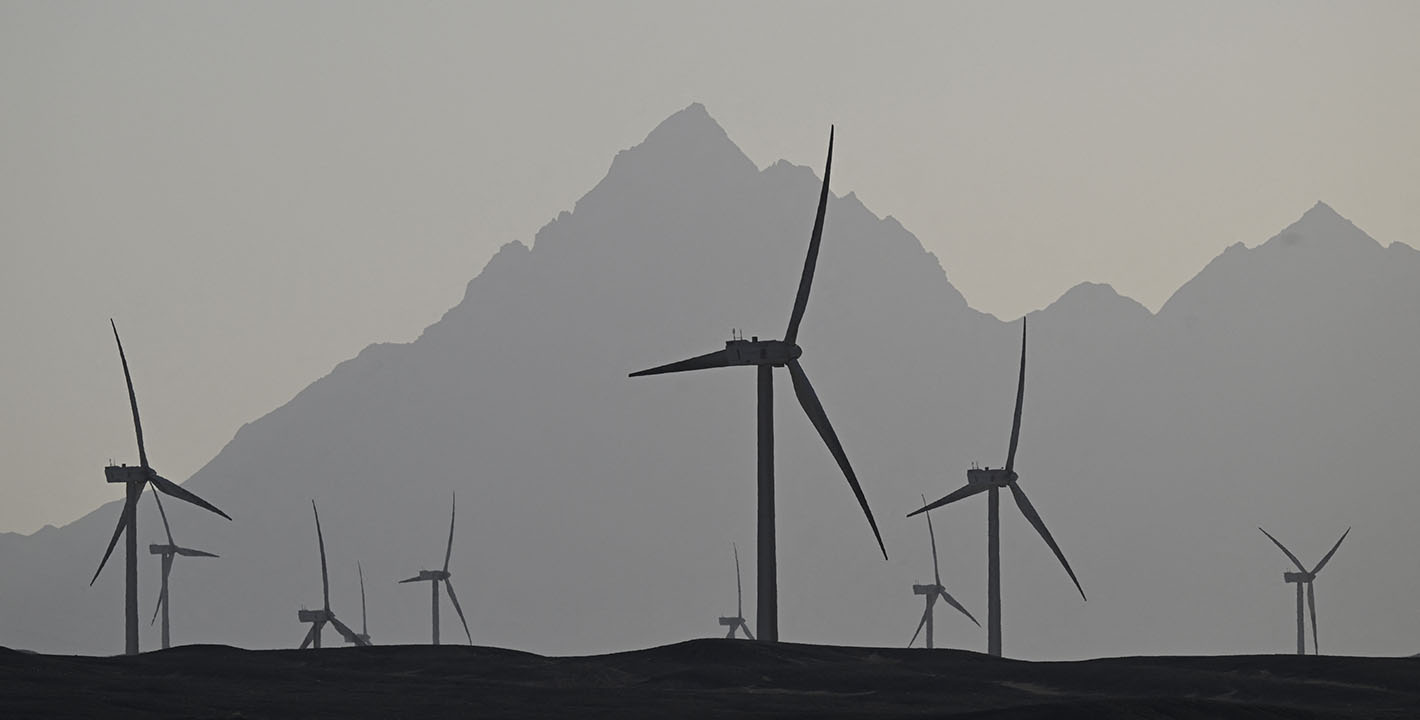
There is a disturbing structural parallel between the old global energy economy and the new green transition.

Angie Omar
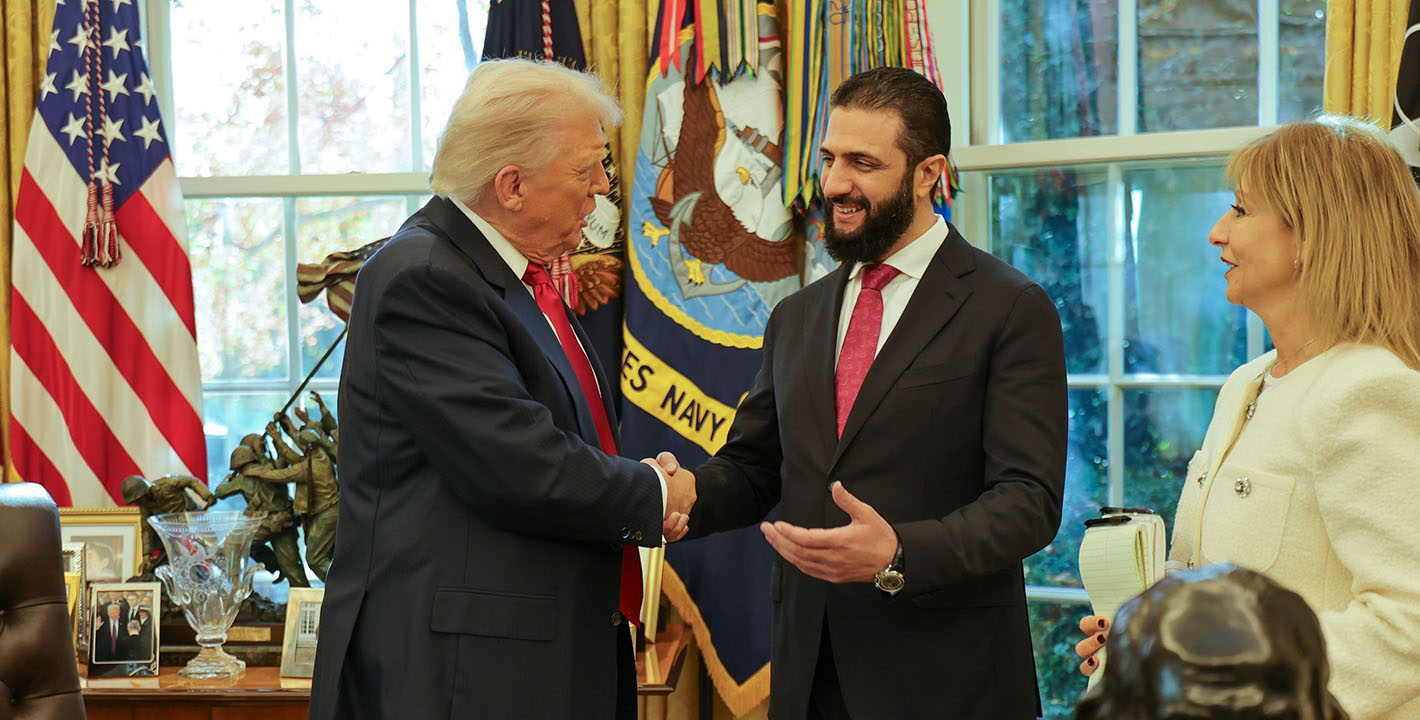
Any move by the United States to make good on Trump’s suggestion that Washington persuade Damascus to confront Hezbollah militarily would have catastrophic consequences.
Kheder Khaddour
As talks begin between Washington and Tehran, Beirut has an opening to advance a regional plan for the party’s disarmament.

Michael Young