

Commentary
Michael Pettis
{
  "authors": [
    "Michael Pettis"
  ],
  "type": "legacyinthemedia",
  "centerAffiliationAll": "dc",
  "centers": [
    "Carnegie Endowment for International Peace",
    "Carnegie China"
  ],
  "collections": [],
  "englishNewsletterAll": "asia",
  "nonEnglishNewsletterAll": "",
  "primaryCenter": "Carnegie China",
  "programAffiliation": "AP",
  "programs": [
    "Asia"
  ],
  "projects": [],
  "regions": [
    "East Asia",
    "China"
  ],
  "topics": [
    "Economy"
  ]
}
Source: Getty
China has so far managed to escape an economic crisis because its government still has credibility.
Source: Wall Street Journal
Last week’s stock-market panic in China was never likely to trigger a financial crisis at home. The reason is not, as many argue, because the losses were narrowly dispersed and small relative to the size of the economy. Greece, after all, constitutes less than 2% of Europe’s gross domestic product, yet it clearly matters to the health and stability of the European financial system. And the small amount of the subprime mortgages relative to the U.S. economy wasn’t enough to prevent them from triggering a crisis back in 2008.
China has so far managed to escape a financial crisis because its relatively closed capital account, its high level of reserves, and above all its reliance on domestic financing means that any mismatch between assets and liabilities can be resolved within the system by the regulators. And because Beijing’s credibility—the perception that it can do what it says it will—is very high, regulators are able to manage this mismatch by using implicit or explicit guarantees to bridge financing gaps.
In many ways, China is primed for an economic crisis. As the economy performs below expectations quarter after quarter while the debt burden surges, slow growth and rising debt are being tied together in a mutually self-reinforcing process—almost the definition of an unstable balance sheet. There is so much pressure within the financial system right now that twice in the past two years attempts at deregulation have been followed by market disruptions.We shouldn’t have expected otherwise. History suggests that developing countries that have experienced growth “miracles” tend to develop risky financial systems and unstable national balance sheets. The longer the miracle, the greater the tendency. That’s because in periods of rapid growth, riskier institutions do well. Soon balance sheets across the economy incorporate similar types of risk.
Long-term infrastructure projects might be funded with short-term debt, or domestic assets funded with external debt. In both cases, rapid growth reduces debt costs in real terms, sharply boosting the borrower’s profitability while reinforcing the economy’s already-rapid growth. The financing gap—the gap between cash flows generated by a project over the long term and the debt-servicing costs of short-term or foreign-currency debt—can easily be refinanced by eager bankers, who have themselves learned that optimism is rewarded.
To take another example, because China’s economic growth caused metal prices to surge, the industry soon learned that companies that allowed debt to grow as they stockpiled inventory profited enormously. The more aggressive these companies were with inventory, the more likely they were to perform well and displace the more prudent among their competitors.
Over time, this means the entire financial system is built around the same set of optimistic expectations. But when growth slows, balance sheets that did well during expansionary phases will now systematically fall short of expectations, and their disappointing performance will further reinforce the economic deceleration. This is when it suddenly becomes costlier to refinance the gap, and the practice of mismatching assets and liabilities causes debt, not profits, to rise.
The more successful the growth miracle, the more likely a country will be to build balance sheets that reinforce growth, making it more vulnerable to crisis and external shocks. This is exactly what we’ve seen in China. After more than three decades of extraordinary expansion, President Xi Jinping’s administration has inherited an economy with surging debt and a highly pro-cyclical financial system.
China’s GDP growth will almost certainly continue to decline by more than consensus expectations, and debt will continue to rise faster. But so long as Beijing’s credibility remains very high, China will nonetheless be protected from the risk of financial crisis. This credibility allows China to manage a financial system designed for credit expansion that has left the country with what would otherwise be an extraordinarily vulnerable balance sheet.
Policy makers must ensure that protecting Beijing’s credibility is a priority. Many countries have taken their credibility for granted during the growth phase, only to see it erode and even collapse during the subsequent adjustment as regulators, underestimating how difficult it would be, overextended themselves in the early stages of adjustment.
While last week’s stock-market panic is probably over and the market will revive, Beijing seems to have followed the historical pattern. It risked its credibility unnecessarily during the rally by appearing to guarantee investor profits, and afterwards it irrevocably committed itself to stabilizing the market.
But the more that Beijing is seen to guarantee, the less pressure there is among Chinese institutions to pay the cost of repairing their balance sheets, raising the chance that Beijing will take on excessive risk. This makes China itself increasingly vulnerable to destabilizing shocks.
The next two to three years are vitally important. In the best case scenario, Beijing will continue to rebalance its economy and to restructure the country’s balance sheet and financial system. Yet this cannot happen except under much slower growth. Because the debt will burden will continue to rise for at least another four or five years, Beijing will be tested more than ever. To defend itself from crisis, it must become increasingly stingy with its protection.
This article was originally published in the Wall Street Journal.

Nonresident Senior Fellow, Carnegie China
Michael Pettis is a nonresident senior fellow at the Carnegie Endowment for International Peace. An expert on China’s economy, Pettis is professor of finance at Peking University’s Guanghua School of Management, where he specializes in Chinese financial markets.
Recent Work
Michael Pettis
Michael Pettis

Huawei pushed hard to enter the Egyptian data centers market, until the Americans made a better offer.

Angie Omar

The armed forces champion a form of capitalism that is generating revenue, but its reliance on rent faces diminishing returns, leaving the country with massive sunk costs and deferred returns, deepening dependency on external borrowing.

Yezid Sayigh

In an interview, Ishac Diwan looks at the merits and flaws in the draft legislation distributing losses from the financial collapse.

Michael Young
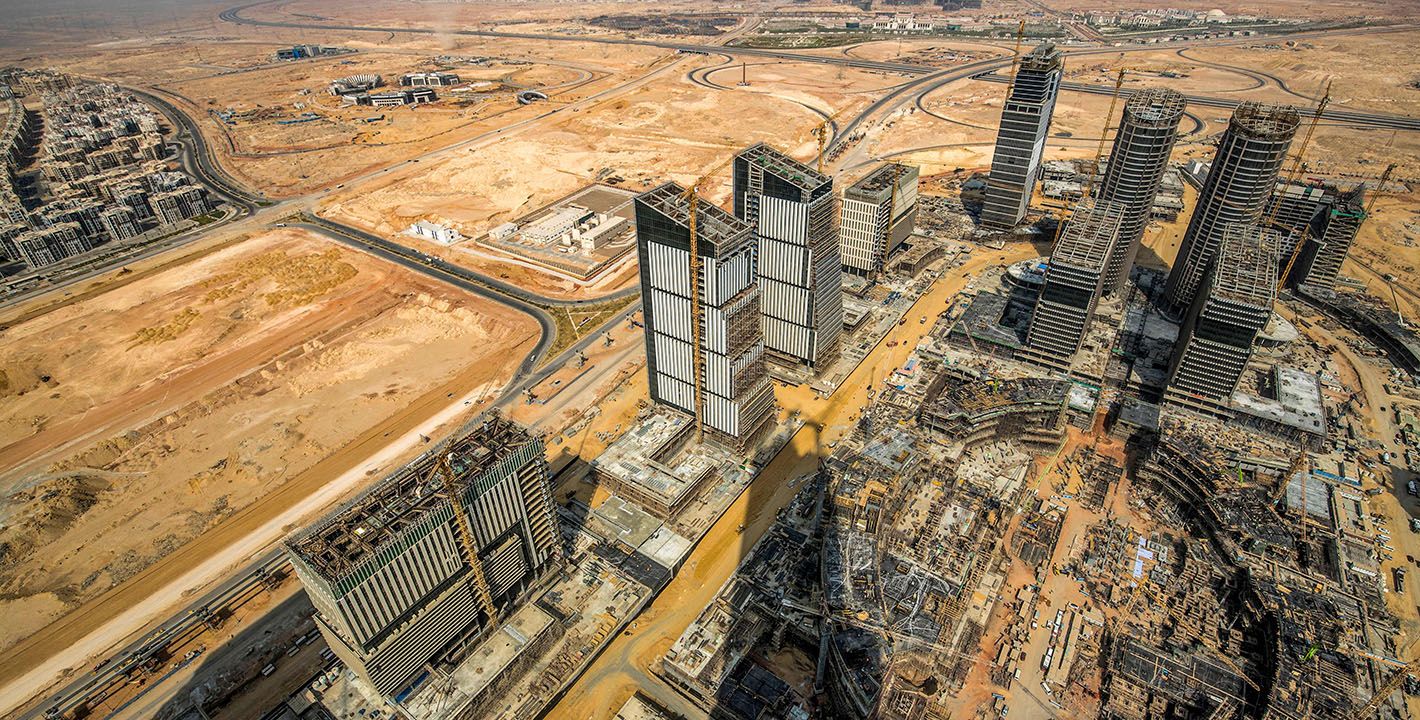
Mustaqbal Misr has expanded its portfolio with remarkable speed, but a lack of transparency remains.
Yezid Sayigh

Arab diaspora business communities in Egypt often mirror the same systemic challenges facing Egyptian businesses.

Nur Arafeh, Yezid Sayigh, Qaboul al-Absi, …