

Research
- +6
Yasmine Farouk, Nathan J. Brown, Maysaa Shuja Al-Deen, …
{
  "authors": [
    "Anouar Boukhars"
  ],
  "type": "other",
  "centerAffiliationAll": "dc",
  "centers": [
    "Carnegie Endowment for International Peace"
  ],
  "collections": [],
  "englishNewsletterAll": "menaTransitions",
  "nonEnglishNewsletterAll": "",
  "primaryCenter": "Carnegie Endowment for International Peace",
  "programAffiliation": "MEP",
  "programs": [
    "Middle East"
  ],
  "projects": [],
  "regions": [
    "Middle East",
    "North Africa",
    "Mauritania"
  ],
  "topics": [
    "Political Reform",
    "Democracy",
    "Security",
    "Military"
  ]
}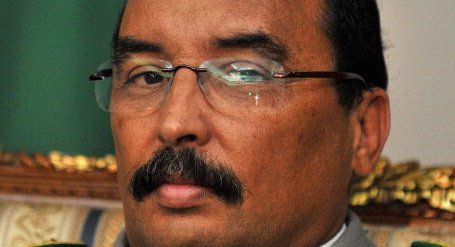
Source: Getty
In a context of mounting internal stresses and external shocks, Mauritania’s delicate stability may become increasingly difficult to sustain.
Source: World Politics Review
Against a broader backdrop of regional turmoil, Mauritania has remained surprisingly, if delicately stable. This feat is especially noteworthy given that just a few years ago the country was considered at significant risk of destabilization. Its politics and society have been perennially buffeted by the storms of racial tensions, ethnic cleavages and political volatility. Since its independence from France in 1960, Mauritania has wavered precariously between this state of fragile stability and state collapse. Its record of successive coups and attempted coups between 1978 and 2008; major ethnic clashes in 1989 and 1990; and terrorist attacks between 2005 and 2011 have put the country at a constant boiling point. Yet Mauritania never collapsed into civil war or violent disintegration.
This uneasy stability, however, will be difficult to maintain in a context of mounting internal stresses and external shocks. There is little doubt that the ascent of Mohammad Ould Abdel Aziz to the presidency in 2009 following a coup in 2008 brought a much-needed reprieve from the mix of violent extremist threats and economic paralysis the country had experienced. The respite, however, could be fleeting, given Mauritania’s increasingly precarious political landscape, exacerbated by rising dissent, risks of ethnic confrontations, plummeting state revenues and the volatile geopolitics of the Sahel and Sahara regions. The incremental effects of these threats are difficult to predict. Depending on the combination of risks, Mauritania could continue limping along in its current tense fragility, succumb to yet another military coup, or descend into communal strife.
Tucked between Arab North Africa and black West Africa, Mauritania faces several multifaceted problems and structural challenges. Five domains of insecurity have emerged as especially critical: a challenging political climate marked by unresolved tensions between the president and the opposition; a deteriorating economic outlook filled with considerable uncertainty; the hardening of socio-political tensions rooted in historical ethno-racial divisions; the growing radicalization of social movements; and the threat of internal militancy. These five factors reinforce each other, creating a vicious circle that must be broken in order for the country to avoid destabilization....
This paper was originally published by World Politics Review.
Former Nonresident Fellow, Middle East Program
Boukhars was a nonresident fellow in Carnegie’s Middle East Program. He is a professor of countering violent extremism and counter-terrorism at the Africa Center for Strategic Studies, National Defense University.
Recent Work


Yasmine Farouk, Nathan J. Brown, Maysaa Shuja Al-Deen, …

Frederic Wehrey, Nathan J. Brown, Bader Al-Saif, …
Carnegie does not take institutional positions on public policy issues; the views represented herein are those of the author(s) and do not necessarily reflect the views of Carnegie, its staff, or its trustees.

As the U.S. stumbles in its war with Iran, we are likely to see an acceleration of its disengagement from the region.

Michael Young

The accord represents a pivotal moment in the region to avert a security vacuum in the Gulf.


Azeema Cheema, Mohanad Hage Ali

In an interview, Jason Burke discusses his sweeping account of the “revolutionists” who so shaped the 1970s and early 1980s.
Michael Young

The armed forces champion a form of capitalism that is generating revenue, but its reliance on rent faces diminishing returns, leaving the country with massive sunk costs and deferred returns, deepening dependency on external borrowing.

Yezid Sayigh
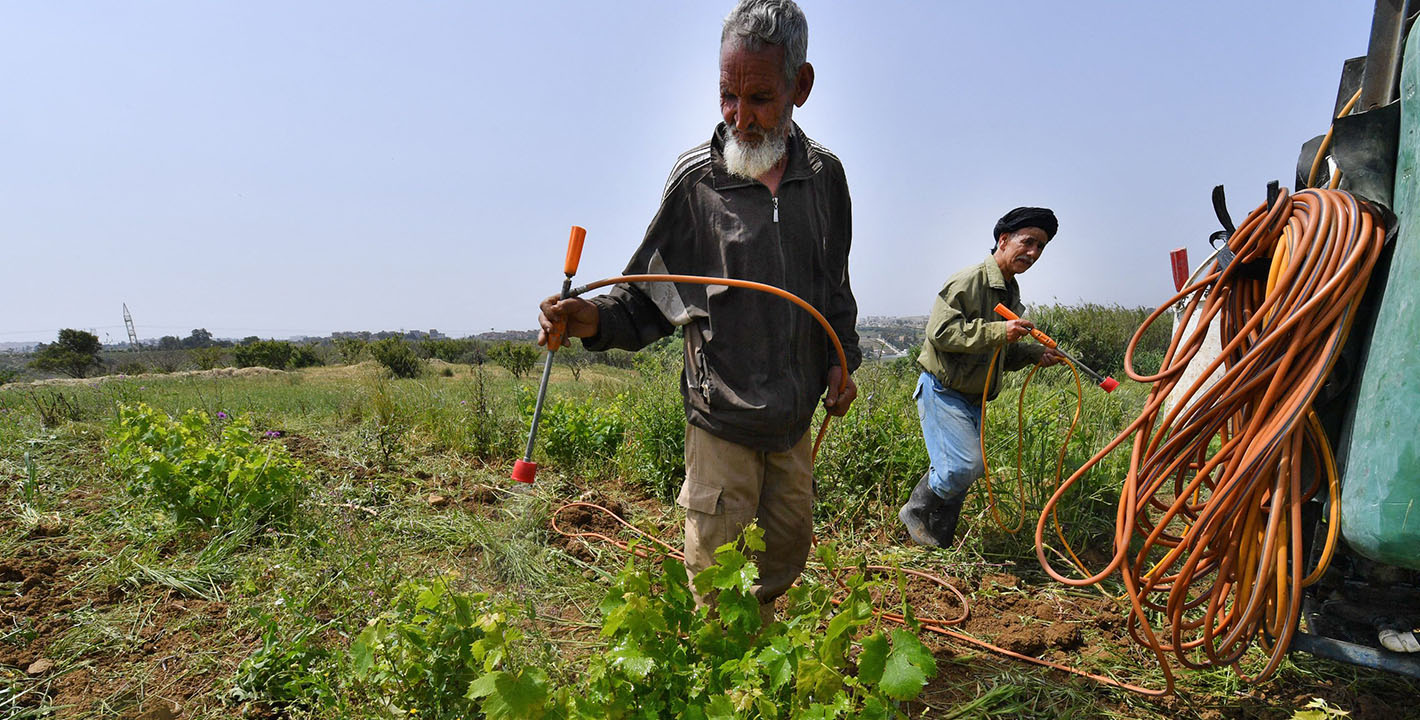
Understanding how farmers in the Oued Sahel-Soummam Valley grapple with climate change is essential for addressing the paradoxes through which adaptation, operating at both individual and institutional levels, deepens the region’s vulnerability and erodes the social fabric and agrarian identity that once defined life.
Ilyssa Yahmi