

Commentary
Thomas de Waal
{
  "authors": [
    "Thomas de Waal"
  ],
  "type": "legacyinthemedia",
  "centerAffiliationAll": "dc",
  "centers": [
    "Carnegie Endowment for International Peace",
    "Carnegie Europe"
  ],
  "collections": [
    "Turkey’s Transformation"
  ],
  "englishNewsletterAll": "ctw",
  "nonEnglishNewsletterAll": "",
  "primaryCenter": "Carnegie Europe",
  "programAffiliation": "EP",
  "programs": [
    "Europe"
  ],
  "projects": [],
  "regions": [
    "Europe",
    "Türkiye",
    "Eastern Europe",
    "Middle East",
    "Caucasus",
    "Armenia",
    "Western Europe",
    "Germany",
    "Iran"
  ],
  "topics": [
    "EU",
    "Security"
  ]
}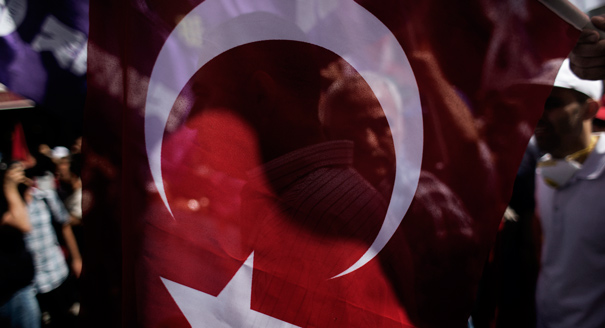
Source: Getty
Even if there is a certain historical resonance to Germany’s resolution on the Armenian genocide, the real battle over Turkey’s responsibility is still being fought in Ankara and Diyarbakir.
Source: Foreign Affairs
On June 2, Germany’s parliament, the Bundestag, voted to declare the mass killings of Armenians by Ottoman Turks in 1915 a genocide. The move, which came one year after the centenary of the Armenian genocide, caught most onlookers by surprise, including Turkish President Recep Tayyip Erdogan, who quickly denounced the resolution and recalled his ambassador from Berlin. Judging from past examples, however, the vote is unlikely to seriously disrupt Turkish–German relations.
The Germans are not the first to take this step and they will not be the last. In Europe, they are following the example of Austria, France, Sweden, and several other countries that have recognized the Armenian genocide in the past few years. Almost all historians of the period agree that the mass killing of the Armenians was an act of genocide, although the term is vague and was devised 30 years later.
But the location and timing of this genocide resolution distinguish it. When the Ottomans began to deport Armenians during World War I, Germany was their closest ally. German officers and soldiers had no direct role in the deportations, which wiped out almost the entire Armenian population of the empire, but they did nothing to stop them...
This article was originally published by Foreign Affairs.

Senior Fellow, Carnegie Europe
Thomas de Waal is a senior fellow at Carnegie Europe, specializing in Eastern Europe and the Caucasus.
Recent Work
Thomas de Waal
Thomas de Waal
Carnegie does not take institutional positions on public policy issues; the views represented herein are those of the author(s) and do not necessarily reflect the views of Carnegie, its staff, or its trustees.

As the U.S. stumbles in its war with Iran, we are likely to see an acceleration of its disengagement from the region.

Michael Young

Middle Eastern states should welcome an accelerated U.S. disengagement from their region.
Michael Young

In an interview, former ambassador Charles Freeman assesses the Trump administration’s war against Iran.
Michael Young

The accord represents a pivotal moment in the region to avert a security vacuum in the Gulf.


Azeema Cheema, Mohanad Hage Ali

In an interview, Jason Burke discusses his sweeping account of the “revolutionists” who so shaped the 1970s and early 1980s.
Michael Young