

Commentary
Maha Yahya
{
  "authors": [
    "Maha Yahya"
  ],
  "type": "legacyinthemedia",
  "centerAffiliationAll": "dc",
  "centers": [
    "Carnegie Endowment for International Peace",
    "Malcolm H. Kerr Carnegie Middle East Center"
  ],
  "collections": [],
  "englishNewsletterAll": "menaTransitions",
  "nonEnglishNewsletterAll": "",
  "primaryCenter": "Malcolm H. Kerr Carnegie Middle East Center",
  "programAffiliation": "MEP",
  "programs": [
    "Middle East"
  ],
  "projects": [],
  "regions": [
    "Egypt",
    "Gulf",
    "Levant",
    "Maghreb",
    "Middle East",
    "North Africa"
  ],
  "topics": [
    "Political Reform"
  ]
}
Source: Getty
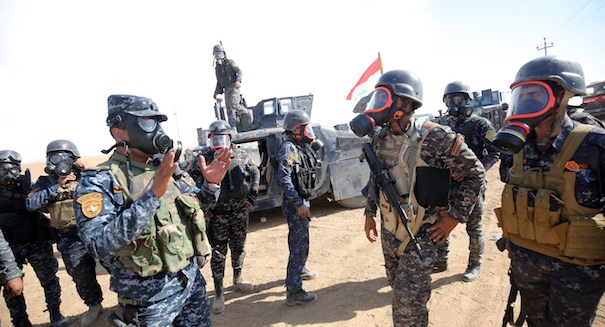
The new US president needs to shift American policy towards the Middle East from a predominantly security perspective focused on the fight against ISIS to one that engages with larger socioeconomic triggers for instability.
Source: Al Jazeera
The 45th United States president inherits a fractured and splintering Middle East, presenting extraordinary foreign policy challenges. The world he inherits is defined by shifting boundaries, changing alliances, as well as heightened global and regional tensions fuelling interrelated sectarian and proxy conflicts across the Middle East.
It is also characterised by the gargantuan distrust of Arab citizens who believe the US has not only abandoned them, but has actively obstructed their quest for a better future whether in Syria, Iraq, Libya, Yemen, Egypt or Palestine.The de-escalation of the regional proxy war between Iran and Saudi Arabia, and by extension the rest of the region, is central to addressing the challenges of civil conflict and state failure across the Middle East.
Without it, negotiated settlements to end ongoing wars in Syria, Iraq, Yemen and Libya will be difficult if not impossible. To do so, the newly elected president must work to convince regional actors of the advantages of moving away from the current zero-sum game wreaking havoc in the region, towards a stable order that can engage with multiple and often conflicting interests.
The success of the Iran deal is a case in point of the advantages of such a policy shift for some countries. This is a tall yet fundamentally critical order for global stability. In the short run, a revised US policy can embrace key Gulf allies who feel sidelined by the US' apparent change in regional priorities, working towards a more coherent approach to ongoing proxy wars in Syria and Iraq.
To address the massive gap in citizen trust, the new US president also needs to shift American policy towards the Middle East from a predominantly security perspective focused on the fight against ISIL to one that engages with larger socioeconomic triggers for instability.
Five areas through which a revamped US policy can begin to rebuild this trust are: 1) to act immediately to end genocide and population transfers and ensure accountability for those atrocities whether by state or non-state actors by supporting international justice mechanisms; 2) leverage US support to regional governments to ensure fundamental rights; 3) support policies that uphold the rights of refugees and asylum seekers including Palestinian refugees; 4) re-engage with the Israeli-Palestinian peace process on the basis of international norms and conventions and 5) support policies that both guard fundamental rights and protect from terrorism.
It is in the interests of the United States to have a stable Middle East. Without addressing these fundamental imbalances, the fissures developing across the region will extend far beyond the region and to the rest of the world.
Director, Malcolm H. Kerr Carnegie Middle East Center
Maha Yahya is director of the Malcolm H. Kerr Carnegie Middle East Center, where her research focuses on citizenship, pluralism, and social justice in the aftermath of the Arab uprisings.
Recent Work
Maha Yahya
Maha Yahya
Carnegie does not take institutional positions on public policy issues; the views represented herein are those of the author(s) and do not necessarily reflect the views of Carnegie, its staff, or its trustees.

Middle Eastern states should welcome an accelerated U.S. disengagement from their region.

Michael Young

The accord represents a pivotal moment in the region to avert a security vacuum in the Gulf.


Azeema Cheema, Mohanad Hage Ali

In an interview, Jason Burke discusses his sweeping account of the “revolutionists” who so shaped the 1970s and early 1980s.
Michael Young

The armed forces champion a form of capitalism that is generating revenue, but its reliance on rent faces diminishing returns, leaving the country with massive sunk costs and deferred returns, deepening dependency on external borrowing.

Yezid Sayigh

Morocco and Algeria, each in its own way, are having to navigate the global economic fallout of the U.S.-Israeli military campaign against Iran.

Yasmine Zarhloule