

Article
Dalia Ghanem
{
  "authors": [
    "Dalia Ghanem"
  ],
  "type": "legacyinthemedia",
  "centerAffiliationAll": "dc",
  "centers": [
    "Carnegie Endowment for International Peace",
    "Malcolm H. Kerr Carnegie Middle East Center"
  ],
  "collections": [],
  "englishNewsletterAll": "menaTransitions",
  "nonEnglishNewsletterAll": "",
  "primaryCenter": "Malcolm H. Kerr Carnegie Middle East Center",
  "programAffiliation": "MEP",
  "programs": [
    "Middle East"
  ],
  "projects": [],
  "regions": [
    "Maghreb",
    "Algeria",
    "Libya",
    "North Africa",
    "Mali"
  ],
  "topics": [
    "Political Reform",
    "Security"
  ]
}
Source: Getty
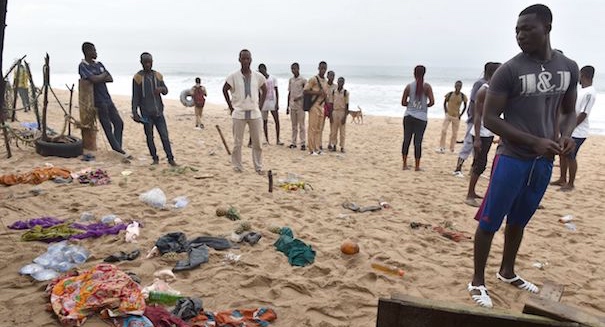
Islamist militant and jihadist groups thrive on disenfranchised youths who lack opportunity and services in their native countries.
Source: The Cipher Brief
The Cipher Brief: Where does al Qaeda in the Islamic Maghreb maintain its primary base in northwestern Africa (Sahel region)?
Dalia Ghanem-Yazbeck: It is hard to map jihadist groups in the Sahel region because organizations such as al Qaeda in the Islamic Maghreb (AQIM) are often comprised of several factions, which are themselves divided into semi-autonomous brigades, battalions and sub-battalions. Furthermore, extremist groups operating in the region, such as AQIM, the Movement for Oneness and Jihad in West Africa (MUJAO), and Ansar e-dine, adapt depending on countries’ counterterrorism strategies.
In 2012, the three aforementioned groups established a base in northern Mali and proceeded to conquer territory in the country until they nearly reached Mali’s capital Bamako. To stop these gains, the French military intervened in 2013 and pushed these groups north towards Libya and east towards Niger. Porous borders enabled the jihadist groups to move from one country to another and expand their scope of action. MUJAO, for instance, extended its sphere of action into Niger, where it perpetrated several acts of violence, such as an attack on Nigerien military base in 2013 and the more recent attack in Bani Bangou last November.TCB: Why did the AQIM select this area for its base? What advantages or disadvantages does it provide?
DGY: At first the Salafist Group for Preaching and Combat (GSPC), the predecessor of AQIM, was pushed by southward by the Algerian military. AQIM’s movement southward also became a matter of conjuncture as it sought to unify all jihadist groups operating in the Sahel region, including the Libyan Islamic Fighting Group and the Moroccan Islamic Combatant Group. In 2009, AQIM leader Abdel Malek Droudkel decided to open its Sahelian front with several kataib (battalions): Mokhtar Bel Mokhtar served as the emir of the western part, Abdelhamid Abou Zeid of the eastern part, and Yahia Djaoudi of the north.
The Sahel is a vast region that covers between 4 and 5 million square kilometers. The topography of the Sahel region and a history of de facto autonomy in some countries such as Mali, Mauritania and Niger, makes government control hard to exercise. Sovereign functions of the state, such as providing assistance, security and protection, development, and public services, are insufficient and lead to a marginalization of populations that in many cases lack education and employment opportunities. This leads to tensions with the central government and contributes greatly to the radicalization of many youths. Islamist militant and jihadist groups thrive on that.
This article was originally published on The Cipher Brief website.
Former Senior Resident Scholar, Malcolm H. Kerr Carnegie Middle East Center
Dalia Ghanem was a senior resident scholar at the Malcolm H. Kerr Carnegie Middle East Center in Beirut, where her research focuses on Algeria’s political, economic, social, and security developments. Her research also examines political violence, radicalization, civil-military relationships, transborder dynamics, and gender.
Recent Work
Dalia Ghanem


Frances Z. Brown, Judy Dempsey, Dalia Ghanem, …
Carnegie does not take institutional positions on public policy issues; the views represented herein are those of the author(s) and do not necessarily reflect the views of Carnegie, its staff, or its trustees.

The armed forces champion a form of capitalism that is generating revenue, but its reliance on rent faces diminishing returns, leaving the country with massive sunk costs and deferred returns, deepening dependency on external borrowing.

Yezid Sayigh

Morocco and Algeria, each in its own way, are having to navigate the global economic fallout of the U.S.-Israeli military campaign against Iran.

Yasmine Zarhloule

This will be the region’s most representative tournament, amid broad changes in its footballing landscape.

Issam Kayssi
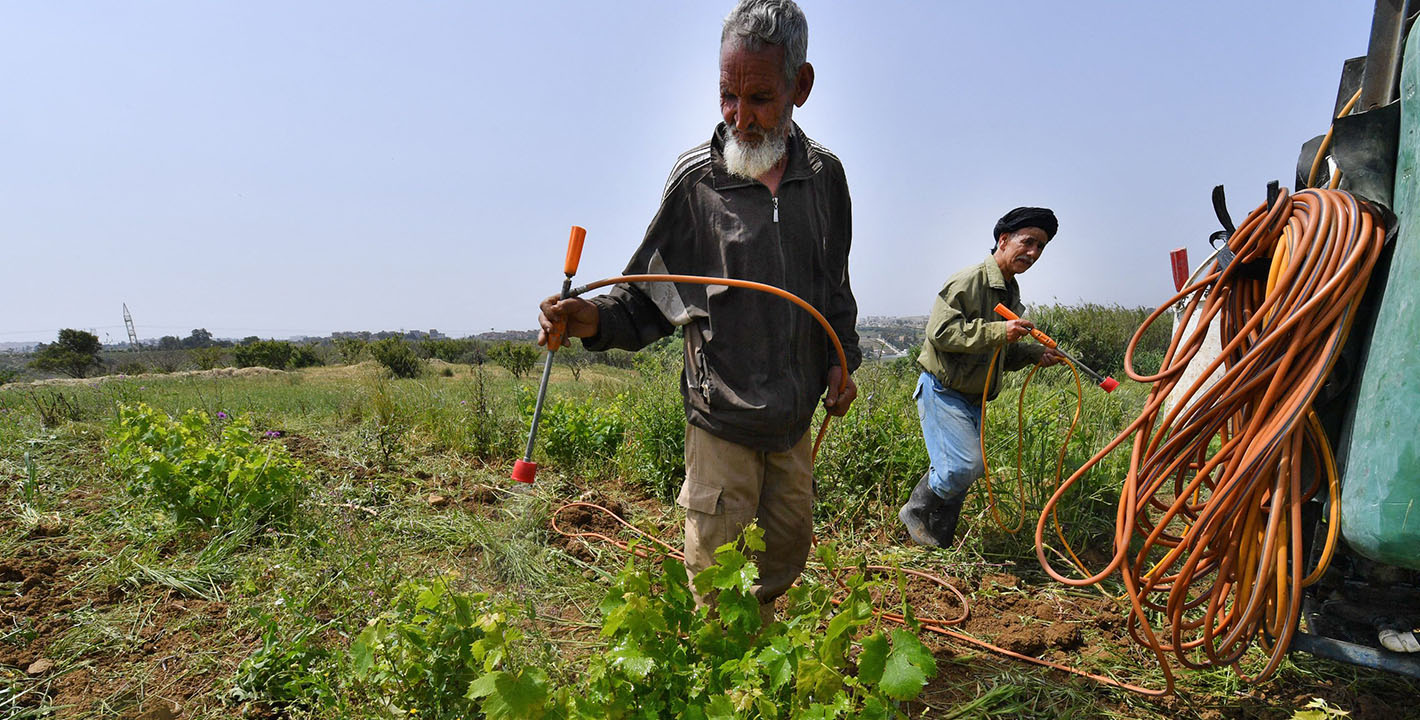
Understanding how farmers in the Oued Sahel-Soummam Valley grapple with climate change is essential for addressing the paradoxes through which adaptation, operating at both individual and institutional levels, deepens the region’s vulnerability and erodes the social fabric and agrarian identity that once defined life.
Ilyssa Yahmi
Unless the European Union-led energy transition provides economic development to Algeria, Morocco, and Tunisia, the process may be perceived as a new form of extraction.
Yasmine Zarhloule