• Research
  • Diwan
  • About
  • Experts
Carnegie Middle East logoCarnegie lettermark logo
LebanonIran
{
  "authors": [
    "Tong Zhao"
  ],
  "type": "legacyinthemedia",
  "centerAffiliationAll": "dc",
  "centers": [
    "Carnegie Endowment for International Peace",
    "Carnegie China"
  ],
  "collections": [
    "Korean Peninsula"
  ],
  "englishNewsletterAll": "ctw",
  "nonEnglishNewsletterAll": "",
  "primaryCenter": "Carnegie China",
  "programAffiliation": "NPP",
  "programs": [
    "Nuclear Policy"
  ],
  "projects": [],
  "regions": [
    "East Asia",
    "China",
    "North Korea"
  ],
  "topics": []
}
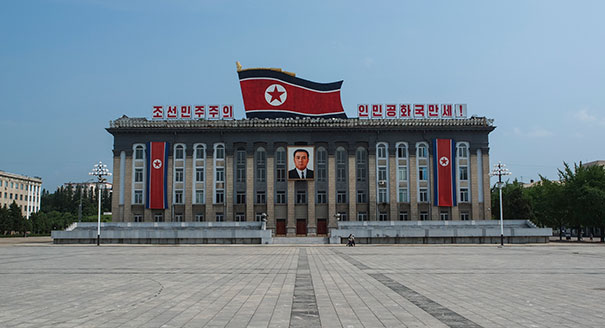
Source: Getty

In The Media
Carnegie China

Why an Oil Embargo Won’t Stop North Korea

With North Korea’s testing of what appears to be a more advanced intercontinental ballistic missile (ICBM), China is under great pressure to impose crippling economic sanctions against Pyongyang, including cutting off its oil supply.

Link Copied
By Tong Zhao
Published on Dec 1, 2017

Source: CNN

With North Korea’s testing of what appears to be a more advanced intercontinental ballistic missile (ICBM), China is under great pressure to impose crippling economic sanctions against Pyongyang, including cutting off its oil supply.

After the most recent UN Security Council resolution over North Korea, China has already pledged to reduced its export of crude oil and oil products to North Korea.
 
    However, US President Donald Trump called his Chinese counterpart to say it was time for China to cut off oil supplies to North Korea, the US ambassador to the UN said Wednesday, and on Thursday US Secretary of State Rex Tillerson said China “could do more with the oil” to help rein in North Korea.
    However, completely cutting off the oil supply would be a drastic step.
    Time is not on the international community’s side in dealing with North Korea. But that is no reason for rushing to take measures without fully assessing their possible impact.
    So what effect would an oil supply cut-off have on the security of the United States and other countries in the region? The first issue to consider is its direct impact on North Korea’s nuclear and missile programs.

    Oil embargo likely to reinforce Pyongyang’s resolve

    Detailed and authoritative data about North Korea’s oil use across various sectors and its capability to adjust and adapt to a cut-off is scarce. That said, some research suggests that North Korea could cut its non-military use of oil substantially to ensure that the military felt no near-term effects.
     
    Another study shows that North Korea has also obtained the technology to replace oil with other indigenous sources of hydrocarbons. Moreover, given that the military probably possesses significant stockpiles of oil, and that the nuclear and missile programs appear to be prioritized over everything else, it is unlikely that an oil cut-off would have any quick impact on these programs.
     
    Furthermore, oil supply is not a significant constraint on North Korea’s nuclear and missile programs. As North Korea sprints to complete the development of a credible nuclear deterrent capability, it has long passed the stage when it can be contained by fuel embargo. As a result, an oil cut-off is more likely to reinforce Pyongyang’s political resolve to acquire nuclear weapons than to dampen it.
     
    Some proponents of an oil embargo might acknowledge these problems, but still support it because of its potential to destabilize the regime—which raises the second question: If an oil embargo does bring about regime instability or even regime collapse, are we ready to deal with the consequences?
     

    Back down or double down?

    An oil embargo may be able to undermine North Korea’s economic system and therefore create regime instability. But the impact will not be immediate. As the consequences of an oil cut-off are felt—and we don’t know exactly how long this could take—the regime will become increasingly desperate.

    Perhaps it will choose to back down. It may, however, choose to behave even more provocatively and aggressively, taking brinksmanship to the extreme in the hope of winning a dangerous competition of risk-taking. Given North Korea’s political ideology, there is ample reason to suspect that this outcome is the most likely.

    A more aggressive North Korean regime could further threaten South Korea, Japan, Guam, and even the US homeland.

    Faced with regime collapse its threats—such as firing missiles toward waters near Guam—would become increasingly credible. Is the United States confident that it could win this game of chicken without initiating a nuclear war?
     
    From the North Korean perspective, an oil embargo that could threaten the stability of the regime contradicts the US official policy of not pursuing regime change.
     
    If Pyongyang becomes convinced of Washington’s intent to challenge its rule, it could be even more defiant and less incentivized to come to the negotiating table.
     
    The United States, China, and other regional countries have homework to do in thinking through these challenges and achieving some basic common understandings before implementing an oil embargo.
     

    Time to talk

    In the meantime, they should pursue two urgent goals. The first is to stop North Korea from further improving its capabilities. In its official statement after the recent ICBM test, Pyongyang declared the completion of its missile development program, implying that no more flight tests are needed.
     
    If North Korea indeed intends to stop future missile tests, it essentially renounces the option of building better missiles such as solid-fueled ICBMs and missiles with multiple warheads that can be more survivable and more threatening. The significance of such a commitment should not be underestimated.
     
    It is time for the international community to be responsive and to reciprocate this possible signal of self-restraint with at least an effort to seek further clarification from Pyongyang about its intentions.
     
    If talking to North Korea can lead to negotiations that freeze its capabilities, this would take the pressure off the international community from quickly implementing an oil embargo that might later be regretted.
     
    The second step is to seriously pursue risk reduction measures. Setting up a direct hot line between Washington and Pyongyang and exchanging high-level envoys—either publicly or privately—are some useful measures to take.
     
    The ongoing game of risk-taking between Pyongyang and Washington has entered a very dangerous stage. The risk of misjudgment and miscalculation is increasingly real and the result could be an unintended nuclear conflict. Containing this crisis is now as important as containing North Korea’s nuclear advancement.
     

    This op-ed was originally published on CNN

    About the Author

    Tong Zhao

    Senior Fellow with the Nuclear Policy Program and Carnegie China

    Tong Zhao is a senior fellow with the Nuclear Policy Program and Carnegie China, Carnegie’s East Asia-based research center on contemporary China. Formerly based in Beijing, he now conducts research in Washington on strategic security issues.

      Recent Work

    • Other
      Unpacking Trump’s National Security Strategy
        • Cecily Brewer
        • +18

        James M. Acton, Saskia Brechenmacher, Cecily Brewer, …

    • Commentary
      The U.S. Venezuela Operation Will Harden China’s Security Calculation

        Tong Zhao

    Tong Zhao
    Senior Fellow with the Nuclear Policy Program and Carnegie China
    Tong Zhao
    East AsiaChinaNorth Korea

    Carnegie does not take institutional positions on public policy issues; the views represented herein are those of the author(s) and do not necessarily reflect the views of Carnegie, its staff, or its trustees.

    More Work from Malcolm H. Kerr Carnegie Middle East Center

    • Commentary
      How China Aligned Itself with Saudi Arabia’s Vision 2030

      China has aligned its cooperation model with Saudi Arabia’s own priorities, most notably since the kingdom unveiled its Vision 2030. Although China announced the Belt and Road Initiative in 2013, the big push in relations happened only after the ascendance of King Salman to the throne in 2015 and Riyadh’s push for Beijing to meet Saudi needs.

        Hesham Alghannam

    • Article
      The GCC’s Multipolar Pivot: From Shifting Trade Patterns to New Financial and Diplomatic Alliances

      The Gulf Cooperation Council has shifted its energy export focus to Asia, particularly India and China. This is part of a broader shift as GCC members look to expand their geopolitical alliances away from the West.

        Alexandre Kateb
    • Commentary
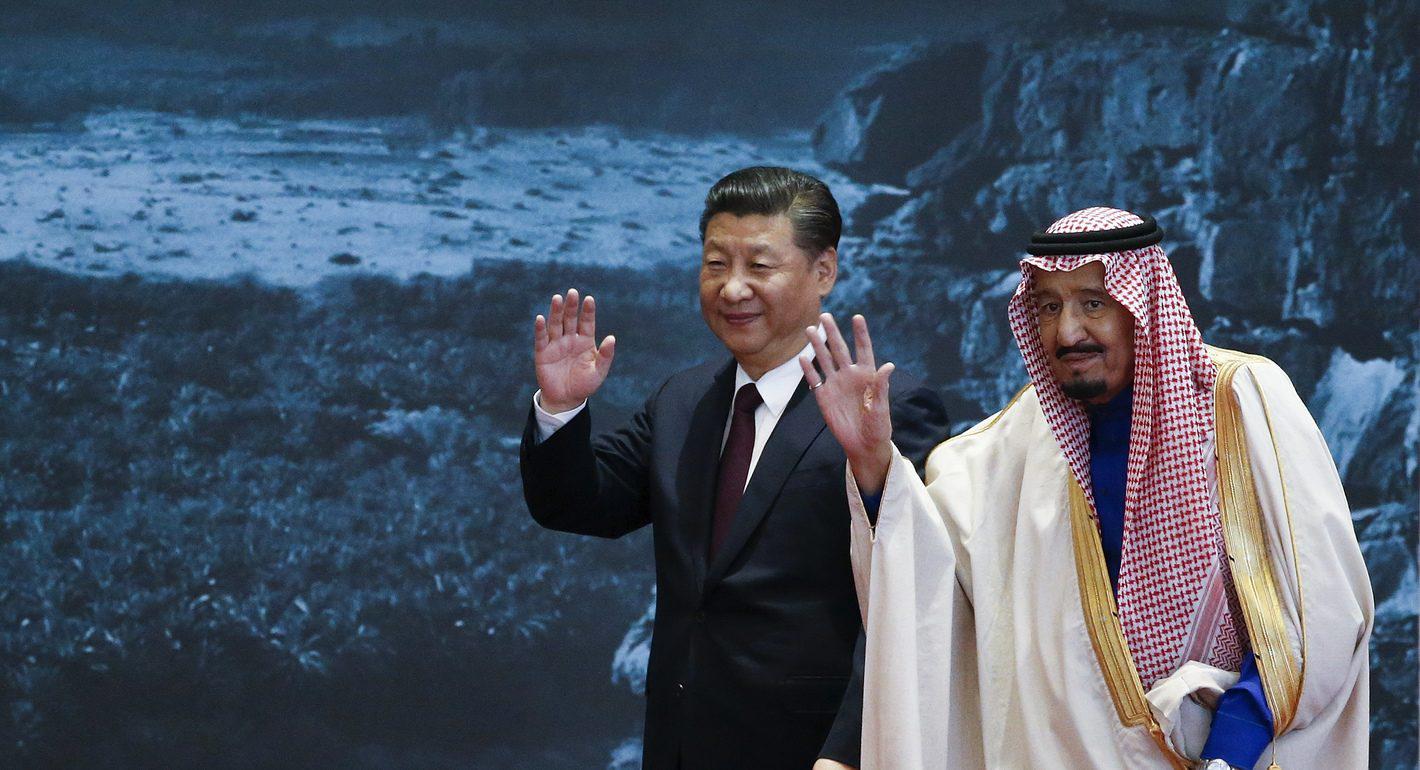
      China’s Evolving Economic and Security Role in the Middle East

      The advantage that China has over other global powers, especially America, is that its foreign policy is closely aligned with those of many of the Middle Eastern countries.

        Jin Liangxiang, Maha Yahya, Hesham Alghannam
    • Article
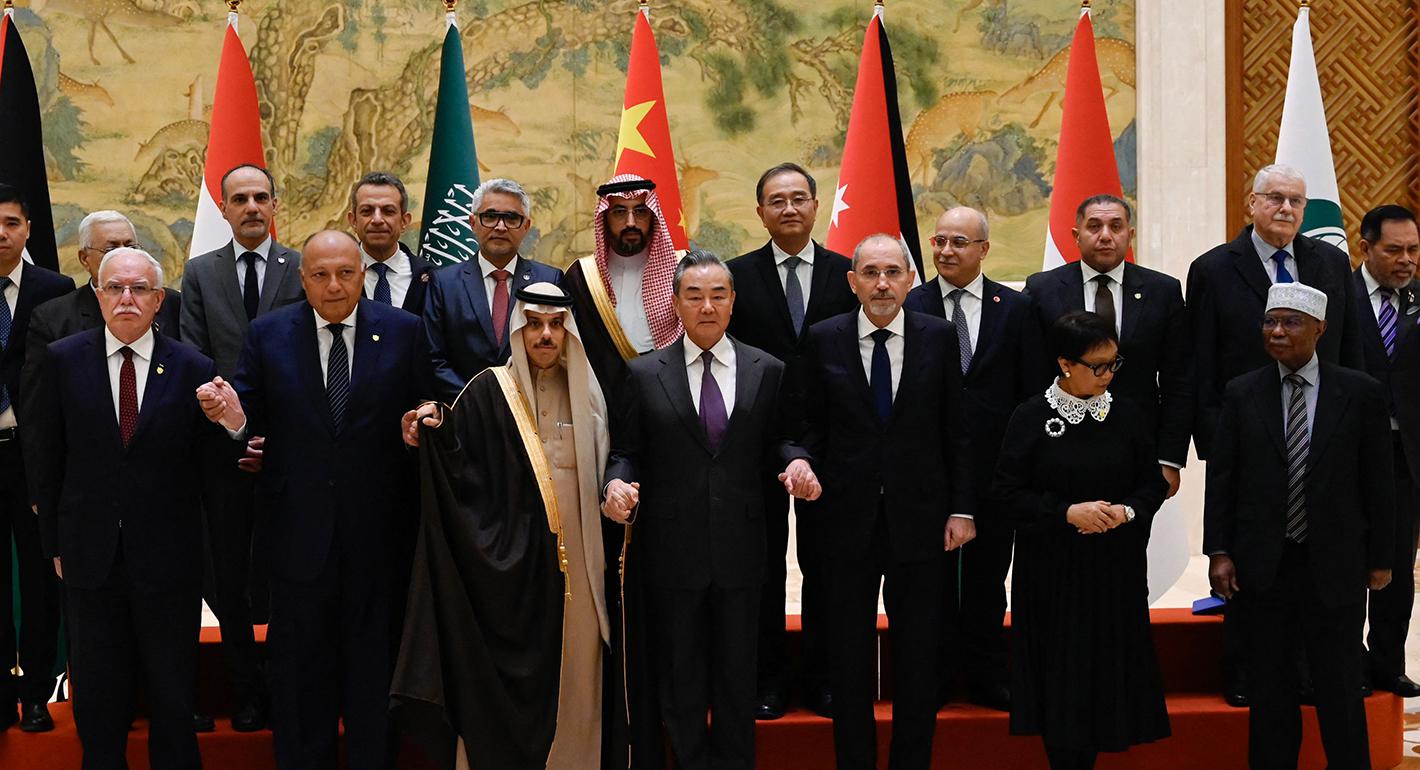
      The Geopolitics of Economic Development in the Middle East

      To create an environment more conducive to cooperation and development, U.S. and Chinese efforts should seek the endorsement of neighboring countries and regional organizations. Otherwise, regional and geopolitical rivalries will remain barriers.

        Abdullah Baabood

    • Commentary
      The Gaza War and the Rest of the World

      Scholars from Carnegie’s global network comment on how the ongoing conflict between Israelis and Palestinians is affecting their areas of interest, and what the implications of this may be.

        • +11

        Maha Yahya, Rosa Balfour, Judy Dempsey, …

    Get more news and analysis from
    Malcolm H. Kerr Carnegie Middle East Center
    Carnegie Middle East logo, white
    • Research
    • Diwan
    • About
    • Experts
    • Projects
    • Events
    • Contact
    • Careers
    • Privacy
    • For Media
    Get more news and analysis from
    Malcolm H. Kerr Carnegie Middle East Center
    © 2026 Carnegie Endowment for International Peace. All rights reserved.