

Other
- +18
James M. Acton, Saskia Brechenmacher, Cecily Brewer, …
{
  "authors": [
    "Tong Zhao"
  ],
  "type": "other",
  "centerAffiliationAll": "dc",
  "centers": [
    "Carnegie Endowment for International Peace",
    "Carnegie China"
  ],
  "collections": [
    "Korean Peninsula"
  ],
  "englishNewsletterAll": "ctw",
  "nonEnglishNewsletterAll": "",
  "primaryCenter": "Carnegie China",
  "programAffiliation": "NPP",
  "programs": [
    "Nuclear Policy"
  ],
  "projects": [],
  "regions": [
    "East Asia",
    "North Korea"
  ],
  "topics": [
    "Nuclear Policy",
    "Arms Control"
  ]
}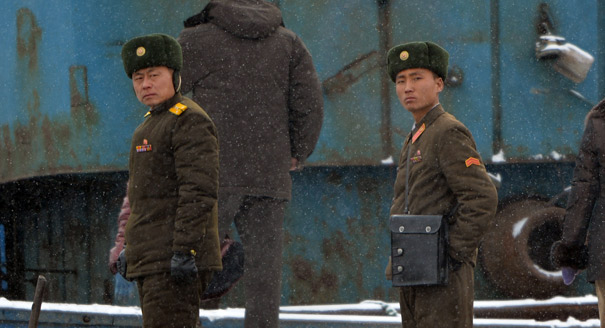
Source: Getty
What is the way forward if deep distrust prevents North Korea from even being able to commit to the goal of denuclearization upfront?
Source: The European—Security and Defense Union
Tensions over the North Korean nuclear crisis have grown so serious that the risks of a major military conflict breaking out soon are all too real. Facing a possible nuclear conflict, both North Korea and the United States say they prefer a negotiated solution, but is it possible to reach a major quid pro quo, in which North Korea would commit to abandoning its nuclear weapons in return for normalized relations, security guarantees, and sanctions relief from the United States and other key international players?
The answer is likely to be no.
North Korea and its international interlocutors have struck grand bargains over its nuclear program before—in particular, the 1994 Agreed Framework and the September 19, 2005 joint statement of the Six Party Talks. The failure of these agreements is instructive.
One fundamental drawback of these agreements was the asymmetrical nature of the commitments required of the two sides. The United States and the other international parties committed to providing economic and energy aid and promised to normalize relations with North Korea, undertake no military attack against it, and strive to establish a peace regime on the Peninsula. With the exception of aid, these commitments were all political that, even though they were made sincerely, could be reversed overnight if the political will to implement them was lost. North Korea’s side of the bargain, on the other hand, entailed a commitment to giving up its existing nuclear weapon capabilities. Such changes to material capabilities, once done, are very difficult to quickly and fully reverse. Implementation of such grand bargains, therefore, requires a high level of confidence and trust from North Korea towards the other parties to be maintained throughout the denuclearization process and afterwards.
History has shown, on multiple occasions, the challenges of abruptly generating such a high level of trust out of nowhere, let alone maintaining it given the long history of deep and longstanding hostility between North Korea and the United States and its partners. Even when Pyongyang was able to agree to a grand bargain, North Korea subsequently kept having trouble trusting that asymmetric commitments would be upheld and thus always felt the need to develop a hedging strategy in case the other parties failed to stick to their side of the bargain. Admittedly, there exist different interpretations about this past history, especially about who was more responsible for the problematic implementation of the agreements, but the asymmetric nature of commitments seemed an inherent and important reason why previous attempts to implement a grand bargain with North Korea failed.
Since the last time North Korea explicitly committed to denuclearization—which was before Kim Jong-un came into power, the distrust between North Korea and the United States has only grown. As a result, there is even less hope today that another grand bargain with North Korea could work.
What is the way forward then, if deep distrust prevents North Korea from even being able to commit to the goal of denuclearization upfront? One option is to try to force Pyongyang to accept denuclearization through coercive pressure. This seems to be the current strategy of the Trump administration. The problem with this strategy is that there is no guarantee that coercion could force North Korea to back down, even if the pressure were strong enough to threaten the regime’s survival. Having learned the lessons of Saddam and Qaddafi who gave up their nuclear development programs and were later dispelled from power and killed, the North Korean regime, if pushed into a corner, would be more likely to resort to nuclear brinksmanship rather than capitulate. Pyongyang might calculate that Washington has more to lose in a nuclear exchange and would therefore be more likely to blink first.
The second option is to acknowledge the fundamental problem of distrust and take an incremental approach towards achieving denuclearization. Given that North Korea completely rejects denuclearization at this moment and forcible denuclearization is way too risky, achieving a denuclearization agreement with North Korea appears beyond reach. However, the relevant parties can still start down the denuclearization route even without every step having been mapped out. For example, initial steps towards de-escalation, which could involve modest limits on North Korea’s capabilities, would be focused on the shared objective of preventing a nuclear war and building some modicum of trust. The hope is that if such measures were successfully implemented, it would pave the ground for exploring more ambitious next steps. After successful cycles of positive interactions, a less paranoid North Korea would be gradually in a better position to reconsider its nuclear program and all relevant parties would be increasingly capable to jointly identify a clear pathway from there to denuclearization.
Steps to begin this process should start from the easiest and least objectionable. In the first stage, efforts could focus on de-escalating tensions. For example, North Korea could refrain from flying missiles over Japan and South Korea in return for the United States keeping its strategic bombers from flying too close to North Korean airspace. In the next stage, Pyongyang could declare a moratorium on nuclear and missile tests and, in return, Washington and Seoul could suspend or scale down major military exercises and lift some economic pain. Such measures don’t require special verification provisions and would be relatively reversible. If these measures could be achieved and maintained, North Korea could go further and suspend fissile material production, in exchange for more reciprocity such as further reduction of economic sanctions. At this stage, some additional verification measures could be considered, starting from the least intrusive ones. Only after all these steps were achieved would it become realistic to consider more radical measures, such as gradually rolling back North Korea’s existing capabilities.
North Korea may be willing to follow the early steps, even in the absence of any trust, as such steps wouldn’t deprive it of the basic nuclear deterrent it has obtained. As long as positive cycles of restraint and reciprocity be started, we would be moving away from a possible nuclear war. In the meantime, the engagement process itself would create additional opportunities for the international community to influence and shape Pyongyang’s nuclear activities towards less provocative and less destabilizing ones. The bottom line is, the only alternative to a violent (and possibly catastrophic) solution of the nuclear crisis is an incremental and probably long-term approach. Sufficient time is necessary for trust to be cultivated and minds to be changed.
This article was originally published in The European—Security and Defense Union

Senior Fellow with the Nuclear Policy Program and Carnegie China
Tong Zhao is a senior fellow with the Nuclear Policy Program and Carnegie China, Carnegie’s East Asia-based research center on contemporary China. Formerly based in Beijing, he now conducts research in Washington on strategic security issues.
Recent Work



James M. Acton, Saskia Brechenmacher, Cecily Brewer, …
Tong Zhao
Carnegie does not take institutional positions on public policy issues; the views represented herein are those of the author(s) and do not necessarily reflect the views of Carnegie, its staff, or its trustees.
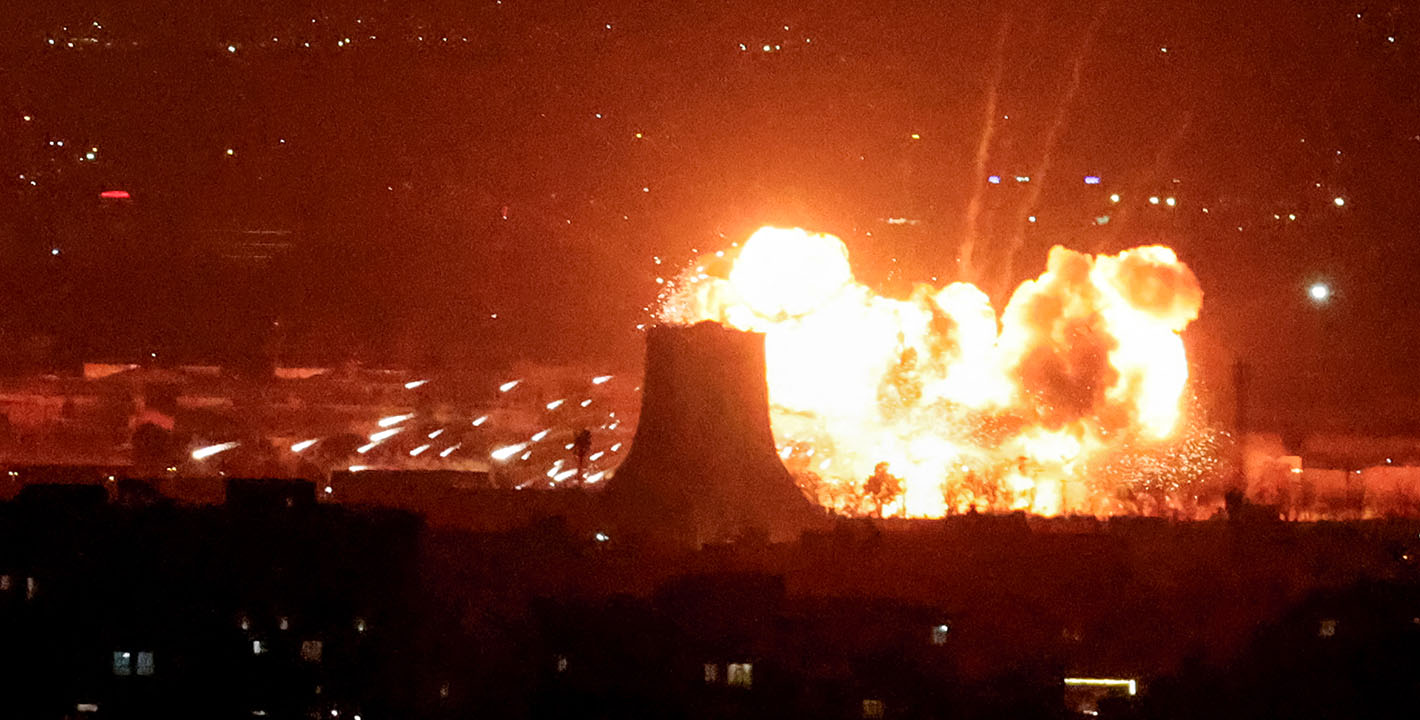
In an interview, Marc Lynch discusses his new book decrying the post-1990 U.S.-dominated order in the Middle East.

Michael Young
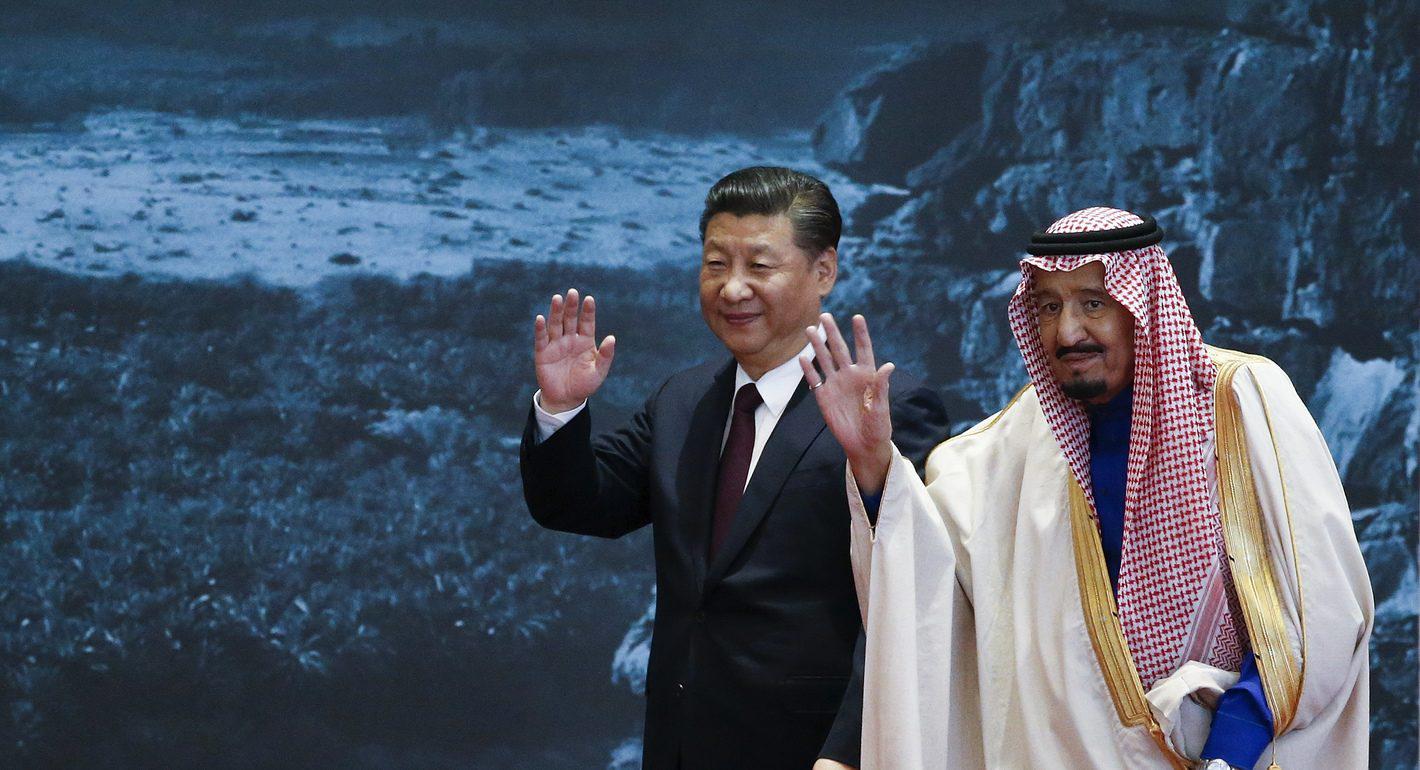
The advantage that China has over other global powers, especially America, is that its foreign policy is closely aligned with those of many of the Middle Eastern countries.


Jin Liangxiang, Maha Yahya, Hesham Alghannam
To create an environment more conducive to cooperation and development, U.S. and Chinese efforts should seek the endorsement of neighboring countries and regional organizations. Otherwise, regional and geopolitical rivalries will remain barriers.
Abdullah Baabood

Scholars from Carnegie’s global network comment on how the ongoing conflict between Israelis and Palestinians is affecting their areas of interest, and what the implications of this may be.


Maha Yahya, Rosa Balfour, Judy Dempsey, …
In an interview, Abdullah Baabood discusses Beijing’s evolving role in the Gulf region, where its priority is stability.
Michael Young