

Article
Deborah Gordon, Stephen D. Ziman
{
  "authors": [
    "Deborah Gordon"
  ],
  "type": "legacyinthemedia",
  "centerAffiliationAll": "dc",
  "centers": [
    "Carnegie Endowment for International Peace"
  ],
  "collections": [],
  "englishNewsletterAll": "ctw",
  "nonEnglishNewsletterAll": "",
  "primaryCenter": "Carnegie Endowment for International Peace",
  "programAffiliation": "SCP",
  "programs": [
    "Sustainability, Climate, and Geopolitics"
  ],
  "projects": [
    "Carnegie Oil Initiative"
  ],
  "regions": [
    "North America",
    "United States"
  ],
  "topics": [
    "Climate Change"
  ]
}
Source: Getty
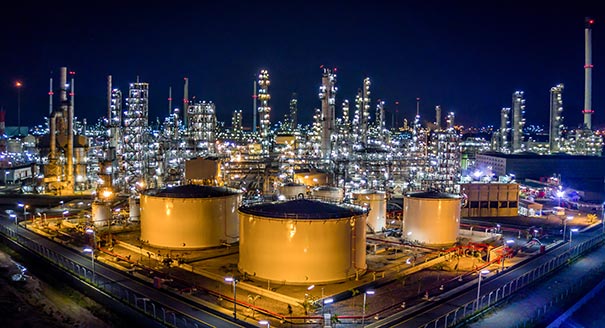
It was recently announced that the United States has just beaten its all-time high in crude oil production—but these claims don’t quite stand up to scrutiny.
Source: Houston Chronicle
It was recently announced that America has just beaten its own all-time high in crude oil production — but these claims don’t quite stand up to scrutiny.
No doubt, greater volumes are flowing out of U.S. oil wells. This is a major feat — at least on the surface.
In November 1970, the U.S. produced a then-record 10.04 million barrels per day of crude. Nearly half a century later, when many once predicted that oil would be in short supply by now, this record apparently has been shattered.
On Feb. 2, 2018, production amounted to 10.25 mbd. This trend is expected to continue. The International Energy Agency projects that the United States is set to become the world’s dominant oil and gas production leader for decades. This news was received triumphantly, with some proclaiming American energy independence, as oil imports from foreign countries shrink to new lows and U.S. crude exports rise.
But the oils produced in 1970s and much of what’s now flowing forth are two entirely different resources.
Historically, the United States has produced conventional crudes resembling maple syrup that could be readily refined into a wide assortment of petroleum products, including gasoline, diesel, jet fuel, marine fuels, fuel oils and more. Today, a significant portion of American “oil” that is extracted through hydraulic fracturing is ultra-light condensates that are the consistency of cream soda, and which our refineries are not well-equipped to process into same products that fuel our mobility. Instead, fracked liquids from U.S. oil and gas are better suited to fire up propane grills and make plastics and other petrochemicals.
Having less need for our own new “oils” means that the United States is increasingly exporting it, mostly from the Gulf Coast. Some 1.5 million barrels per day of condensates are now being sent abroad, up ten-fold since 2010. The U.S. Energy Information Administration projects that continued fracking will raise condensate production to 5 mbd in 2023 — nearly 35 percent above 2017 levels, while America’s conventional crude production will level off at 11-12 mbd.
This changes everything.
These ultra-light, gassy oils and wet gases have to be managed anew. It’s not just that they’re extracted using unconventional techniques with new issues to attend to (such as disposing of water from the fracking process).
They also tend to leak the powerful greenhouse gas methane into the atmosphere, vastly increasing climate risks. They can explode in transit. They require major new infrastructure investment, especially in pipelines to handle them. And they require new processing and refining methods in order to make the full slate of conventional petroleum products we depend on.
On an economic front, if the oil America is producing is increasingly geared toward petrochemicals and liquefied petroleum gas instead of gasoline and diesel, the nation needs to hasten its move to electric vehicles before motor fuel supplies are in short supply amid condensate abundance.
In terms of trade, a majority of U.S. ultra-light condensates are heading to Canada to dilute with their extra-heavy bitumen so oil sands can flow through pipelines to be refined in America or exported abroad. The IEA recently reported that a shipment of U.S. condensate blended with heavier crude recently arrived in the United Arab Emirates. This development would have seemed “incredible” a few years ago, but is now looking like the shape of things to come. If we’re not careful, the current decision to export an increasing volume of condensates may find us inadvertently trading away our long-term interests for short-term profits, when what we should be doing is gearing up domestically for a changing oil future.
This has a material bearing on national energy policy.
The first thing that needs to be done is to gather as much public information as possible on these new record-breaking ultra-light oils, starting in Texas. Surprisingly, there is still no clear-cut definition of what even constitutes a condensate. Policymakers, investors, trade partners, and the public would benefit from knowing these oils better in terms of their compositions, supply chain characteristics, and environmental trade-offs. New reporting protocols are needed to ensure greater transparency in order to balance private interests and public goods where oil decision-making is concerned.
Before we celebrate, we need to step back and find out the details of the competing resources America is producing. Only then will the U.S. really know when it breaks its own record — and what this means for Americans.
This article was originally published by the Houston Chronicle.

Former Director and Senior Fellow, Energy and Climate Program
Gordon was director of Carnegie’s Energy and Climate Program, where her research focuses on oil and climate change issues in North America and globally.
Recent Work
Deborah Gordon, Stephen D. Ziman
Deborah Gordon, Smriti Kumble, David Livingston
Carnegie does not take institutional positions on public policy issues; the views represented herein are those of the author(s) and do not necessarily reflect the views of Carnegie, its staff, or its trustees.

As the U.S. stumbles in its war with Iran, we are likely to see an acceleration of its disengagement from the region.

Michael Young

Huawei pushed hard to enter the Egyptian data centers market, until the Americans made a better offer.

Angie Omar

Middle Eastern states should welcome an accelerated U.S. disengagement from their region.
Michael Young

In an interview, former ambassador Charles Freeman assesses the Trump administration’s war against Iran.
Michael Young

By failing to address Palestinian representation, the current process is bound to lead to just another temporary arrangement.

Nathan J. Brown