

Commentary
Ulrich Kühn
{
  "authors": [
    "Ulrich Kühn"
  ],
  "type": "other",
  "centerAffiliationAll": "dc",
  "centers": [
    "Carnegie Endowment for International Peace"
  ],
  "collections": [
    "U.S. Nuclear Policy"
  ],
  "englishNewsletterAll": "ctw",
  "nonEnglishNewsletterAll": "",
  "primaryCenter": "Carnegie Endowment for International Peace",
  "programAffiliation": "NPP",
  "programs": [
    "Nuclear Policy"
  ],
  "projects": [],
  "regions": [
    "North America",
    "United States"
  ],
  "topics": [
    "Security",
    "Nuclear Policy"
  ]
}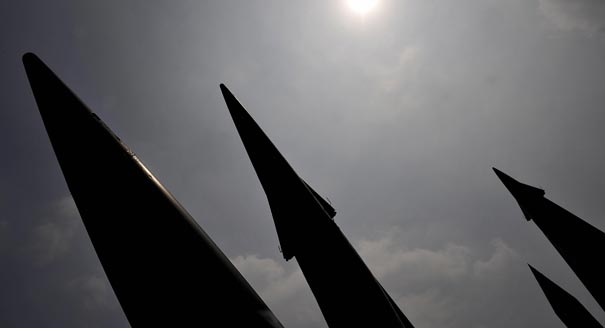
Source: Getty
Why the United States does not currently have a long-term strategy for dealing with its most fundamental foreign policy challenges and why it needs one.
Source: Bulletin of the Atomic Scientists
What might Sigmund Freud, the father of psychoanalysis, have found, had he lived long enough to study the 2018 US Nuclear Posture Review and its drafters? Anxiety about failure and death, fear of impotence, and an obsession with deterrence that obscures the ultimate question: “What is it that the United States wants in this world?” In this essay, the author uses psychoanalytic metaphors to explain why the United States does not currently have a long-term strategy for dealing with its most fundamental foreign policy challenges – and why it needs one, particularly as regards the global nuclear dilemma.
Imagine for a second that Sigmund Freud were to analyze the 2018 US Nuclear Posture Review (NPR). He would quickly encounter strong feelings of anxiety and unhappiness that the drafters of the NPR seem to express when writing about nuclear deterrence. Anxiety about failure, and ultimately death, is omnipresent in the document and is met by prescriptions for more nuclear capabilities. Fear of impotence – in the form of unhappiness with the restraints that nuclear deterrence puts on the natural instinct of aggression – is answered in the NPR by the lowering of the threshold to nuclear use. But ultimately, when digging deeper into the document, Freud would come across an obsession with deterrence, one that saves and prevents the “American patient” from asking the ultimate question: “What is it that I want in this world?”
This article was originally published in the Bulletin of the Atomic Scientists.

Former Nonresident Scholar, Nuclear Policy Program
Ulrich Kühn was a nonresident scholar at the Carnegie Endowment for International Peace, and the head of the arms control and emerging technologies program at the Institute for Peace Research and Security Policy at the University of Hamburg.
Recent Work
Ulrich Kühn
Ulrich Kühn
Carnegie does not take institutional positions on public policy issues; the views represented herein are those of the author(s) and do not necessarily reflect the views of Carnegie, its staff, or its trustees.

In an interview, Rozina Ali discusses her new book on the rise and manifestations of Islamophobia in the United States.

Michael Young

In an interview, Ian Lustick and Eli Clifton discuss their new book on why a prominent ally has so much influence in America.
Michael Young

As the U.S. stumbles in its war with Iran, we are likely to see an acceleration of its disengagement from the region.
Michael Young

Middle Eastern states should welcome an accelerated U.S. disengagement from their region.
Michael Young

In an interview, former ambassador Charles Freeman assesses the Trump administration’s war against Iran.
Michael Young