

Commentary
Just look at Iraq in 1991.
Marwan Muasher
{
  "authors": [
    "Toby Dalton",
    "Gaurav Kalwani"
  ],
  "type": "legacyinthemedia",
  "centerAffiliationAll": "dc",
  "centers": [
    "Carnegie Endowment for International Peace"
  ],
  "collections": [],
  "englishNewsletterAll": "ctw",
  "nonEnglishNewsletterAll": "",
  "primaryCenter": "Carnegie Endowment for International Peace",
  "programAffiliation": "NPP",
  "programs": [
    "Nuclear Policy"
  ],
  "projects": [],
  "regions": [
    "South Asia",
    "India",
    "Pakistan"
  ],
  "topics": [
    "Security"
  ]
}
Source: Getty
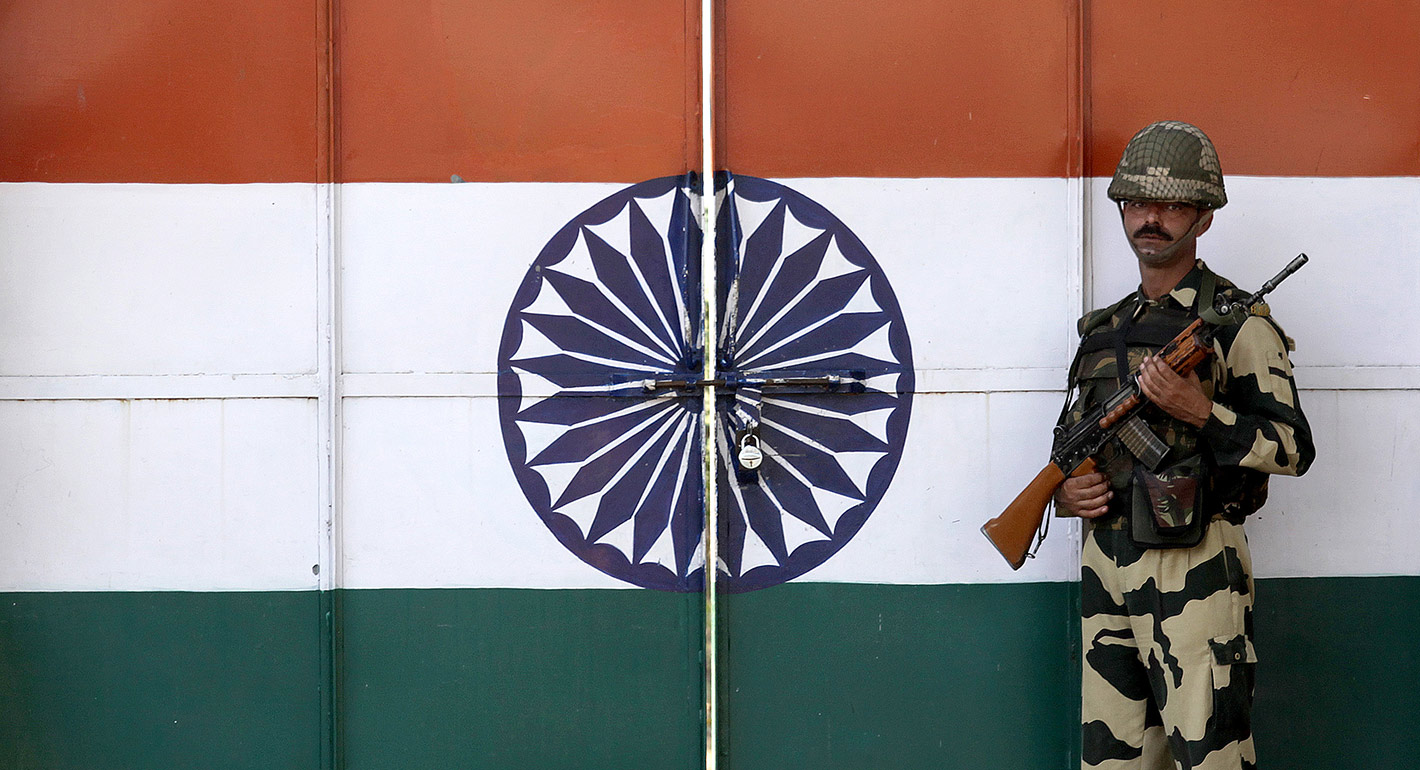
The next crisis between India and Pakistan might originate from an Indian offensive to seize territory in Kashmir. If so, the chances of the conflict escalating to war are more likely than currently predicted.
Source: War on the Rocks
What will trigger the next crisis in South Asia? Conventional wisdom holds that it will follow a script common to successive crises since the early 1990s. The pattern starts with a high-casualty terror attack in India, attributed to Pakistan-based militant groups with a long history of carrying out cross-border operations, which then puts the onus on India to calibrate escalation in its response. Just because nearly every crisis between India and Pakistan in the last three decades began with an act of cross-border terrorism, however, does not mean that other potential catalysts should be neglected.
One intriguing alternative deserves scrutiny: Instead of an attack in India that initiates crisis, what if one arose following a proactive Indian operation to seize territory over the Line of Control (LOC) in the portion of the disputed territory of Kashmir controlled by Pakistan? Indian leaders have contemplated such operations in the past, and the current government in India has demonstrated its willingness to take considerable risks, including in the February 2019 crisis. Moreover, New Delhi’s August 2019 decision to revoke the special constitutional status of Kashmir underscores its willingness to reconsider long-standing norms and practices. If the next crisis starts with an Indian operation, the odds are much greater that it will escalate quickly to war for reasons that the conventional South Asia crisis wisdom tends to discount.

Senior Fellow and Co-director, Nuclear Policy Program
Toby Dalton is a senior fellow and co-director of the Nuclear Policy Program at the Carnegie Endowment. An expert on nonproliferation and nuclear energy, his work addresses regional security challenges and the evolution of the global nuclear order.
Gaurav Kalwani
Former Research Assistant, Nuclear Policy Program
Gaurav Kalwani was a research assistant with the Nuclear Policy Program.
Carnegie does not take institutional positions on public policy issues; the views represented herein are those of the author(s) and do not necessarily reflect the views of Carnegie, its staff, or its trustees.

Just look at Iraq in 1991.

Marwan Muasher

Baku may allow radical nationalists to publicly discuss “reunification” with Azeri Iranians, but the president and key officials prefer not to comment publicly on the protests in Iran.

Bashir Kitachaev
In addressing Hezbollah’s disarmament, the Lebanese state must start by increasing its own leverage.

Michael Young
The country’s political and military establishment is still debating how to interpret the recent war’s outcome.

Nicole Grajewski
Spot analysis from Carnegie scholars on events relating to the Middle East and North Africa.

Mohanad Hage Ali