

Commentary
Cornelius Adebahr
{
  "authors": [
    "Cornelius Adebahr"
  ],
  "type": "other",
  "centerAffiliationAll": "dc",
  "centers": [
    "Carnegie Endowment for International Peace",
    "Carnegie Europe"
  ],
  "collections": [
    "Transatlantic Cooperation",
    "Iranian Proliferation"
  ],
  "englishNewsletterAll": "ctw",
  "nonEnglishNewsletterAll": "",
  "primaryCenter": "Carnegie Europe",
  "programAffiliation": "EP",
  "programs": [
    "Europe"
  ],
  "projects": [],
  "regions": [
    "Middle East",
    "Europe",
    "North America",
    "Iran"
  ],
  "topics": [
    "Foreign Policy",
    "EU",
    "Security",
    "Nuclear Policy"
  ]
}
Source: Getty
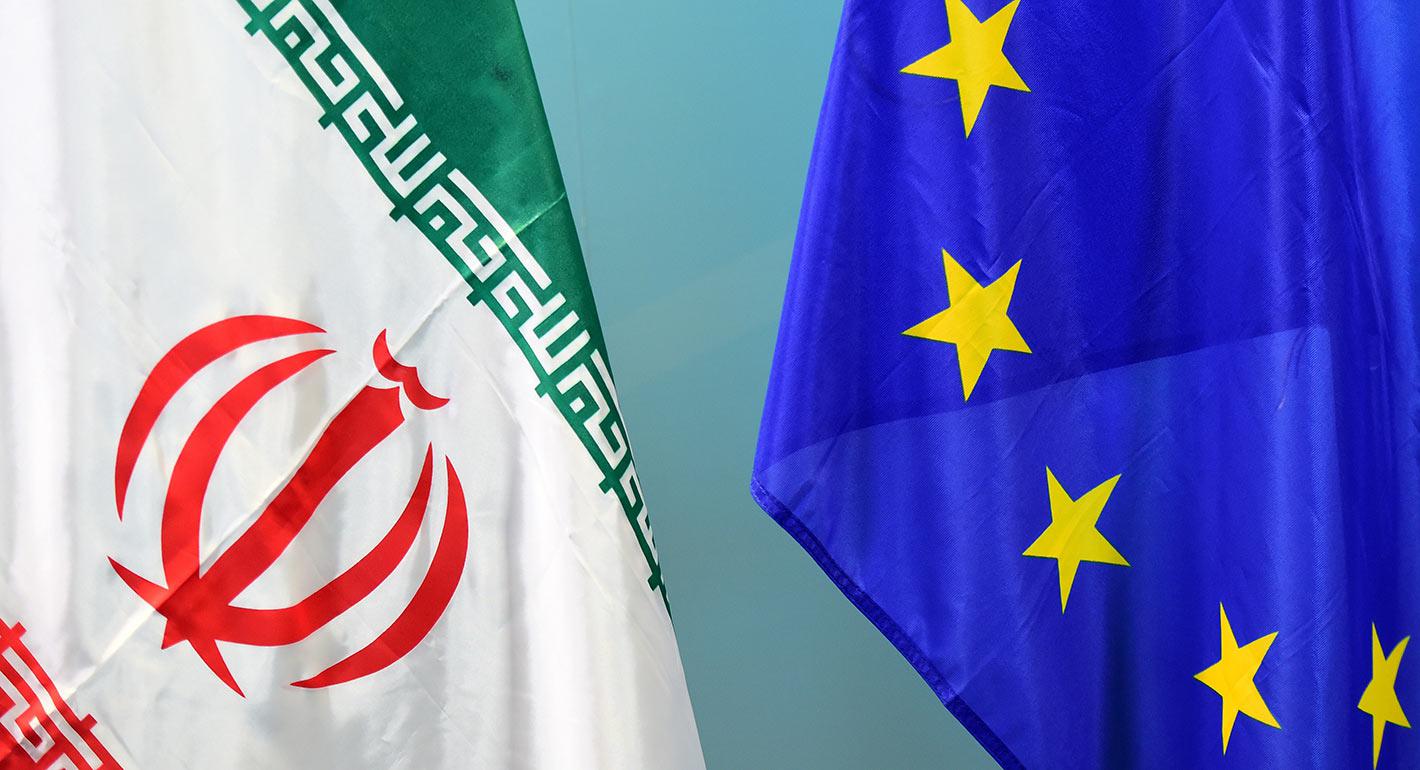
In the critical months between the elections in the United States and Iran, the EU must forge a new transatlantic approach toward Tehran that incorporates shared interests and joint action.
Source: Friedrich Ebert Stiftung
With four years of President Donald Trump in the White House coming to an end, there is some good news to be had: The 2015 Iranian nuclear deal is still alive. Admittedly, that’s a description of its general condition, not a diagnosis of good health. In fact, it is hard to foresee the agreement, officially the Joint Comprehensive Plan of Action (JCPOA), surviving another Trump term. On the other hand, the simple fact of former vice president Joe Biden winning the electoral college could enable the United States to build on the existing framework of the nuclear deal – whether through a "more for more" or "less for less" approach – to craft some sort of JCPOA 2.0, rather than constructing an entirely new agreement. For Europeans, this would mean resuming their role as a constructive mediator between Washington and Tehran.
For decades, Europe's relations with Iran have been a function of a broader triangular relationship that includes both the United States and Iran. Transatlantic bonds have been the foundation not only of European security, but also of a rules-based international order for the past seven decades. Meanwhile, relations between Tehran and Washington have been fraught with enmity since 1979. In contrast, interactions between Iran and Europe – widely understood as the European Union or its member states – have been comparably less pronounced; in effect, they are open to influence from the other sides of the triangle – U.S.-Iranian relations and the state of the transatlantic partnership.
The 2015 Iran nuclear deal had been at the core of this fragile triangle until the U.S. withdrawal in May 2018. Since then, the JCPOA has gone from being the only unifying political issue among the three parties to becoming a hotly contested matter, initially between the Europeans and the United States, and later, following Iran's gradual ceasing of its own commitments to the agreement, also between the EU and Iran. This comes on top of such persisting concerns as acts of sabotage in the Persian Gulf area and inside Iran, ongoing proxy wars in Syria and Yemen, regular rocket attacks in Iraq against U.S. troops, and the dire socioeconomic situation of the Iranian people as exemplified by recurring strikes and unrest. There is also the matter of increased hostage-taking of dual nationals in Iran under spurious accusations.1
As current U.S. policy threatens to broadly undermine the foundations of Europe's security and prosperity, and Iran contributes to increased instability in its immediate neighborhood, the EU needs to reassess its approach to Iran. Of importance, in the case of a Biden electoral victory, Europe will have to quickly reverse gears and switch from fighting for the survival of the JCPOA to developing concrete proposals, backed up with political will and resources, to forge a new transatlantic approach toward Iran. The window of opportunity will be short: The Europeans cannot substantively engage with the incoming Biden team during the transition period, from the election to the president's inauguration, as this would amount to foreign interference. An unclear electoral outcome would obviously also play a factor time-wise. But even more at issue, there are not even five months between the U.S. presidential inauguration in late January 2021 and the Iranian presidential election scheduled for mid-June 2021.
The triangular relationship of Iran, the EU, and the United States over the past two decades offers a number of valuable lessons learned relevant to any discussion of a possible Democratic presidency. For the EU, looking ahead to 2021 means examining how European interests in the region can best be aligned with the new approach of a Biden White House.
This article was originally published by Friedrich Ebert Stiftung.
1Limbert 2019.

Former Nonresident Fellow, Carnegie Europe
Cornelius Adebahr was a nonresident fellow at Carnegie Europe. His research focuses on foreign and security policy, in particular regarding Iran and the Persian Gulf, on European and transatlantic affairs, and on citizens’ engagement.
Recent Work
Cornelius Adebahr

Cornelius Adebahr, Barbara Mittelhammer
Carnegie does not take institutional positions on public policy issues; the views represented herein are those of the author(s) and do not necessarily reflect the views of Carnegie, its staff, or its trustees.

In an interview, Ian Lustick and Eli Clifton discuss their new book on why a prominent ally has so much influence in America.

Michael Young

As the U.S. stumbles in its war with Iran, we are likely to see an acceleration of its disengagement from the region.
Michael Young

Huawei pushed hard to enter the Egyptian data centers market, until the Americans made a better offer.

Angie Omar

Middle Eastern states should welcome an accelerated U.S. disengagement from their region.
Michael Young

In an interview, former ambassador Charles Freeman assesses the Trump administration’s war against Iran.
Michael Young