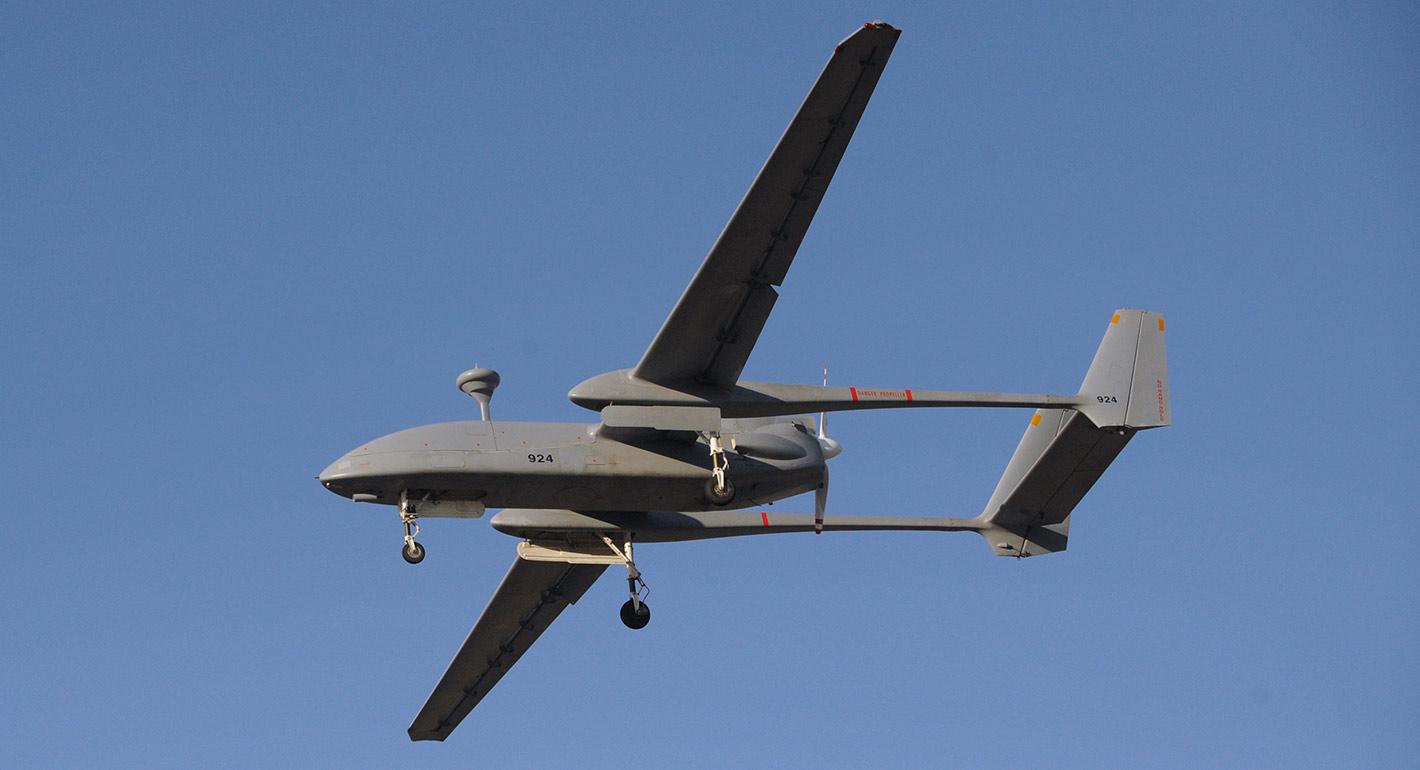
In July, the Indian Ministry of Civil Aviation released for public comment a set of draft rules for unmanned aircraft systems. Called the Drone Rules, 2021, these would replace the existing Unmanned Aircraft System Rules, 2021, and are likely to give the Indian economy a big boost.
What Are the Economic Benefits of Drones?
Drones can reduce costs for businesses over the medium to long term by improving or automating some production processes. In fact, in Australia, the growth of the drone sector is expected to deliver cost savings to businesses of around $9.3 billion over the next twenty years.
For example, drones can perform inventory checks, which take up a lot of time and money. In the oil and gas industry, drones can complete this task in only a fraction of the time humans would need.
Furthermore, drones allow businesses to survey their assets over a large geographic spread in a cost-effective manner. Utility companies like oil, gas, and electricity providers have assets (like transformers and pipelines) spread over large areas that can be monitored effectively by drones. Drones can also reduce labor costs significantly by substituting aerial operations for dangerous and labor-intensive work. For example, drones can undertake operations like inspection, mapping, and surveying in open-cast mine operations. Drones can also conduct safety inspections of construction sites, plants, and other sites, as well as reach areas that are difficult or dangerous for humans to inspect.
How Are Drones Already Being Used in India?
Drones have many nonmilitary uses. The Indian government and businesses have already begun to deploy drones in a range of different scenarios:
- Transport: Indian Railways, National Highways Authority of India, and the government of Maharashtra have employed drones to monitor stretches of land for different projects. The purposes of these projects range from enhancing safety to reducing field visits. For example, Indian Railways has used a drone to monitor a particular area in the Karnataka region that is vulnerable to landslides. In another project, Indian Railways has also used drones to capture images of a project so government officials can monitor its ongoing progress without carrying out field visits.
- Agriculture: Drones have been used in different parts of Maharashtra to assess crop damage. Farmers in the state of Andhra Pradesh have used drones to spray pesticides or fertilizers in limited areas.
- Disaster management: India’s National Disaster Management Authority has deployed drones for various purposes, from conducting search and rescue missions to surveying disaster sites.
- Mining: The police department in Karnataka has used drones to detect illegal sand mining. The government of Andhra Pradesh has employed drones to carry out three-dimensional mapping in mines. In addition to other benefits, this could help lessen the safety threat caused by inaccurate mapping of mines.
- Deliveries: Omnipresent, a robotics company, has gotten permission from the government to start trial deliveries for products bought online. Omnipresent has already tested drone deliveries of medicine for the All India Institute of Medical Sciences hospital in New Delhi.
- Photography: Wedding photography and videography are other areas where drones are used.
- Law enforcement: The government of Karnataka has started a pilot project to monitor crowds and traffic using drones. In addition, police departments in the city of Thane and the state of Tamil Nadu have also used drones to assist them with surveillance in criminal investigations.
- Urban development: The government of Andhra Pradesh has utilized drones to conduct mapping of development projects in the city of Amravati.
- Other uses: Drones have also been deployed to tackle locust onslaughts and to help the government with patrolling and announcements during the coronavirus pandemic. Using drones for patrolling helped keep police officers safe by reducing the need for in-person monitoring of localities. For coronavirus-related announcements, custom drones were made with megaphones attached. Policemen could dial into these megaphones and make announcements. Drones were also used to drop off medical supplies and spray disinfectants over public spaces.
What Are the Existing Rules?
The existing Unmanned Aircraft System Rules, 2021, were notified on March 12, 2021. They are notably more complex and onerous than the new proposed rules and will continue to be in force until the new rules are enacted.
- The existing rules apply to all drones registered or used in India unless they are over 300 kilograms (660 pounds). For heavy drones that weigh more than that—as some commercial drones used for cargo delivery might—then rules for larger aircraft would apply. These rules require drone owners to undergo multiple approvals. To name a few, owners must obtain a certificate of airworthiness, a unique number for each drone, special permission if they want to use the drones for research and development, a security clearance, and permission to sell or give the drone to someone else.
- The rules categorize drones into different subcategories, each with different rules. For example, no license or permit is required to fly a drone weighing up to 250 grams (0.5 pounds, called a nano drone).
- There are criminal offenses under the old rules, including offenses for which the accused can be arrested without a warrant. The penalties are linked to the size of the drone involved in the incident, so even a seemingly minor accident involving a large drone would end up with 500 times the penalty amount specified for the individual.
What Was Changed for the Proposed Draft Rules?
The draft rules are much simpler than the existing rules and place less of a burden on companies wishing to use drones.
- The proposed rules cover drones up to 500 kilograms (1,100 pounds), after which they operate under rules for large aircrafts. This significantly increases the size of drones that are covered by these rules. Larger drones will still be treated as drones in all aspects. This is a significant departure from the existing rules, where large drones are treated as aircraft for the purpose of requirements related to, for example, airworthiness and radio telegraph apparatuses.
- The rules eliminate many permits and licenses currently required. For example, the draft rules require six forms instead of twenty-five forms. However, the rules still mandate that drone users provide a unique identification number, certificate of airworthiness, and remote pilot license.
- The rules do not require a license or a permit to fly a nano drone. There is also no need to obtain a license or a permit to fly a micro drone (which is a drone weighing more than 250 grams and less than or equal to 2 kilograms or 4.4 pounds) for noncommercial purposes. No permit is needed to use a drone for research and development (the list of entities eligible for this exemption is mentioned in the rules).
- Penalties are lower. The link between the penalty and the size of the drone has been removed. The fine is now capped at 1 lakh (100,000) rupees ($1,350), irrespective of the size of drone involved in the incident. Under the new rules, there will also not be any offenses where the accused can be arrested without a warrant.
However, certain issues could still be of concern. First, the rules give all state governments, union territory administrations, and law enforcement agencies direct access to the data available on the online platform used to manage drones. This provision does not state exactly why this data would be shared or what it would be used for. This could possibly be in violation of the principle of purpose limitation, which requires the purpose of data sharing to be clearly mentioned. This would violate Section 5 of the proposed data protection bill when it becomes law. To fix this, the Ministry of Civil Aviation should add a clause laying out the exact purpose for which such access will be provided.
Second, the rules mention that certification standards, which will dictate what needs to be done to obtain a certificate of airworthiness, “may promote the use of made-in-India technologies, designs, components and drones; and India’s regional navigation satellite system named Navigation with Indian Constellation (NavIC).” This could be the beginning of a protectionist approach toward Indian drone systems. The rules should not make recommendations toward Indian technologies. Instead, companies producing these technologies should be left to compete in a free and fair market. This would provide Indian competitors the necessary incentive to improve their products and services.
What Are the Implications for India’s Economy?
The reduction in the number of licenses required is a welcome move toward opening up the drone industry. Licensing is a cost that regulated entities must bear, so a large number of required licenses only increases the compliance cost for companies and creates a barrier to entry because only big firms can afford them. The likely effect of the new rules is already being noted—the tech market intelligence firm BIS Research has cited them as a factor for the growth of the Indian drone market, which is expected to reach $1.21 billion in 2021.
Further, the increase in the size of the industry will open up the path for job creation. Drone-related jobs will be created for remote pilots, engineers, and data processing and analysis experts. There will also be demand for people skilled in specific-use cases like surveying, mapping, and photography.
From an economic perspective, the draft rules are surely a step in the right direction.