

Research
Steve Feldstein, Shreya Joshi
{
  "authors": [
    "Steve Feldstein"
  ],
  "type": "testimony",
  "centerAffiliationAll": "dc",
  "centers": [
    "Carnegie Endowment for International Peace"
  ],
  "englishNewsletterAll": "democracy",
  "nonEnglishNewsletterAll": "",
  "primaryCenter": "Carnegie Endowment for International Peace",
  "programAffiliation": "DCG",
  "programs": [
    "Democracy, Conflict, and Governance"
  ],
  "regions": [
    "United States"
  ],
  "topics": [
    "Military",
    "AI",
    "Technology",
    "Defense",
    "Security"
  ]
}
Source: Getty
The world is at a critical inflection point, where a combination of ever more powerful AI systems, accelerating proliferation, and a corresponding norms vacuum is setting up a dangerous set of conditions.
Testimony to the Tom Lantos Human Rights Commission, September 2026
Chairman McGovern, Chairman Smith, and Members of the Committee, thank you for inviting me to testify in today’s hearing. I have worked on matters related to democracy, human rights, and national security for over two decades with a more recent research focus on the impact of AI technologies on political repression, armed conflict, and governance.
I believe we are at a critical inflection point, where a combination of ever more powerful AI systems, accelerating proliferation, and a corresponding norms vacuum is setting up a dangerous set of conditions.
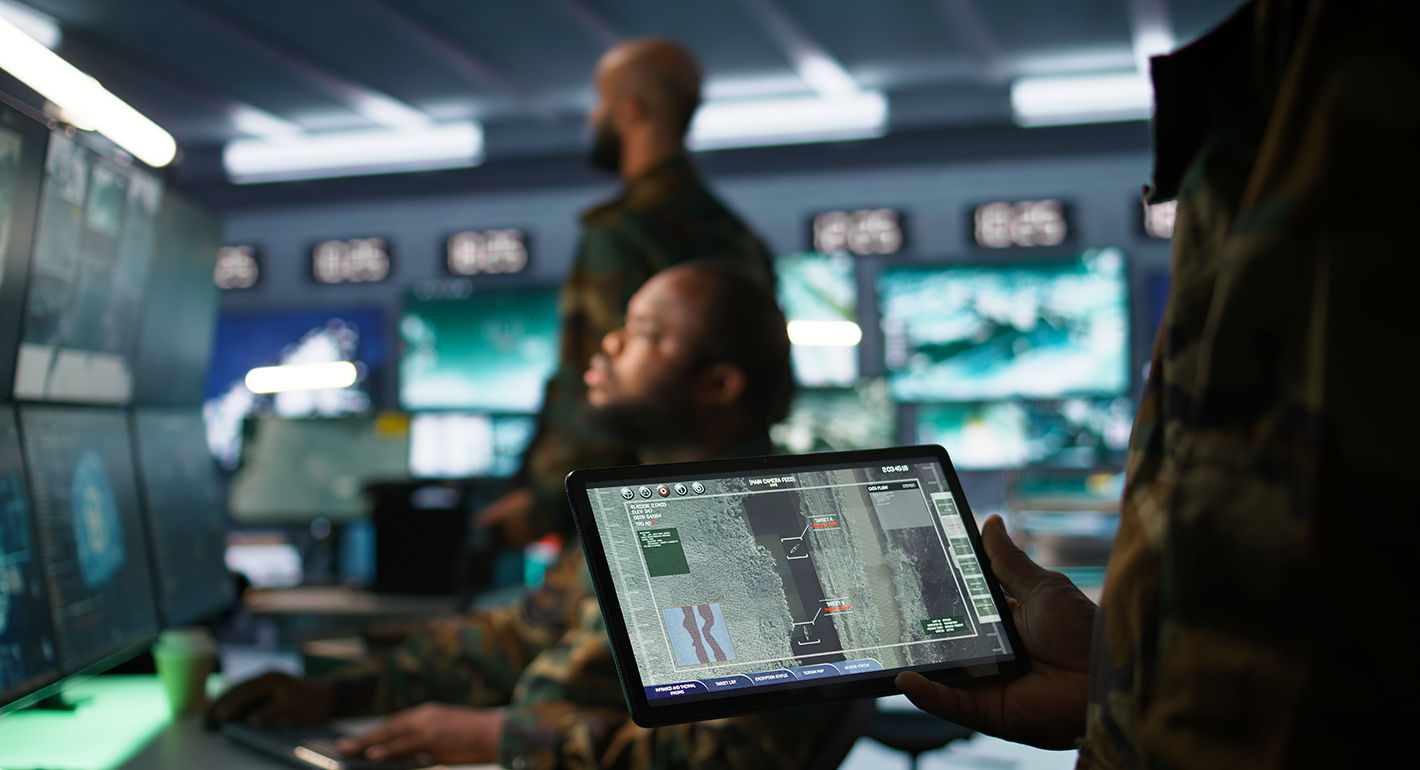
Military AI systems are no longer theoretical. Driven by developments on the battlefield in Ukraine, Gaza, and Iran, major militaries are rapidly integrating AI targeting systems at scale and experimenting with autonomous weapons. In the Iran war, during the first week of hostilities alone, the Pentagon reported it had struck more than 3,000 targets. By the time a ceasefire was announced 38 days later, the number of attacked targets had risen to 13,000, largely due to Palantir’s Maven targeting system. In Israel, AI targeting systems have played a crucial role in supporting its military campaign against Gaza. One of the deployed systems, known as Lavender, reportedly produced 37,000 target recommendations in the opening weeks of the war, leading to 15,000 strikes. In the Russia-Ukraine war, both sides have widely integrated AI into their targeting efforts. In late August, a small Russian drone swooped towards a Ukrainian gas station, exploded into a wall, and killed three civilians. Powered by a commercially available Nvidia minicomputer, and flying without a radio link, it reportedly used onboard AI to independently navigate and select its targets, making this one of the first documented cases of a fully autonomous, self-targeting AI system killing civilians.
As military applications of AI grow, their proliferation is increasing. Only a small number of countries currently possess high-end AI targeting systems equivalent to Maven: China, Israel, North Korea, Russia, South Korea, Ukraine, the United Kingdom, and the United States. These systems are complex and require extensive capital investments and infrastructural upgrades, limiting how quickly other nations can acquire them. Still, there is a significant pool of countries that possess the capacity and incentives to acquire this technology soon, such as India, Iran, Pakistan, Saudi Arabia, Türkiye, and the UAE—some of which have documented records of human rights violations and war crimes.
Other AI capabilities can also lead to wartime harm. For example, Anthropic’s September threat intelligence report revealed that a slew of actors used Claude Code to enhance their weapons development, including non-state actors like the Houthi militia, which deployed Claude to develop multi-stage ballistic missiles and guided rockets. And it wasn’t just the Houthis, reportedly an Iranian-linked group deployed Claude to target US Navy ships in the Middle East, pulling together transponder data, photographs and satellite imagery to track naval vessels. These developments are accelerating the diffusion of military knowledge and expertise, allowing hostile actors to achieve breakthroughs, such as developing autonomous drones, while facilitating the wide dissemination of lethal capabilities.
These developments put pressure on an already weakening global commitment to international humanitarian law (IHL) and international human rights. Not only is the world experiencing a surge in armed conflict—last year more than 255,000 people were killed in battle across 65 conflicts in 35 countries, the highest number of conflict events since 1946—but the scale of atrocities committed by warring parties is rising correspondingly. As the brutality of contemporary wars come into focus, there is scant political will to hold perpetrators to account. The United States has traditionally been a leading upholder of these principles, but under the current administration, America has executed a stunning reversal. In the Pentagon, Secretary Pete Hegseth fired top lawyers for the military services, known as judge advocates general (JAGs), who oversee military conduct and make sure that military personnel follow the laws of armed conflict. He eliminated offices entrusted with preventing and responding to civilian harm during combat operations, firing 90 percent of the employees staffing the Civilian Harm Mitigation and Response office and the Civilian Protection Center of Excellence. That decision has led to major deficiencies when it comes to evaluating civilian risks from drone and missile strikes and related missions. Reporting indicates, for example, that no member of either center reviewed the Minab site in Iran prior to US missile strikes that killed at least 178 civilians. Secretary Hegseth also fired the interim director and slashed personnel in the office of operational test and evaluation, which Congress established in 1983 to respond to concerns that the Pentagon was deploying weapons systems that failed to operate safely or effectively—a particularly troubling development in the age of AI warfare. Meanwhile, the Pentagon is pushing to incorporate AI technologies, from autonomous drones to AI targeting systems, into its arsenal, signaling its intent, in the words of Secretary Pete Hegseth, to become an “‘AI-first’ warfighting force across all components, from front to back.”
The challenges presented by military AI are acute, but I believe that progress is possible and would offer four ideas for consideration:
To conclude, unconstrained innovation does not lead to better or more efficient warfighting. Rather, it produces unreliable weapons that miss their targets, violate human rights, and ultimately move the United States further from victory. The proliferation risks associated with military AI open the door to mounting civilian harm and threaten America’s national security. We have a narrow window of opportunity to shape this technology. We should seize this moment while we can.
Thank you. I look forward to your questions.

Director and Senior Fellow, Democracy, Conflict, and Governance Program
Steve Feldstein is a senior fellow and director of the Democracy, Conflict, and Governance Program at the Carnegie Endowment for International Peace. His research focuses on technology, national security, the global context for democracy, and U.S. foreign policy.
Recent Work
Steve Feldstein, Shreya Joshi


Sophia Besch, Eric Ciaramella, Steve Feldstein, …
Carnegie does not take institutional positions on public policy issues; the views represented herein are those of the author(s) and do not necessarily reflect the views of Carnegie, its staff, or its trustees.

In an interview, Rozina Ali discusses her new book on the rise and manifestations of Islamophobia in the United States.

Michael Young

In an interview, Ian Lustick and Eli Clifton discuss their new book on why a prominent ally has so much influence in America.
Michael Young

As the U.S. stumbles in its war with Iran, we are likely to see an acceleration of its disengagement from the region.
Michael Young

Middle Eastern states should welcome an accelerated U.S. disengagement from their region.
Michael Young

In an interview, former ambassador Charles Freeman assesses the Trump administration’s war against Iran.
Michael Young