• Research
  • Diwan
  • About
  • Experts
Carnegie Middle East logoCarnegie lettermark logo
LebanonIran
Public Opinion and Power
Book

Public Opinion and Power

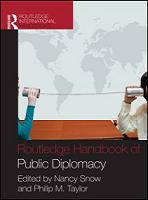
This chapter examines how world public opinion influences the United States' ability to exercise influence abroad militarily, economically, and politically. It concludes by discussing the difference between opposition to American foreign policy, on the one hand, and anti-Americanism, on the other hand, and exploring that difference's policy implications.

Link Copied
By Ali Wyne
Published on Nov 3, 2008

Source: Routledge

Although opposition to American foreign policy is particularly pronounced in the Arab-Muslim world, it has reached alarming levels even in those countries that America counts as its closest allies.  Thus, in 2006, Anthony King, one of the world’s preeminent political scientists, observed that, "There has probably never been a time when America was held in such low esteem on this side of the Atlantic."  How does this state of affairs impact American foreign policy?  Joseph Nye has contributed greatly to the discourse on this question by introducing the notion of "soft power:" A nation wields soft power if it can convince others to support its objectives without having to employ force, economic sanctions, or other coercive instruments of statecraft.   Extending Nye's concept, Ali Wyne examines how world public opinion influences the United States' ability to exercise influence abroad. 

Please click here to read the rest of the chapter. 

This book is available from Routledge.
To order the book from Routledge, please click here. 

Ali Wyne is a Junior Fellow in the China Program.

About the Author

Ali Wyne

Former Junior Fellow, China Program

Ali Wyne
Former Junior Fellow, China Program
North AmericaUnited StatesMiddle EastSouth AsiaChinaPolitical ReformEconomyForeign Policy

Carnegie does not take institutional positions on public policy issues; the views represented herein are those of the author(s) and do not necessarily reflect the views of Carnegie, its staff, or its trustees.

More Work from Malcolm H. Kerr Carnegie Middle East Center

  • Commentary
    Diwan
    Shockwaves Across the Gulf

    The countries in the region are managing the fallout from Iranian strikes in a paradoxical way.

      • Angie Omar

      Angie Omar

  • Commentary
    Diwan
    The U.S. Risks Much, but Gains Little, with Iran

    In an interview, Hassan Mneimneh discusses the ongoing conflict and the myriad miscalculations characterizing it.

      Michael Young

  • Commentary
    Diwan
    The Greatest Dangers May Lie Ahead

    In an interview, Nicole Grajewski discusses the military dimension of the U.S. and Israeli attacks on Iran.

      Michael Young

  • Commentary
    Diwan
    Firepower Against Willpower

    In an interview, Naysan Rafati assesses the first week that followed the U.S. and Israeli attack on Iran.

      Michael Young

  • Commentary
    Diwan
    What Is Israel’s Plan in Lebanon?

    At heart, to impose unconditional surrender on Hezbollah and uproot the party among its coreligionists.

      Yezid Sayigh

Get more news and analysis from
Malcolm H. Kerr Carnegie Middle East Center
Carnegie Middle East logo, white
  • Research
  • Diwan
  • About
  • Experts
  • Projects
  • Events
  • Contact
  • Careers
  • Privacy
  • For Media
Get more news and analysis from
Malcolm H. Kerr Carnegie Middle East Center
© 2026 Carnegie Endowment for International Peace. All rights reserved.