• Research
  • Diwan
  • About
  • Experts
Carnegie Middle East logoCarnegie lettermark logo
LebanonIran
At Last, Iraqi Lawmakers Agree on the 2010 Election Law

Source: Getty

Article

At Last, Iraqi Lawmakers Agree on the 2010 Election Law

On December 6, 2009, the Iraqi parliament finally passed an election law for the 2010 elections. The law deals with the most controversial issues regarding the election.

Link Copied
Published on Dec 14, 2009

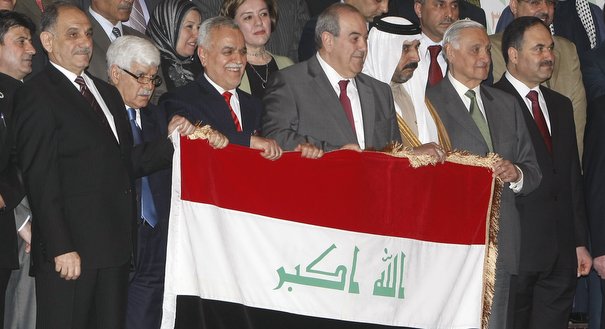
On Sunday, December 6, 2009, the Iraqi parliament finally passed an election law for the 2010 elections. The Presidency Council swiftly approved the measure, the result of sensitive negotiations among Iraq’s top legislators.

 The most controversial issues were the distribution of parliamentary seats among provinces, and the number and distribution of minority and compensatory seats, which are apportioned to parties too small to win election in any single province, but that win a large enough share of the national vote to earn a seat in parliament.
  • The 325-seat parliament will consist of 310 seats for the provinces, eight seats for minority groups, and seven compensatory seats.
     
  • Provincial seats will be distributed on the basis of the 2005 Ministry of Trade’s population numbers (based on food ration cards), with 2.8% population growth added for all provinces. 
     
  • Iraqis living abroad will vote for representatives of their home provinces, with no special status attributed to them.
     
  • Minority seats will be distributed as follows: five Christian seats will be contested within a single national district reserved for Christians. In addition, Yazidis will have one reserved seat in Nineveh, Saibis one in Baghdad, and Shabakis one in Nineveh. 
     
  • The seven remaining compensatory seats will be distributed among parties that fare well on the national level but do not gain any seats on the provincial level
 
Province2005 Elections2010 Elections
Baghdad5968
Nineveh1931
Basra1624
Dhi Qar1218
Babil1116
Sulaymaniya 1517
Anbar 914
Irbil 1314
Diyala 1013
Kirkuk 912
Salahaddin 812
Najaf 812
Wasit 811
Qadisiyah 811
Maysan710
Dohuk 710
Karbala 610
Muthanna 57
Compensatory Seats4515
Total275325
IraqPolitical ReformDemocracy

Carnegie does not take institutional positions on public policy issues; the views represented herein are those of the author(s) and do not necessarily reflect the views of Carnegie, its staff, or its trustees.
More Work from Malcolm H. Kerr Carnegie Middle East Center

  • Commentary
    Diwan
    The Hezbollah Disarmament Debate Hits Iraq

    Beirut and Baghdad are both watching how the other seeks to give the state a monopoly of weapons. 

      Hasan Hamra
  • Commentary
    Diwan
    System Maintenance in Iraq

    In an interview, Shahla al-Kli discusses the country’s parliamentary elections and what they reveal.

      Rayyan Al-Shawaf

  • Commentary
    Diwan
    Toward a New Compromise in Iraq?

    Recent election results have placed Nouri al-Maliki in a strong position to name the next prime minister.

      Wladimir van Wilgenburg

  • Commentary
    Diwan
    Israel’s Ring of Buffer Zones

    In the aftermath of the October 7 attacks, the Israelis have transformed their neighbors’ borderlands to serve their own security interests. 

      Armenak Tokmajyan

  • Commentary
    Diwan
    Mutual Disenforcement in the Arab World

    Ties between Iraq and Lebanon show how fragile regional states tend to strengthen each other’s dysfunctions.

      Hasan Hamra

Get more news and analysis from
Malcolm H. Kerr Carnegie Middle East Center
Carnegie Middle East logo, white
  • Research
  • Diwan
  • About
  • Experts
  • Projects
  • Events
  • Contact
  • Careers
  • Privacy
  • For Media
Get more news and analysis from
Malcolm H. Kerr Carnegie Middle East Center
© 2026 Carnegie Endowment for International Peace. All rights reserved.