

Commentary
In an interview, Ian Lustick and Eli Clifton discuss their new book on why a prominent ally has so much influence in America.
Michael Young
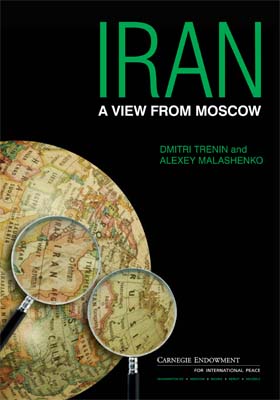
Although Iran and Russia have substantial economic and military ties, Moscow is increasingly wary of Tehran’s growing nuclear ambitions, which have the potential to threaten Russia.
Although Iran and Russia have substantial economic and military ties, Moscow is increasingly wary of Tehran’s growing ambitions. Dmitri Trenin and Alexey Malashenko offer a view from Moscow and detail how Iran’s desire to develop nuclear weapons and long-range missiles—while refusing to compromise with the international community—threaten Russia.
“Moscow does not have enough sway to directly alter Tehran’s policies and it does not want to be an intermediary between Iran and the United States,” the authors write. “But as Iran’s neighbor, economic and military partner, and as a permanent member of the Security Council, Russia can encourage moderate forces in Iran to compromise with the West on the nuclear issue instead of confronting Washington.”
Former Director, Carnegie Moscow Center
Trenin was director of the Carnegie Moscow Center from 2008 to early 2022.
Former Scholar in Residence, Religion, Society, and Security Program
Malashenko is a former chair of the Carnegie Moscow Center’s Religion, Society, and Security Program.
Carnegie does not take institutional positions on public policy issues; the views represented herein are those of the author(s) and do not necessarily reflect the views of Carnegie, its staff, or its trustees.

In an interview, Ian Lustick and Eli Clifton discuss their new book on why a prominent ally has so much influence in America.

Michael Young

As the U.S. stumbles in its war with Iran, we are likely to see an acceleration of its disengagement from the region.
Michael Young

Middle Eastern states should welcome an accelerated U.S. disengagement from their region.
Michael Young

In an interview, former ambassador Charles Freeman assesses the Trump administration’s war against Iran.
Michael Young

The accord represents a pivotal moment in the region to avert a security vacuum in the Gulf.


Azeema Cheema, Mohanad Hage Ali