• Research
  • Diwan
  • About
  • Experts
Carnegie Middle East logoCarnegie lettermark logo
PalestineSyria
The Battle of Dubai: The United Arab Emirates and the U.S.-Iran Cold War

Source: Getty

Paper
Malcolm H. Kerr Carnegie Middle East Center

The Battle of Dubai: The United Arab Emirates and the U.S.-Iran Cold War

If the United States and the United Arab Emirates seek to move beyond sanctions and military containment to address the deeper roots of the Iranian threat, they may find they have differing long-term interests.

Link Copied
By Karim Sadjadpour
Published on Jul 27, 2011

Additional Links

Full Text

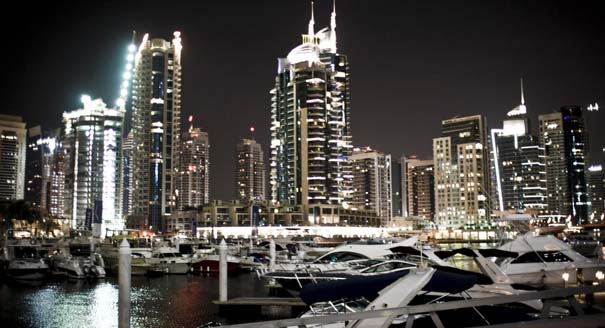
As the United States seeks to contain Iran’s nuclear ambitions through economic sanctions and diplomatic isolation, the United Arab Emirates (UAE) has come to play a critical yet often ambiguous role. The UAE, namely the emirate of Dubai, is a top source of Iranian imports and a key transshipment point for goods—legal and illegal—destined for the Islamic Republic. Dubai’s bustling and loosely regulated ports have repeatedly frustrated international sanctions against Iran.

At the same time, the government in Abu Dhabi feels acutely threatened by Iran and has consequently forged a strategic alliance with the United States. The UAE spends billions of dollars on U.S. arms and Emirati officials have privately urged the United States to consider all possible options—including military intervention—to stop Iran’s nuclear program. Additionally, the UAE has allowed the United States to use Dubai—home to the world’s second-largest Iranian diaspora community—as a perch to gather information on Iran.

A combination of U.S. pressure and Abu Dhabi’s newfound economic and political clout over Dubai has led the UAE to significantly enhance the enforcement of sanctions in recent years. Yet both the United States and the UAE face serious obstacles in distinguishing between legal and illegal commerce and have felt a backlash from legitimate merchants who feel unfairly targeted.

Few policymakers in Washington or Abu Dhabi believe that sanctions alone will modify Iran’s external behavior or curtail its nuclear ambitions. But if the United States and the UAE seek to move beyond sanctions and military containment to address the deeper roots of the Iranian threat—namely the character of the Iranian regime—they may find they have differing long-term interests.
 
Karim Sadjadpour
Senior Fellow, Middle East Program
Karim Sadjadpour
Middle EastIranUnited Arab EmiratesGulfPolitical ReformForeign PolicyNuclear Policy

Carnegie does not take institutional positions on public policy issues; the views represented herein are those of the author(s) and do not necessarily reflect the views of Carnegie, its staff, or its trustees.

More Work from Malcolm H. Kerr Carnegie Middle East Center

  • Commentary
    Diwan
    Iran and the New Geopolitical Moment

    A coalition of states is seeking to avert a U.S. attack, and Israel is in the forefront of their mind.

      Michael Young

  • Commentary
    The Middle East’s Promising Gen Z

    Fifteen years after the Arab uprisings, a new generation is mobilizing behind an inclusive growth model, and has the technical savvy to lead an economic transformation that works for all.

      Jihad Azour

  • Commentary
    Carnegie Politika
    Baku Proceeds With Caution as Ethnic Azeris Join Protests in Neighboring Iran

    Baku may allow radical nationalists to publicly discuss “reunification” with Azeri Iranians, but the president and key officials prefer not to comment publicly on the protests in Iran.

      Bashir Kitachaev

  • Commentary
    Diwan
    Iran’s Woes Aren’t Only Domestic

    The country’s leadership is increasingly uneasy about multiple challenges from the Levant to the South Caucasus.

      Armenak Tokmajyan

  • Commentary
    Diwan
    Exporting Fossil Fuels Through Cloud Computing

    The GCC states’ use of Artificial Intelligence will generate much leverage over the global digital infrastructure and climate talks.

      Camille Ammoun

Get more news and analysis from
Malcolm H. Kerr Carnegie Middle East Center
Carnegie Middle East logo, white
  • Research
  • Diwan
  • About
  • Experts
  • Projects
  • Events
  • Contact
  • Careers
  • Privacy
  • For Media
Get more news and analysis from
Malcolm H. Kerr Carnegie Middle East Center
© 2026 Carnegie Endowment for International Peace. All rights reserved.