

Commentary
Just look at Iraq in 1991.
Marwan Muasher
Source: Getty
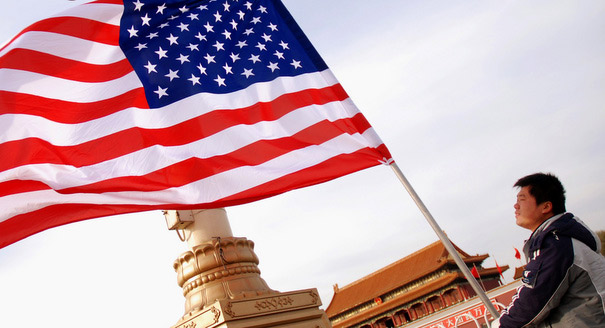
Leadership transitions in China and the United States, combined with mounting tensions in the bilateral relationship, could have far-reaching consequences for both countries.
In less than one month, American voters will decide whether to give Barack Obama a second term as U.S. president or to replace him with Mitt Romney. Just two days after the American presidential election, the Chinese Communist Party will convene its 18th National Congress to anoint its fifth generation of leadership. If history is an indicator of the future, there are many reasons to be optimistic about the prospects for U.S.-China relations following any transition. Still, there remain many uncertainties and challenges that, if not immediately and properly addressed, could inflict serious damage to the bilateral relationship.
In the United States, with deepening fears about a rapidly rising China and a sluggish American economy, China-bashing seems to have reached an unprecedented level. Many analysts are deeply concerned that the alarming rhetoric from both candidates, if translated into concrete policies after the election, will probably lead to significant changes in America’s China policy and a sharp downturn in the bilateral relationship.
These concerns, while not unjustified, should not be overblown. As annoying and unsettling as it sounds, such China-bashing rhetoric is usually just posturing aimed at generating support at home. It should not be viewed as a credible policy statement. Once the campaign dust settles, the president-elect will have to face a multitude of domestic, bilateral, and international realities that make it both difficult and unrealistic to initiate any abrupt and significant changes to the United States’ China policy.
In fact, over the past four decades of U.S. presidents, from Richard Nixon to Barack Obama, the dominant trend of Washington’s China policy has been one of remarkable continuity characterized by engagement and cooperation. If there was any noticeable change after the inauguration of a new president, it has more often been a refinement than a fundamental shift.
The same could also be said of China’s policy toward the United States. From Deng Xiaoping to Jiang Zemin to Hu Jintao, the Chinese leadership has been actively pursuing a policy of engagement and cooperation with the United States, despite its deep-rooted—and seemingly growing—suspicion and resentment of the world’s only superpower. One indicator of China’s commitment to such policy, and of the importance Beijing attaches to its relations with the United States, is the established practice of sending China’s heir apparent to the United States to build up a personal rapport with American leaders before officially assuming power.
But uncertainties exist, and the biggest one stems from Chinese domestic politics. The legitimacy of the Chinese Communist Party has traditionally rested on two cornerstones—nationalism and economic performance. During Mao’s era, nationalism was the primary source of legitimacy. After Deng launched reforms and opened up China’s economy to the world in 1978, economic performance has moved to the fore.
Lately, faults have begun to form. In the aftermath of the 2008 financial crisis and after three decades of growth at breakneck speed, China’s economy has shown unmistakable signs of a significant slowdown. In addition to economic woes, the Communist Party is confronted with myriad of pressing issues that seriously undercut its legitimacy: glaring inequality, rampant corruption and abuse of power, environmental degradation, and deteriorating product safety, to name just a few.
Faced with mounting domestic pressure, the Chinese leadership may be unable to resist whipping up nationalistic sentiment to distract the domestic audience and shore up support. The ongoing Japan-China standoff over the disputed Senkaku/Diaoyu Islands appears to be influenced by such political considerations. However, the Chinese government seems fully aware that in times of widespread discontent, nationalistic protests also carry a real danger of turning into outlets for pent-up frustration and calls for political reform. This was obviously the case under the Kuomintang regime, when protests against a foreign presence in China, or specifically the Japanese occupation, often turned into calls for political reform. The Chinese government quickly subdued anti-Japanese protests in mid-September after reports came out of unruly mobs attacking innocent citizens, vandalizing properties, and looting stores. Since then, the government has imposed strict restrictions on such protests.
The Chinese government should be extremely reluctant to stir up tensions in the U.S.-China bilateral relationship. The exception would be if a U.S. action were widely perceived by the Chinese public to be completely unjustifiable and provocative. The Chinese regime’s legitimacy could also be influenced by political reforms, such as competitive elections at the county or municipal level; a more independent judiciary; better protection of fundamental political rights; relaxation of censorship; and increased government transparency. If—and this is a big if—the new Chinese leadership decides to embrace these reforms, the temptation and urgency to use nationalism to bolster domestic legitimacy will be significantly reduced. After all, a government of the people, by the people, and for the people does not need to worry about its legitimacy—even in the worst times of economic performance—in contrast to a government that neither trusts nor is trusted by its own people. Such reforms should also give a huge boost to U.S.-China relations because the formation of similar political institutions would contribute to mutual understanding and strategic trust.
Beyond domestic considerations, the leaderships in both countries face the daunting challenge of adjusting to the obvious and far-reaching changes in each other’s capabilities and influence. Having dominated international affairs since 1945 and as the only superpower in the world today, the United States seems ill-prepared—at least from the Chinese perspective—for accommodating a rapidly rising China, as exemplified by the high-profile U.S. rebalancing toward Asia. Meanwhile, Chinese leaders—and to a lesser extent the Chinese public—are perceived to be increasingly assertive as a result of China’s growing economic and military power. Fundamental differences in political institutions and ideological beliefs will only make matters much worse.
Regardless, rather than throwing accusations at each other or resigning themselves to unavoidable mutual misperceptions, leaders in both countries must work together to manage a relationship that has enormous implications for regional and global security. The first step is to educate the Chinese and American public about the importance and complexities of the bilateral relationship. Leaders are not just decision makers, they are also agenda setters and opinion shapers. Yet leaders in both countries have sadly abandoned the latter two roles in the face of domestic pressure. It is high time that they muster the political will, stand firm on the bully pulpit, and lay out a long-term vision for the U.S.-China bilateral relationship.
Xie Tao is a professor of political science at Beijing Foreign Studies University.
This article was published as part of the Window into China series

Xie Tao
Xie Tao is professor of Political Science and Dean of the School of International Relations and Diplomacy, Beijing Foreign Studies University. His research interests include U.S.-China relations, Chinese foreign policy, as well as American public opinion toward China.
Carnegie does not take institutional positions on public policy issues; the views represented herein are those of the author(s) and do not necessarily reflect the views of Carnegie, its staff, or its trustees.

Just look at Iraq in 1991.

Marwan Muasher

Baku may allow radical nationalists to publicly discuss “reunification” with Azeri Iranians, but the president and key officials prefer not to comment publicly on the protests in Iran.

Bashir Kitachaev

In addressing Hezbollah’s disarmament, the Lebanese state must start by increasing its own leverage.

Michael Young

The country’s political and military establishment is still debating how to interpret the recent war’s outcome.

Nicole Grajewski
Spot analysis from Carnegie scholars on events relating to the Middle East and North Africa.

Mohanad Hage Ali