

In The Media
John Judis
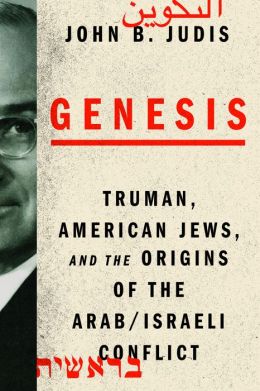
The fatal flaw in American policy can be traced back to the Truman years. What happened between 1945 and 1949 sealed the fate of the Middle East for the remainder of the century.
Source: Farrar, Straus and Giroux
A probing look at one of the most incendiary subjects of our time—the relationship between the United States and Israel
There has been more than half a century of raging conflict between Jews and Arabs—a violent, costly struggle that has had catastrophic repercussions in a critical region of the world. In Genesis, John B. Judis argues that, while Israelis and Palestinians must shoulder much of the blame, the United States has been the principal power outside the region since the end of World War II and as such must account for its repeated failed efforts to resolve this enduring strife.The fatal flaw in American policy, Judis shows, can be traced back to the Truman years. What happened between 1945 and 1949 sealed the fate of the Middle East for the remainder of the century. As a result, understanding that period holds the key to explaining almost everything that follows—right down to George W. Bush’s unsuccessful and ill-conceived effort to win peace through holding elections among the Palestinians, and Barack Obama’s failed attempt to bring both parties to the negotiating table. A provocative narrative history animated by a strong analytical and moral perspective, and peopled by colorful and outsized personalities, Genesis offers a fresh look at these critical postwar years, arguing that if we can understand how this stalemate originated, we will be better positioned to help end it.

Former Visiting Scholar
As a visiting scholar at Carnegie, Judis wrote The Folly of Empire: What George W. Bush Could Learn from Theodore Roosevelt and Woodrow Wilson.
Recent Work
John Judis
John Judis
Carnegie does not take institutional positions on public policy issues; the views represented herein are those of the author(s) and do not necessarily reflect the views of Carnegie, its staff, or its trustees.

It is improbable that Israel’s forthcoming elections will alter much in terms of how the country thinks about security.

Nathan J. Brown

Huawei pushed hard to enter the Egyptian data centers market, until the Americans made a better offer.

Angie Omar

Middle Eastern states should welcome an accelerated U.S. disengagement from their region.

Michael Young

In an interview, former ambassador Charles Freeman assesses the Trump administration’s war against Iran.
Michael Young

The accord represents a pivotal moment in the region to avert a security vacuum in the Gulf.


Azeema Cheema, Mohanad Hage Ali