

Commentary
European Commission President Ursula von der Leyen is about to give her annual address on the state of the EU. Here’s what she won’t—but should—say.
Rym Momtaz
{
  "authors": [
    "Constantino Xavier",
    "Arushi Kumar"
  ],
  "type": "legacyinthemedia",
  "centerAffiliationAll": "dc",
  "centers": [
    "Carnegie Endowment for International Peace",
    "Carnegie India"
  ],
  "collections": [],
  "englishNewsletterAll": "ctw",
  "nonEnglishNewsletterAll": "",
  "primaryCenter": "Carnegie India",
  "programAffiliation": "SAP",
  "programs": [
    "South Asia"
  ],
  "projects": [],
  "regions": [
    "South Asia",
    "India"
  ],
  "topics": [
    "Foreign Policy"
  ]
}
Source: Getty
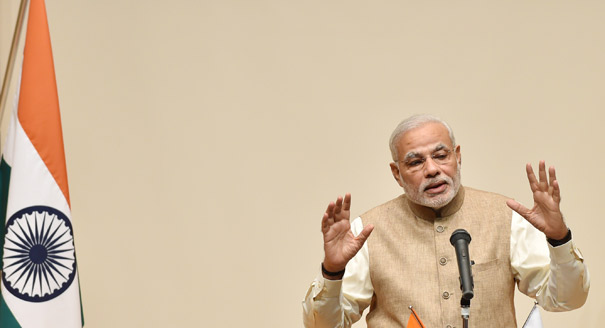
India must focus on Estonia, Latvia, and Lithuania if it wishes to shape Eurasia’s geostrategic transformation.
Source: Livemint
As Europe witnesses rapid geopolitical change amidst a more assertive Russia, retrenched US and proactive China, the importance of the Baltic region has grown once again. The recent visit by the minister of state for external affairs M.J. Akbar to Latvia and Lithuania, from 24-26 May, following his visit to Estonia last year, indicates India’s rising interest in the region.
India’s Baltic outreach is in line with New Delhi’s priority of strengthening bilateral ties with small states rather than treating them as a subset of its relationships with other great powers and their respective spheres of influence. While India’s Europe policy remains committed to the dual track of engaging the European Union (EU) multilaterally and its individual member-states bilaterally, there is now also interest in developing sub-regional cooperation initiatives, for example in Central and Eastern European countries.
For Estonia, Latvia and Lithuania, in turn, the imperative is to play a pivotal role in the strategic transformation of Eurasia. As China and Russia align to connect the Pacific to the Atlantic, the Baltic states will play a central role as transportation hubs but may not want to rely exclusively on Beijing’s Belt and Road Initiative. Beyond their role in the EU and Nato (North Atlantic Treaty Organization), the three states are also seeking to craft their own diplomatic identity, including in the scientific, technological and digital economy domains. On all these fronts, India offers the Baltic states with possibilities for alternative partnerships in Asia.
As India and the Baltics celebrate the 25th anniversary of their diplomatic relations this year, this is the right moment to move the relationship forward. To do so, India should take the initiative on four fronts.
First, at the diplomatic level, India must expand its presence in the Baltic region. While Estonia, Latvia and Lithuania now all have full-fledged embassies in New Delhi, since 2014, India’s relations with the three countries are still channelled via its diplomatic missions in Helsinki, Stockholm and Warsaw. Opening Indian embassies in Tallinn, Riga and Vilnius would be a first step in that direction. The ministry of external affairs could also restructure its Central Europe Division, as it currently does not distinguish between the Baltics and non-EU states.
Second, beyond the bilateral dimension, there should be greater Indo-Baltic engagement on regional and global issues, for example via more regular consultations on the EU and Russia, as well as on the changing transatlantic partnerships and the rising role of China. This would allow New Delhi to develop a more nuanced understanding of developments in Central and Eastern Europe, rather than relying on the views of Washington, Brussels or Moscow.
For the Baltic states, in turn, a closer dialogue with India would facilitate their exposure to the BRICS (Brazil, Russia, India, China and South Africa), Shanghai Cooperation Organization and other international initiatives in which India is playing a more prominent role. Similarly, by reaching out to Delhi, they will also complement their views on Asia, which have traditionally focused on Russian, European, and more recently also Chinese perspectives.
To facilitate this dialogue, India and the Baltics could, for example, deepen engagement by holding annual summits in a 3+1 format. New Delhi can also seek to engage various other regional constellations, including the Baltic Sea Region or the Nordic-Baltic Eight (NB 8) initiative. Ad-hoc meetings, similar to the ones conducted by Turkey and Japan with the three states, can also be used to further cooperation. As Estonia prepares to assume the presidency of the Council of the EU, from July onwards, more such engagement opportunities will arise.
Third, India and the Baltic states must explore the potential of their historical links. On the cultural front, the Baltics and India share a common heritage which must be explored via greater people-to-people contacts. For example, several generations of Lithuanians have been raised with the idea that their language comes from Sanskrit. The Centre of Indian Studies and Culture at the University of Latvia, or the recently inaugurated Centre of Baltic Culture and Studies at the Dev Sanskriti University, in Haridwar are examples of how these ties are being revitalized.
Finally, since regaining their independence in 1992, the three Baltics states have also been at the forefront of developing innovative digital governance, which opens up possibilities for cooperation with India. Estonia, for example, has played a leading role in developing European and global standards on data privacy and to strengthen cyber-security. As New Delhi takes the initiative to regulate these new domains domestically and internationally, it would benefit from a closer dialogue to assess and share experiences with Baltic policymakers.
By exploring the potential across these various sectors, a stronger partnership between India and the Baltic states will naturally also uncover a common democratic identity and a shared commitment to principles such as the rule of law and multilateralism to foster global governance and security. Most importantly, this liberal approach will distinguish the current Indo-European rapprochement from the autocratic or unilateral impulses that drive other Eurasian initiatives.
Former Fellow, Carnegie India
Constantino Xavier was a fellow at Carnegie India, based in New Delhi. His research focus is on India’s foreign policy, with emphasis on relations with its neighboring countries and South Asian regional security.
Arushi Kumar
Carnegie does not take institutional positions on public policy issues; the views represented herein are those of the author(s) and do not necessarily reflect the views of Carnegie, its staff, or its trustees.

European Commission President Ursula von der Leyen is about to give her annual address on the state of the EU. Here’s what she won’t—but should—say.

Rym Momtaz

The books, podcasts, and films that explain the world it made.

Andrew Leber
U.S. trading partners in Asia are closely watching the dispute for signs of how it may affect their own interests.

Barbara Weisel

The aftermath of the Ceuta crisis shows Europe has drawn the wrong lessons. Rather than doubling down on failed migration policies, the EU needs to address the underlying roots of such episodes.

Richard Youngs
By abandoning past U.S. pro-democracy policies and adopting several lines of pro-autocratic action, the Trump administration has fundamentally repositioned the United States vis-à-vis democracy in the world.

Thomas Carothers