

Commentary
- +1
Paul Haenle, Xue Gong, Ngeow Chow Bing, …
{
  "authors": [
    "Paul Haenle"
  ],
  "type": "legacyinthemedia",
  "centerAffiliationAll": "",
  "centers": [
    "Carnegie Endowment for International Peace",
    "Carnegie China"
  ],
  "collections": [
    "China and the Developing World",
    "U.S.-China Relations",
    "China’s Foreign Relations"
  ],
  "englishNewsletterAll": "",
  "nonEnglishNewsletterAll": "",
  "primaryCenter": "Carnegie China",
  "programAffiliation": "",
  "programs": [],
  "projects": [],
  "regions": [],
  "topics": [
    "Economy"
  ]
}
Source: Getty
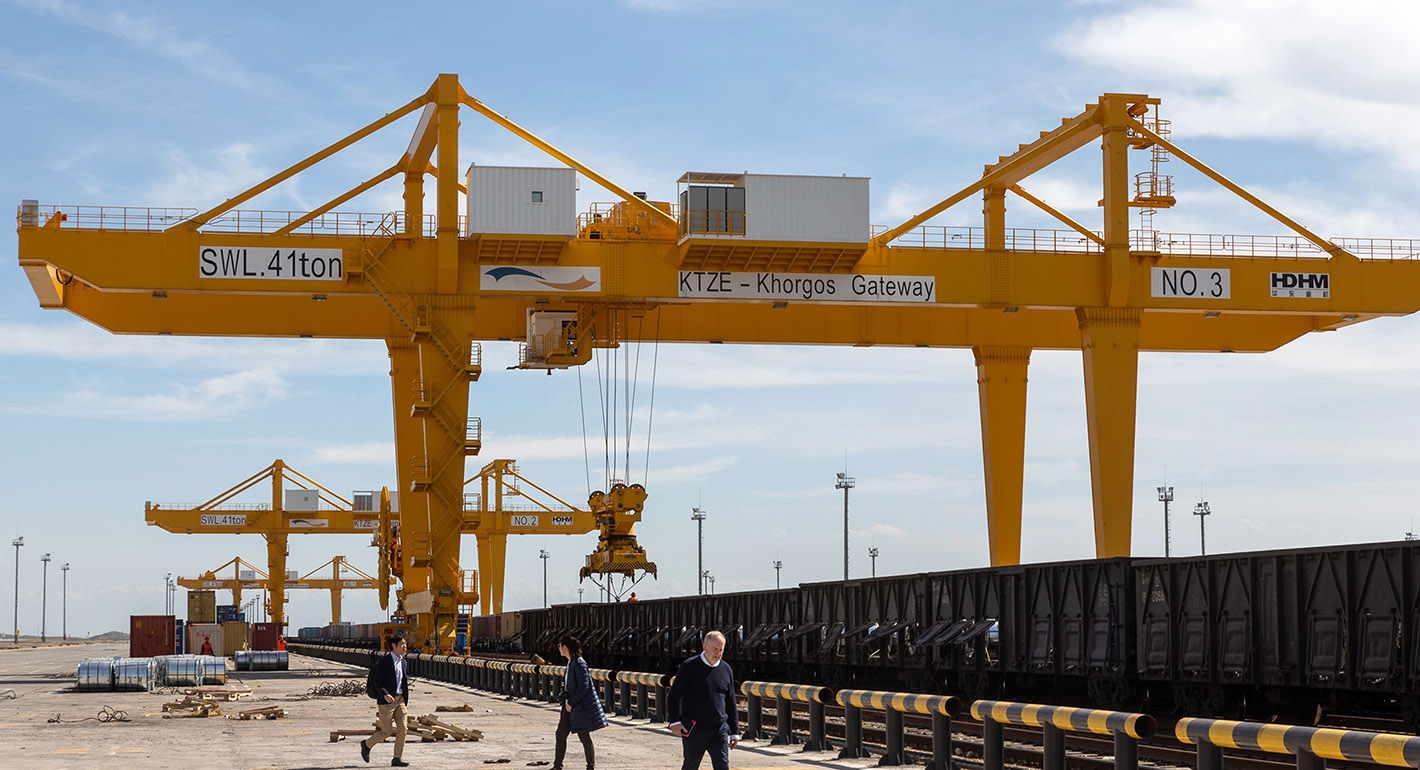
It is far too early to declare the “death” of the Belt and Road Initiative. Such assessments are premature, and fail to recognize the importance of the BRI to the leadership in Beijing.
Source: ChinaFile
It is far too early to declare the “death” of the Belt and Road Initiative (BRI). Such assessments are premature, and fail to recognize the importance of the BRI to the leadership in Beijing. It is a flagship project of the Xi Jinping era, illustrative of Beijing’s shift from “hide and bide” to “striving for achievements.”
Recently, the initiative has been increasingly scrutinized for its lack of transparency, rampant corruption, and failure to promote economically sustainable projects and good governance. However, despite growing criticism of the BRI, many developing countries welcome it: they have a genuine need for infrastructure development but a dearth of funding.
I am doubtful we will see the BRI abandoned any time soon. What we can hope for is a recalibration of the BRI that seeks to sincerely address international criticism, match rhetoric with actions, and set more achievable goals. We should also hope China opens up BRI projects to non-Chinese companies, addresses concerns about debt and economic sustainability, and implements international development best practices.
If China were to take such steps, it would be better not only for the countries along the Belt and Road, but also for China. In addition to international critiques, Beijing has also received pushback from its own citizens for spending so much abroad at a time when many areas within China still need development. Following the September 2018 Forum on China-Africa Cooperation, flickers of domestic discontent flared up over China’s pledge to provide U.S.$60 billion in concessionary loans, grants, and investments. Some Chinese observers question whether Beijing is developing other countries at the expense of its own citizens.
Although the BRI has encountered significant setbacks and criticisms, too much political, financial, and intellectual capital has been sunk into the project for Chinese leaders to abandon it. As long as Xi helms the Chinese political system, the BRI is likely to occupy a central place in China’s foreign policy. Ultimately, however, the success or failure of the BRI will depend on what China does to learn and adapt from the initiative’s shortcomings. If Beijing fails to make the initiative more transparent, more equitable, and more sustainable, I suspect the United States and like-minded countries will continue to harbor negative views. If, however, China demonstrates sincere efforts to learn and adapt, it could generate positive impacts and move China toward a more responsible model of development.
This piece is part of a collection originally published by ChinaFile

Former Maurice R. Greenberg Director’s Chair, Carnegie China
Paul Haenle held the Maurice R. Greenberg Director’s Chair at the Carnegie Endowment for International Peace and is a visiting senior research fellow at the East Asian Institute, National University of Singapore. He served as the White House China director on the National Security Council staffs of former presidents George W. Bush and Barack Obama.
Recent Work


Paul Haenle, Xue Gong, Ngeow Chow Bing, …

Paul Haenle, Chong Ja Ian
Carnegie does not take institutional positions on public policy issues; the views represented herein are those of the author(s) and do not necessarily reflect the views of Carnegie, its staff, or its trustees.

The European Commissioner for Trade is headed to China. But after President Xi’s bridge-building visit to Washington, can a more isolated EU overcome Beijing’s stranglehold on critical raw materials? Who will blink first?

Rym Momtaz, ed.

The domestic impacts of how long it is taking to end the war in Ukraine have pushed the French electorate to the political extremes and compromised the country’s diplomatic capacity.
Rym Momtaz

The Plaza Accord was not an externally imposed punishment of Japan but part of a broader restructuring that Japanese economists and policymakers themselves recognized was necessary. Its effects were undermined, however, when Tokyo responded to the resulting slowdown with policies that exacerbated investment, credit expansion, and the very imbalances the adjustment was intended to resolve.

Michael Pettis

A summer of escalation in the Black Sea has hurt Ukraine economically and is exacerbating world food security. A truce is needed—as is a broader reframing of Europe’s Ukraine strategy.

Thomas de Waal
The Bureau of Industry and Security needs to adjust its focus and practices to maintain its position as the U.S. government’s primary champion of international technological competition.

Geoffrey Irving