

Commentary
With the growth in points of friction between the great powers, organizations like the SCO will continue to play a role in the strategic adaptation of the smaller powers caught between them.
Temur Umarov
{
  "authors": [
    "Kirill Krivosheev"
  ],
  "type": "commentary",
  "blog": "Carnegie Politika",
  "centerAffiliationAll": "dc",
  "centers": [
    "Carnegie Endowment for International Peace",
    "Carnegie Russia Eurasia Center"
  ],
  "collections": [
    "Aso Tavitian Initiative"
  ],
  "englishNewsletterAll": "ctw",
  "nonEnglishNewsletterAll": "",
  "primaryCenter": "Carnegie Russia Eurasia Center",
  "programAffiliation": "russia",
  "programs": [
    "Russia and Eurasia"
  ],
  "projects": [],
  "regions": [
    "Caucasus",
    "Azerbaijan",
    "Armenia"
  ],
  "topics": [
    "Foreign Policy",
    "Economy"
  ]
}
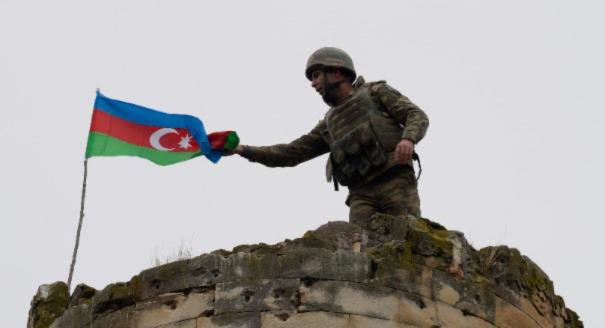
Source: Getty
If everything continues the way it is going in Nagorno-Karabakh, for the Armenians Russia will become the ally that couldn’t protect it, while for the Azeris it will be the mediator that did the enemy’s bidding.
New clashes in the Nagorno-Karabakh region disputed by Armenia and Azerbaijan, and Baku’s demands for the area’s “demilitarization” are a stark reminder that the fighting in Ukraine is inflaming tensions in other post-Soviet conflicts. Periodic exchanges of fire between the Armenian and Azerbaijani sides are nothing new, but this time the skirmishes could lead to Azerbaijan gaining control of the Lachin corridor, a mountainous road that connects the region with Armenia, and also houses key gas and electrical infrastructure. If all of that gets cut off, the very existence of what remains of Armenian-controlled and -populated Nagorno-Karabakh will be under threat.
The Lachin corridor is located between the Armenian border and Nagorno-Karabakh’s main town, Stepanakert, but in Soviet times it was populated by Azeris. During the first Nagorno-Karabakh War (1992–1994), it was the scene of particularly vicious fighting, and in December 2020, after Armenia’s defeat in the 2020 war, Baku demanded the return of this territory.
Negotiations moderated by Russia produced the following solution for the mountainous road: a five-kilometer strip along the highway was put under the control of Russian peacekeepers. The town of Shusha through which the road passes, greatly prized as a cultural center by the Azeris, was transferred to the control of Baku, with peacekeepers stationed at a junction to ensure that Armenians were allowed to enter Stepanakert without excessive interrogations.
Armenia and Azerbaijan undertook to “determine a plan for the construction of a new route” as an alternative to the Lachin corridor—one that would not go through Shusha—before November 2023. After that, Russian peacekeepers would be moved there, along with transport links between Armenia and Nagorno-Karabakh.
The current clashes broke out after Baku announced it had completed construction of its 32-kilometer section of the new highway between Nagorno-Karabakh and the Armenian border well ahead of schedule. The Azeris are eager to take control of the entire Nagorno-Karabakh region, and have accordingly been laying down infrastructure at a frantic pace. Completion of the road means Baku can now demand control over the Lachin corridor.
Yet Armenia still needs to build its own 8-kilometer section of road to connect the new highway to its own road network. Unlike the Azeris, the Armenians are in no rush. When Baku reported the imminent completion of work on the highway, Yerevan was still only starting preparations for a tender. Actual work on the connecting road was only begun on August 4: after the current clashes broke out.
Baku is unlikely to want to wait for nearly eighteen months for the Armenians to vacate the Lachin corridor and start using the new highway. The remaining residents of several Armenian settlements inside the Lachin corridor don’t want to leave their homes, and have been writing open letters to the U.S. and French leaderships in the hope that those countries might turn out to be more pro-Armenian moderators than Russia.
In these circumstances, the role of Russian peacekeepers is particularly important, but Moscow has very little room for maneuver. For Armenian politicians, still reeling from their country’s defeat in the 2020 war, nothing is off the table right now, from breaking off relations with Russia entirely and focusing instead on the West in the hope that it will save the Armenians from a “new genocide,” to calls to support Moscow unconditionally in its conflict with Kyiv in an attempt to make Moscow treat Nagorno-Karabakh as it does the breakaway South Ossetia or Donbas republics. Both approaches, while poles apart, stem from the same overly high expectations that some in Armenia have of Russia.
The reasons are understandable. After its defeat in the recent war, Armenia signed an agreement that contained several deliberate ambiguities, such as the future status of Nagorno-Karabakh. Now those vague outlines are gradually beginning to be filled in—to the advantage of the stronger side, Azerbaijan. The Armenians can only hope that support from a powerful ally might help to turn the situation in their favor.
In reality, Russia simply cannot meet those inflated expectations. Russian peacekeepers are on friendly terms with the leadership of the Nagorno-Karabakh Armenians, and official Russian documents at times refer to the “Nagorno-Karabakh Republic.” But that doesn’t so much reassure the Armenians as it irritates the Azeris. Baku is furious that Russian peacekeepers have laid the blame for the recent clashes exclusively on Azerbaijan, and that they have effectively allowed the de facto Nagorno-Karabakh authorities to retain their own army.
Baku’s recent calls for the “full demilitarization” of Nagorno-Karabakh are further proof that the Azerbaijani leadership does not want to see the Russian peacekeepers’ mandate extended past 2025, and that in the meantime, it is ready to do everything it can to make sure their mission is no longer necessary.
The easiest way to achieve that goal is to make it so that the Armenian part of Nagorno-Karabakh simply ends up deserted. The status of the new corridor between Armenia and Nagorno-Karabakh has not yet been determined, but Baku appears to have no intention of making it extraterritorial, since Yerevan refused to grant that same status to the road from Baku to the Azerbaijani exclave of Nakhichevan. If the new corridor is not given extraterritorial status, the Azerbaijani authorities will be able to detain practically any Nagorno-Karabakh Armenian on the road to Armenia for “participation in an illegal armed gang.”
Nagorno-Karabakh’s electricity, gas, and internet are currently supplied only by Armenia, via the Lachin corridor. Baku is unlikely to allow that infrastructure to be built along the new highway, since its aim is to force the Nagorno-Karabakh Armenians to buy Azerbaijani gas and electricity. This will push them to either integrate into Azeri financial and legal systems or leave to avoid living with no power or connection to the outside world.
Accordingly, the end of summer, when the Armenians are due to leave the Lachin corridor, could become a defining moment in the Nagorno-Karabakh conflict. Will Baku allow Armenians to pass through the Lachin corridor? Will electricity and gas supplies to Nagorno-Karabakh from Armenia be turned off? Neither Yerevan nor Russian peacekeepers will have much sway over Baku on these matters. The future of the conflict will be in Azerbaijan’s hands.
The most Armenia can count on in terms of international support is condemnation of Baku for aggressive rhetoric. It certainly can’t hope for support for an independent Nagorno-Karabakh. But the belief has firmly taken root in Armenian public opinion that certain external players, and Russia in particular, should uphold their “right to self-determination,” regardless of any international agreements already signed. For this reason, even if the Armenian-held parts of Nagorno-Karabakh will be gradually deserted, it’s hard to imagine that this process will take place without any bloodshed.
Nor does it bode well for Russia’s positions in the South Caucasus. If everything continues the way it is going, for the Armenians Russia will become the ally that couldn’t protect it, while for the Azeris it will be the mediator that did the enemy’s bidding. For now, both sides in the conflict are keeping any such thoughts to themselves, but it’s not hard to imagine a situation in which the rampant nationalistic populism in the region forces local leaders to say it out loud.

Kirill Krivosheev
Journalist
Carnegie does not take institutional positions on public policy issues; the views represented herein are those of the author(s) and do not necessarily reflect the views of Carnegie, its staff, or its trustees.

With the growth in points of friction between the great powers, organizations like the SCO will continue to play a role in the strategic adaptation of the smaller powers caught between them.

Temur Umarov

When faced with fuel shortages in the past, Central Asian governments could always count on additional supplies from Moscow. That safety net no longer exists.

Galiya Ibragimova

Despite unhappiness on the ground, Moscow is determined to use both carrot and stick to ensure there is record support for United Russia in occupied Ukraine.

Konstantin Skorkin
The recent damage inflicted by Ukrainian drones and missiles on Russia has made Belarus aware of its own vulnerabilities—and surprisingly amenable to Kyiv’s demands.

Artyom Shraibman
Russia looks set to reap economic benefits from closer ties with Southeast Asian countries that are keen to find reliable energy suppliers and diversify trade ties.

Alexander Gabuev