

Commentary
Nikita Smagin
{
  "authors": [
    "Nikita Smagin"
  ],
  "type": "commentary",
  "blog": "Carnegie Politika",
  "centerAffiliationAll": "",
  "centers": [
    "Carnegie Endowment for International Peace",
    "Carnegie Russia Eurasia Center"
  ],
  "englishNewsletterAll": "",
  "nonEnglishNewsletterAll": "",
  "primaryCenter": "Carnegie Russia Eurasia Center",
  "programAffiliation": "",
  "programs": [],
  "projects": [],
  "regions": [
    "Iran",
    "Russia",
    "Middle East"
  ],
  "topics": [
    "Foreign Policy",
    "Security",
    "Global Governance"
  ]
}
Source: Getty
While the prospect of a full-scale war between Iran and Israel is a worry for the Kremlin, it could also have a significant financial upside for Russia.
The escalating conflict between Israel and Iran is beginning to impact Russian interests in the Middle East, as well as threaten a whole range of Russian-Iranian projects. Nevertheless, Moscow prefers to adapt to the evolving situation rather than to get directly involved. Russia cannot—and will not—save Iran in its confrontation with Israel and the United States.
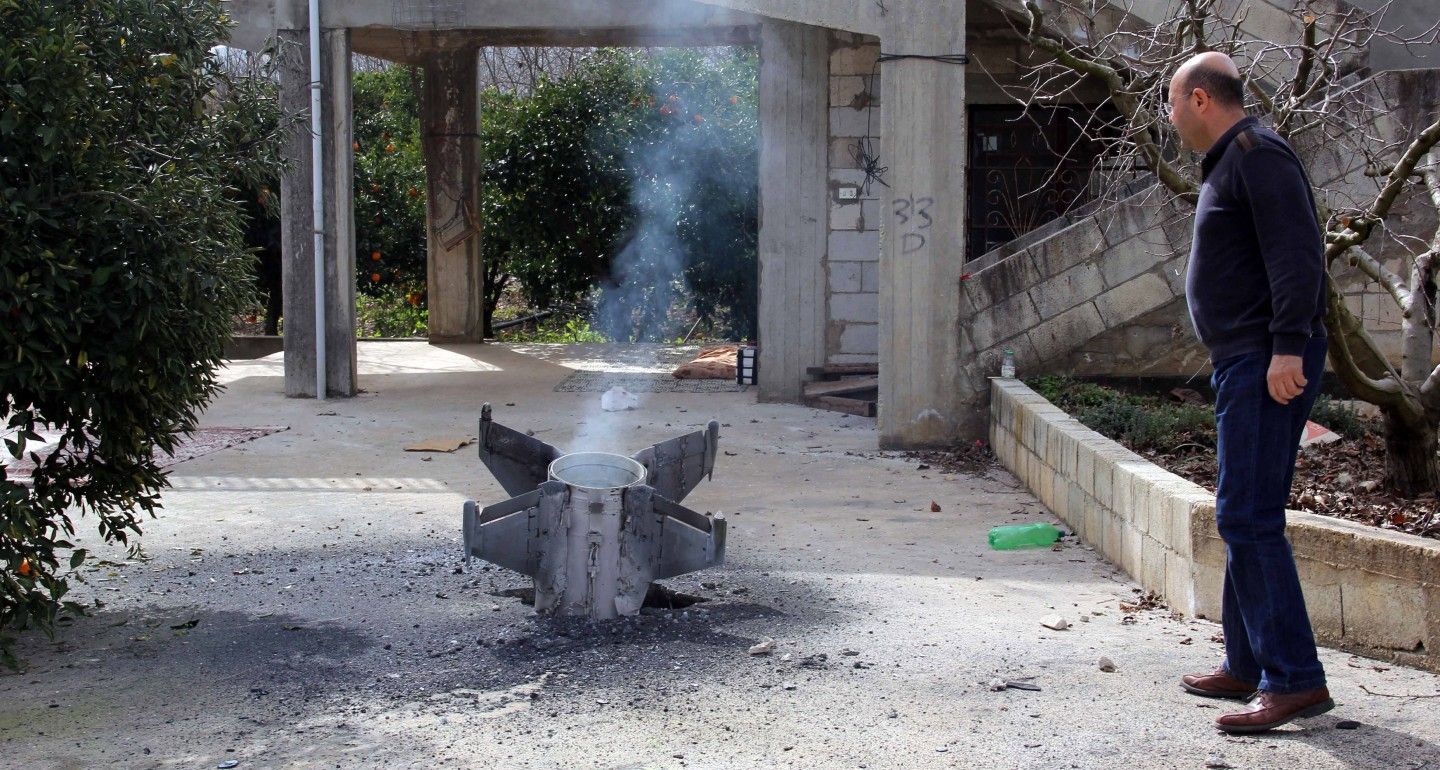
The fighting between Iran and Israel is creeping closer and closer to Russia’s interests. The most obvious possible flashpoint is the Russian troops based at Syria’s Khmeimim Air Base. Israel bombed Iranian forces near Khmeimim on October 3, and some Israeli missiles have been shot down by Russia.
All this has fueled concerns that Israel could go on to attack Russian targets, triggering a whole new cycle of escalation. But the chances of a Russia-Israel war are slim. Of course, there is the risk of a stray missile, but neither side wants to sever ties, and that means the fallout from any mistake would be contained.
A similar incident to the one near Khmeimim Air Base took place in 2018 when Syrian air defenses accidentally shot down a Russian transport plane with fifteen soldiers on board (it was being used as aerial cover by an Israeli pilot after an attack). Despite threatening rhetoric from Moscow, the issue was resolved in a phone call between Russian President Vladimir Putin and Israeli Prime Minister Benjamin Netanyahu.
There is no suggestion that Russia is considering any sort of direct military intervention in the ongoing fighting in the Middle East. Moscow is so deeply committed in Ukraine that it has no time for another war. Nor has it ever seemed likely to fight to further Iran’s interests.
The most that Russian forces are likely to do is to step up efforts to ward off Israeli attacks on Syria—particularly as Israel has stopped informing Russia in advance of strikes. In other words, any Israeli aircraft targeting Syria could be perceived by Russia as a threat. Even so, Russia does not have sufficient air defense systems to protect all of Syria. The most it could do would be to escalate its response to attacks near Russian facilities.
Instead of direct participation, Russia could seek to support Iran by supplying weapons to Iranian proxy forces, including Hezbollah and the Houthis. However, for the Kremlin, that would be more logical if such deliveries were going to harm the United States, rather than Israel. While Moscow believes obstructing the United States anywhere on the planet to be a legitimate goal, it does not think the same about Israel. As a consequence, Russia is only likely to send weapons to Iranian proxies if U.S. soldiers are actively involved in the conflict.
Iran itself is in line to receive advanced Russian military technology. As well as expecting the delivery of two Su-35 fighter jet squadrons, Tehran is also interested in acquiring Russian radars and air defense systems. Of course, none of this will happen overnight. Even once Moscow greenlights the deliveries, the equipment needs to get to Iran, and Iranians need to be trained to use it. The training program for S-400 missile systems, for example, lasts up to five months. Even if Moscow were to deliver such systems in the coming weeks, they could be deployed by Iran no earlier than spring 2025.
The most realistic possibility is that Russia could aid Iran by sharing intelligence: Tehran is known to have already submitted such a request. While a decision by Moscow to go ahead would be logical, even the most up-to-date intelligence about Israeli and U.S. troop movements would not be enough to change the regional balance of power in favor of Iran.
A full-scale war between Iran and Israel would undoubtedly not be welcomed by Russia. Strikes on Iranian infrastructure could complicate a whole series of Russian-Iranian joint ventures: gas projects, the International North–South Transport Corridor, and more general economic cooperation. Moscow would not be pleased to see Israel and the United States “take out” one of its few reliable international partners.
At the same time, such a war would not be a disaster for the Kremlin. Russia is becoming less and less dependent on Iranian military equipment (the production of Iranian drones, for example, is increasingly taking place inside Russia), while a lack of Iranian missiles or drones is unlikely to seriously impact the battlefield in Ukraine. The trade with Iran is also relatively insignificant for the Russian economy, accounting for just 1 percent or so of the country’s total turnover. Even a complete halt of Iranian trade, therefore, would not be a major loss.
Indeed, there could even be an upside for Russia to a full-scale conflict in the Middle East. Predictably, global oil prices have been rising on the back of the tensions between Israel and Iran, and analysts predict they could hit $100 per barrel in October. Higher oil prices generate more revenue for the Russian budget.
Furthermore, if Israel follows through on its threats to destroy Iran’s oil export infrastructure, then Russia will be free of one of its main competitors when it comes to dumping oil on the Chinese market. And in a worst-case scenario, if Iran closes the Strait of Hormuz, most of the oil-producing countries in the Middle East will immediately be cut off from international markets, making Russian oil indispensable.
Russia therefore has no urgent need to save Iran—particularly if by doing so it would risk a direct military confrontation. In the short term at least, Moscow will let the United States and Israel do whatever they consider necessary in the Middle East.

Expert on Iranian foreign and domestic policies, Islamism, and Russia's policy in the Middle East
Recent Work
Nikita Smagin
Nikita Smagin
Carnegie does not take institutional positions on public policy issues; the views represented herein are those of the author(s) and do not necessarily reflect the views of Carnegie, its staff, or its trustees.

Despite a new textbook, an influx of Russian teachers and managers, and an end to the teaching of Ukrainian, the Kremlin is unlikely to have “reprogrammed” locals.

Konstantin Skorkin

For every ruble allocated to social policy, health, and education in 2027, double that amount is earmarked for the army, the police, and the security services.

Alexandra Prokopenko

Cargo traffic through Russia’s Northern Sea Route has increased because of the disruption caused by the conflict in the Middle East, the Ukraine war, and U.S.-China tensions.

Mikhail Korostikov
An analysis of traffic accident data suggests that Ukrainian drone attacks caused a material but not disastrous fall in Russian gasoline consumption over the summer.

Sergey Vakulenko

Sergei Kiriyenko used Russia’s parliamentary vote to further hone his strategy of corporate mobilization that is designed to maximize votes for United Russia.

Andrey Pertsev