

Commentary
James D.J. Brown
{
  "authors": [
    "James D.J. Brown"
  ],
  "type": "commentary",
  "blog": "Carnegie Politika",
  "centerAffiliationAll": "",
  "centers": [
    "Carnegie Endowment for International Peace",
    "Carnegie Russia Eurasia Center"
  ],
  "englishNewsletterAll": "",
  "nonEnglishNewsletterAll": "",
  "primaryCenter": "Carnegie Russia Eurasia Center",
  "programAffiliation": "",
  "regions": [
    "South Korea",
    "Russia"
  ],
  "topics": [
    "Foreign Policy",
    "Global Governance",
    "Security"
  ]
}
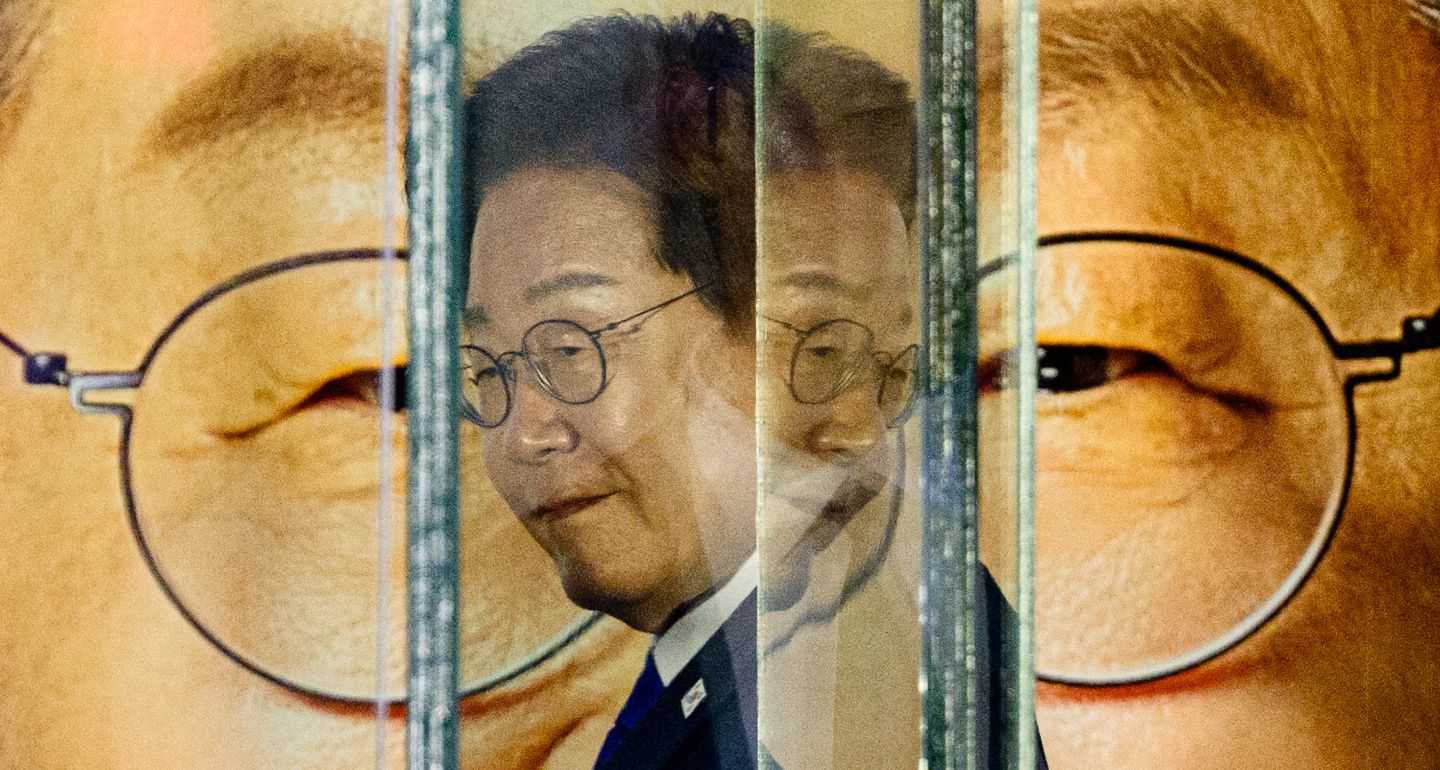
Фото: Getty Images
There are limits as to how far the shift in South Korea’s foreign policy will go.
For the first time in eighteen years, South Korea recalled an ambassador on October 8—from Ukraine. Such withdrawals are reserved for cases when a government wishes to send an especially strong diplomatic protest. This downturn in bilateral relations is especially worrying for Kyiv because it is accompanied by signs of South Korean reengagement with Russia.
The cause of this rift was what initially seemed a minor disagreement. Speaking at the United Nations General Assembly on September 23, Ukrainian President Volodymyr Zelensky noted that Ukraine had “sent two North Korean prisoners of war to the Republic of Korea.” Korean President Lee Jae-myung took umbrage at this, posting on X on September 24 that Zelensky’s announcement was a “breach of a nondisclosure agreement” between the two governments.
The dispute then escalated. After Kyiv denied the existence of such an agreement, President Lee claimed that the Ukrainian side was calling him a liar.
Ukrainian Foreign Minister Andrii Sybiha sought to defuse the situation by sending a message to his Korean counterpart on October 6. However, while Foreign Minister Cho Hyun said that Sybiha’s message included an apology, he said it was insufficient, “so we intend to take firm measures.” This led to the withdrawal of Ambassador Park Ki-chang. Seoul then took matters further by announcing that eight more diplomatic staff had been withdrawn.
In the meantime, South Korean relations with Russia appeared to be warming. Media reports in October revealed that more than 176,000 tons of fuel, including diesel, had been shipped from South Korea to Russia in July and August, including by using tankers subject to UK and EU sanctions. South Korea thus became Russia’s second-largest fuel supplier in August, delivering 31 percent of its fuel imports. This helped offset declines in Russia’s domestic refining capacity caused by Ukrainian attacks.
South Korea is also promoting closer cooperation with Russia in the area of logistics. On October 13, President Lee attended a ceremony in Busan to welcome the return of the Panstar Acro, the first Korean container ship to complete a round trip via the Northern Sea Route that tracks Russia’s Arctic coast. Although using this shipping route requires extensive cooperation with Moscow, Lee pledged “all-out support” to encourage its development.
Tourism is another field of growing cooperation, with 193,700 Russian tourists visiting South Korea between January and September: a 12.9 percent increase on the same period in 2025.
Personnel choices also point to South Korean interest in reviving ties with Russia. On October 1, President Lee appointed Song Young-gil, a member of parliament from his Democratic Party of Korea, as special advisor for peace and diplomacy. Song has long-standing ties to Russia. He was awarded Russia’s Order of Friendship by President Vladimir Putin in 2013. Under President Moon Jae-in, Song also served as special envoy to Russia and was chairman of the Presidential Committee on Northern Economic Cooperation, an initiative by the Moon administration to enhance economic relations with Russia.
Many observers may be puzzled by the rift with Ukraine and simultaneous tilt toward Russia. After all, in many ways, Kyiv seems a natural partner for Seoul, and Moscow a potential adversary.
To start with, one might expect considerable sympathy in South Korea for Ukraine’s plight given that Ukraine is combating Russian aggression—just as South Korea had to resist aggression from a Moscow-backed North Korean regime back in 1950.
More recently, Russia’s intensifying cooperation with Pyongyang, including the signing of the Treaty on Comprehensive Strategic Partnership in 2024, has strengthened North Korea’s capabilities. The Center for Strategic and International Studies estimates that Pyongyang has received up to $14 billion from Russia, helping drive the North Korean economy to 3 percent growth.
Military cooperation has also enhanced Pyongyang’s capacity to threaten South Korea. Russia regularly uses North Korean-supplied KN-23 and KN-24 ballistic missiles against Ukraine, including against key energy infrastructure on November 6. The technical feedback from these attacks helps Pyongyang enhance the accuracy of its missiles.
North Korea’s provision of approximately 16,000 troops to join Russian forces in fighting Ukraine has also afforded the North Korean military with first-hand experience of modern drone-intensive warfare that most countries lack and which one day could be employed against South Korea.
The first explanation for South Korea’s behavior is that it is simply sensible policymaking. In his inaugural address in June 2025, President Lee spoke of his intention to pursue “pragmatic, national-interest-centered diplomacy.”
South Korea relies on imports for almost 98 percent of its fossil fuel consumption. Since February this year, that energy insecurity has been made more pronounced by the United States’ war against Iran. In this context, it makes practical sense for Seoul to strengthen ties with alternative energy suppliers. The South Korean government could point to the Trump administration’s diesel deal with Russia in October as evidence that it is not alone in taking this approach.
It might also be argued that the Lee administration’s stance is not actually so different from that of his conservative predecessor Yoon Suk-yeol, who served as president from 2022 until his removal from office in April 2025 for attempting a coup.
South Korea did impose sanctions on Russia after the full-scale invasion of Ukraine in February 2022, but they were more tentative than those of many Western partners, including Japan. Enforcement has also been questionable, with the Ukrainian government repeatedly expressing concern that the Korean authorities were not doing enough to prevent the illegal export to Russia of computer numerical control (CNC) machines, which can be used in the production of weapons.
Despite Korea’s strengths as an arms exporter, administrations since 2022 have also consistently refused to directly supply lethal military equipment to Ukraine. Due to these considerations, Russian officials have since December 2023 described South Korea as “one of the most friendly among the unfriendly countries.”
However, while some of the Lee administration’s recent policies toward Ukraine and Russia can be attributed to pragmatism, there is also an ideological component.
President Lee, as standard-bearer of the Democratic Party of Korea, is a progressive populist. In foreign policy terms, this entails prioritizing engagement with North Korea while regarding Japan, as the former colonial power, with a more skeptical eye. In 2016, Lee stated that Japan is still “an adversary state,” though he has moderated his rhetoric since becoming president.
Korean progressives are also known for advocating for more autonomy from the United States. Rather than committing unequivocally to a security order based around U.S.-led alliances, the Lee administration speaks about the shift from a unipolar to a multipolar order, thus echoing language used by Moscow and Beijing. In this context, Foreign Minister Cho Hyun has argued that “Korea must diversify its partners and expand its strategic space.
With regard to North Korea, rather than presenting it as a threat, President Lee has stressed peaceful coexistence. During his own speech to the UN General Assembly on September 22, Lee spoke of his intention “to respect the North on the international stage and seek cooperation wherever possible.” He has also downplayed the denuclearization of North Korea as an immediate goal.
This helps explain the vehemence of the Lee administration’s response to Zelensky’s revelation about the North Korean prisoners of war. Coming just a day after Lee’s UN speech, Zelensky’s intervention was seen as undermining the centerpiece of Lee’s foreign policy.
South Korea’s recent outreach to Russia should also be viewed in this context: The Lee administration may hope that Moscow can be prevailed upon to use its growing leverage in Pyongyang to encourage North Korea to restart dialogue with the South.
Both Ukraine and South Korea’s European partners will undoubtedly be concerned by this shift in Seoul’s foreign policy. However, there are limits as to how far it will go.
First, while many in President Lee’s ruling Democratic Party may dream of strategic autonomy from the United States, the reality is that Korea remains dependent on its U.S. ally. This entails the continued presence of U.S. troops on Korean soil and regular military drills. This will remain a point of friction between Seoul and Moscow.
This was highlighted on November 3, when Russian Foreign Ministry spokeswoman Maria Zakharova condemned joint military exercises between South Korea and the United States as “dangerous military games and provocations.”
Second, economic interests place restrictions on President Lee’s foreign policy ambitions. South Korea has the objective of becoming the world’s fourth-largest arms exporter by 2030, with Europe representing one of the most attractive export markets. Korean firms will therefore be opposed to steps by the central government that risk alienating European partners.
Similarly, Korea’s infrastructure companies will want to maintain good relations with Kyiv in order to play a major role in Ukraine’s post-conflict reconstruction.
Compared with these opportunities, economic cooperation with Russia looks far less attractive as its economy stagnates and Moscow regularly violates the rights of foreign investors. The latest example of this trend was the seizure of Japan Tobacco’s business in Russia.
Lee’s lashing out at Ukraine and conciliatory stance toward Russia reveal much about his foreign policy ideology. However, security and economic imperatives ensure that South Korea will not stray too far from the policy of its Western partners.

Professor of Political Science at Temple University
Recent Work
James D.J. Brown
James D.J. Brown
Carnegie does not take institutional positions on public policy issues; the views represented herein are those of the author(s) and do not necessarily reflect the views of Carnegie, its staff, or its trustees.
A gas deal would create palpable economic value, but it wouldn’t fundamentally change the position of either Russia or the EU.
Sergey Vakulenko
Russia’s banking sector is sinking ever deeper into a crisis that the authorities are simply managing rather than trying to fix.
Alexander Kolyandr, Alexandra Prokopenko
The war does threaten Putin’s existence. That is why he does not negotiate.
René Nyberg
Russia’s coveted Red Sea naval base has fallen victim to its erratic foreign policy.
Sergey Konyashin
Mikhail Zvinchuk’s detention could have dealt a serious blow to Russia’s propaganda infrastructure in the Balkans. Instead, the incident has made something else eminently clear: Moscow values and protects its propagandists, while Europe still hasn’t figured out what to do with them.


Ivan Filippov, Ksenia Luchenko