

In The Media
Michele Dunne, Robert Kagan
{
  "authors": [
    "Robert Kagan"
  ],
  "type": "legacyinthemedia",
  "centerAffiliationAll": "",
  "centers": [
    "Carnegie Endowment for International Peace"
  ],
  "collections": [],
  "englishNewsletterAll": "",
  "nonEnglishNewsletterAll": "",
  "primaryCenter": "Carnegie Endowment for International Peace",
  "programAffiliation": "",
  "programs": [],
  "projects": [],
  "regions": [
    "United States"
  ],
  "topics": []
}
REQUIRED IMAGE
Source: Carnegie
Reprinted from the Washington Post, February 7, 2001
If the European leaders who met with Donald Rumsfeld last week had peeked under the table, they would have seen a secretary of defense whose legs had just been cut out from under him. The day before Rumsfeld set off for Munich to urge allies to increase their defense budgets, White House spokesman Ari Fleischer announced that the Bush administration would seek no increase in U.S. defense spending -- not this year, and not in next year's budget either. Other than a small pay increase and some money for military housing, President Bush has decided to submit Bill Clinton's defense budget for Fiscal Year 2002 unchanged. A well-placed administration official says Rumsfeld "didn't know this was coming." Either way it is a major defeat -- for him and for the nation's military. Bush may suffer, too. This is his first broken campaign promise.
On the trail last year Bush and Dick Cheney made a rather large point about Bill Clinton's "eight years of neglect" of the military. The current state of readiness was dismal and the future looked even grimmer. Defense spending was far too low, lower "as a percentage of GNP than at any time since Pearl Harbor." Bush talked about transforming the military to take advantage of technological innovations and in the meantime investing the money necessary to keep the armed forces in fighting trim. Not wanting to unnerve the soccer moms, Bush only pledged to increase the budget by a paltry $4.5 billion a year, but his advisers hinted of more. Bush did promise to increase spending on weapons research and development by $20 billion, starting with the FY 2002 budget. And just so we're clear, here's what Bush did not say on the stump: "If elected, I promise to enact Bill Clinton's defense budget."
So, what happened? Obviously, Bush and his political advisers have decided to throw defense overboard in order to sell their tax-cut plan this year. Fleischer's spin-art explanation, that the Bush administration needs to complete a full-scale strategic review before seeking any increases, is absurd. A review is always nice, but unless Bush's new "strategy" consists of pulling out of Europe, Asia and the Middle East all at once, it won't solve the budget problem. And the Bush team doesn't need a strategic review to tell it that the current Pentagon budget is inadequate. Even before you get to decisions on big expensive weapons programs, there are the glaring problems of readiness and basic procurement. The Joint Chiefs say they need more than $10 billion right now, not for shiny new toys but just for spare parts to keep old planes flying and tanks running. Last August one renowned defense expert pointed out that "budget shortfalls" were damaging troop morale, forcing the military to cut back on training and exercises, and creating dangerous "shortages of spare parts and equipment." He warned that if we had to fight Iraq again, the military would have a much riskier time than 10 years ago. The man offering that dire assessment: Dick Cheney.
Was this just campaign talk? To the cheers of his military audience Cheney declared, "Help is on the way." But six months later, it looks like help will have to wait. Now Fleischer says the president doesn't want to "throw money" at the military, subtly suggesting that the military chiefs are just playing their usual greedy game.
They're not. An unusual consensus has emerged inside and outside the Pentagon. Departing Clinton officials now talk, though without the appropriate sense of embarrassment, about a gap between strategy and resources of as much as $60 billion per year. A couple of months ago former secretaries of defense James Schlesinger and Harold Brown recommended an increase of more than $50 billion. The Joint Chiefs say the right figure is more like $90 billion. Senate Armed Services Committee Chairman John Warner implored Rumsfeld at his confirmation hearing to boost the budget substantially this year, and centrist Democrats in both House and Senate would support an increase.
This was Rumsfeld's working assumption, and until last week Rumsfeld's skeleton staff was busy drafting a supplemental appropriations bill to get some money where it was most needed quickly, a strategy modeled on Ronald Reagan's successful tactic of early 1981. Rumsfeld and his team then planned further increases in the FY 2002 budget.
Now Rumsfeld's plans are in disarray, and so are Bush's vaunted proposals to revamp the military. Thanks to last week's decision, any impact Bush may have on defense strategy will not come until his third year in office, by which time the Democrats may well control Congress. As one senior official told me, "You can't begin to undertake a transformation of the military without some increase in spending." Nor can the Pentagon begin to research and develop the technologies needed for the more robust missile defense shield Bush promised if Rumsfeld has to work under the Clinton budget. If last week's decision stands, Bush may have little choice but to go ahead with Clinton's plan for a limited ground-based missile defense, the same one he derided as inadequate throughout the campaign.
The irony is that if Al Gore had been elected, the defense budget would be higher this year. Gore promised a $10 billion increase, and you can bet the Republican Congress would have held him to it. Now who will hold Bush accountable?

Former Senior Associate
Kagan, author of the recent book, The Return of History and the End of Dreams (Knopf 2008), writes a monthly column on world affairs for the Washington Post and is a contributing editor at both the Weekly Standard and the New Republic.
Recent Work

Michele Dunne, Robert Kagan
Robert Kagan, Michele Dunne
Carnegie does not take institutional positions on public policy issues; the views represented herein are those of the author(s) and do not necessarily reflect the views of Carnegie, its staff, or its trustees.

Ongoing uncertainty in the Middle East allows Moscow to both increase its influence in Tehran and continue to enjoy the financial windfall of higher oil prices.

Nikita Smagin

Governments in Estonia, Latvia, and Lithuania want to ensure that a U.S. military withdrawal would not leave them dangerously exposed to a Russian attack.

Sergejs Potapkins
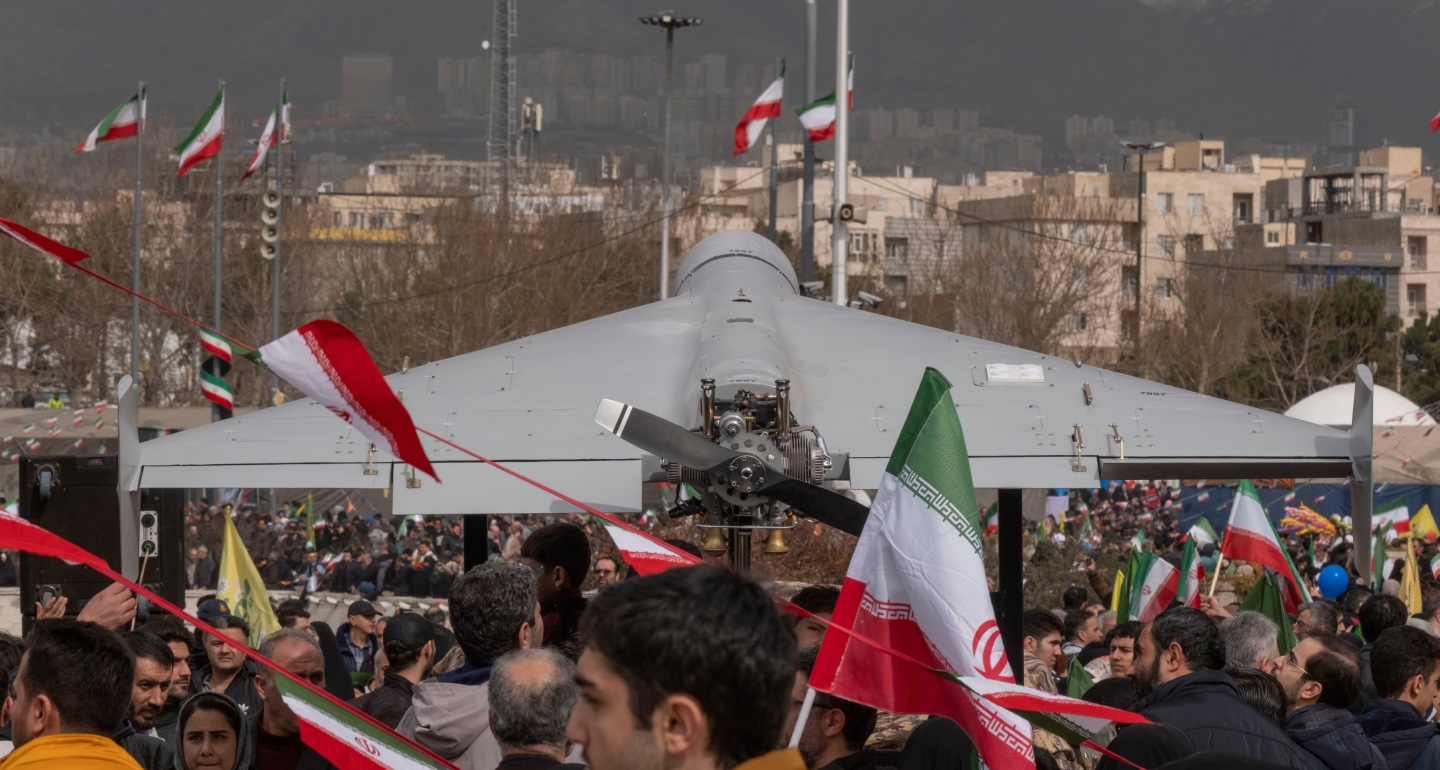
The Russian leadership wants to avoid a dangerous precedent in which it is squeezed out of Iran by the United States and Israel—and left powerless to respond in any meaningful way.
Nikita Smagin
Lukashenko is willing to make big sacrifices for an invitation to Mar-a-Lago or the White House. He also knows that the clock is ticking: he must squeeze as much out of the Trump administration as he can before congressional elections in November leave Trump hamstrung or distracted.

Artyom Shraibman

The Kremlin expects to not only profit from rising fertilizer prices but also exact revenge for the collapse of the 2023 grain deal.

Alexandra Prokopenko