

Other
Ms. Doris Meissner
{
  "authors": [
    "Doris Meissner"
  ],
  "type": "legacyinthemedia",
  "centerAffiliationAll": "",
  "centers": [
    "Carnegie Endowment for International Peace"
  ],
  "collections": [],
  "englishNewsletterAll": "",
  "nonEnglishNewsletterAll": "",
  "primaryCenter": "Carnegie Endowment for International Peace",
  "programAffiliation": "",
  "programs": [],
  "projects": [],
  "regions": [
    "South America"
  ],
  "topics": []
}
REQUIRED IMAGE
Source: Carnegie
Reprinted with permission from the Washington Post, August 8, 2001
By officially raising the possibility of legalizing the status of large numbers of undocumented immigrants, the administration has poked a sizable hornet's nest. But this cannot be avoided—not if Presidents Bush and Vicente Fox of Mexico intend to carry out the serious rethinking of migration policy to which they have pledged.
Feelings on the issue are strong. Opponents of legalization say it undermines the integrity of our laws and penalizes the many in immigration queues who play by the rules. Supporters argue that undocumented immigrants are critical to the economy, and reality says they're here to stay. They played by rules governing the dynamics of free trade, cross-border labor markets and international economic disparities.
Both sides are right. So how does the Bush-Fox promise of a new approach get to "yes"? By incorporating legalization into an ambitious joint initiative that offers the chance for actually solving the problem of unauthorized migration from Mexico.
The last time it was tried, of course, legalization was also part of a regime meant to eliminate the problem. Called the Immigration Reform and Control Act of 1986, its centerpiece was penalties against employers who hired undocumented workers. The goal was to "de-magnetize" the lure of jobs that fuel illegal immigration. The sponsors' three-legged stool included strengthened border enforcement and legalization to have a "clean slate" for a future of reduced levels of illegal immigration.
In the 15 years since, employer sanctions have failed. The law is weak, fraudulent work documents abound, and neither Congress nor successive administrations mustered the resources or will to enforce them. Border enforcement fared better, but it took nearly a decade for sufficient funds and effective strategies to materialize.
The unexpected success was legalization. More than 3 million people gained legal status. Three-fourths were Mexicans, who now represent 20 percent of legal immigrants. They are the single-largest nationality among today's newcomers, a trend likely to continue. They bind our two countries as never before and are key to the reasons driving the Bush-Fox discussions.
But unacceptably high levels of unauthorized migration have continued, and the undocumented population now in the United States is probably at an all-time high.
That could be dramatically different over the next 15 years. What's needed is for the two countries to commit now to erase the need for unauthorized migration. This historic goal is within reach for the first time.
After decades of aggressive population measures, Mexico is experiencing declining fertility, and the numbers in age groups that emigrate are decreasing. Assuming the continued success of NAFTA and sustained growth, Mexico can produce enough jobs and prosperity to meet the needs of its people by about 2015. That should result in narrowing the gap in wages and standards of living between our countries, the critical ingredient for reducing migration pressures.
Here, the experience of the European Union is instructive. It shows that deeply embedded emigration traditions, e.g., in Ireland, Spain, Portugal and Italy, can be reversed when large wage gaps shrink. People then move in manageable numbers by choice, not desperation.
A North American version of this turnaround is the goal the two presidents should set for their Cabinet representatives as they meet this week. Generous legalization measures are then desirable and defensible. Allowing people to move from being shadow residents to legitimate immigrants creates the proper climate for protection of individual rights and enables travel and earnings to flow back to communities in Mexico. Both nations benefit.
With legalization should come a new commodity, NAFTA immigration visas. These would give NAFTA partners a way to meet unique employment and family immigration needs resulting from economic integration in the future. Such visas are far preferable to a guest worker scheme, which would not substitute for unauthorized migration but would stimulate new flows and deepen chronic weaknesses in labor conditions, even with union organizing.
To work, a new equation must also include solid commitments to joint responsibility for border enforcement and a broad-based development agenda. These constitute significant departures for both nations. Mexico must actively participate in border enforcement to achieve safety in border regions, regulate travel through authorized crossings, combat migrant smuggling and strengthen the rule of law. To diminish wage gaps, free trade must be augmented by education, social investment, infrastructure initiatives and poverty reduction. These require U.S. support and attention.
With an endgame policy connecting migration and NAFTA, Presidents Bush and Fox would win the foreign policy success they crave and set a course never before available to our nations.
Former Senior Associate
Recent Work
Ms. Doris Meissner
Carnegie does not take institutional positions on public policy issues; the views represented herein are those of the author(s) and do not necessarily reflect the views of Carnegie, its staff, or its trustees.

Geological complexity and years of mismanagement mean the Venezuelan oil industry is not the big prize officials in Moscow and Washington appear to believe.

Sergey Vakulenko

Despite the organizers’ efforts, Intervision was unable to demonstrate its reason for existence, and ended up with disappointing viewing figures.

Andrey Shashkov

It might seem that within BRICS, Russia should be overshadowed by the giant economies of China and India, especially the former. Yet what is happening is almost the opposite, with Russia effectively taking over the leading role in the club.

Alexander Baunov
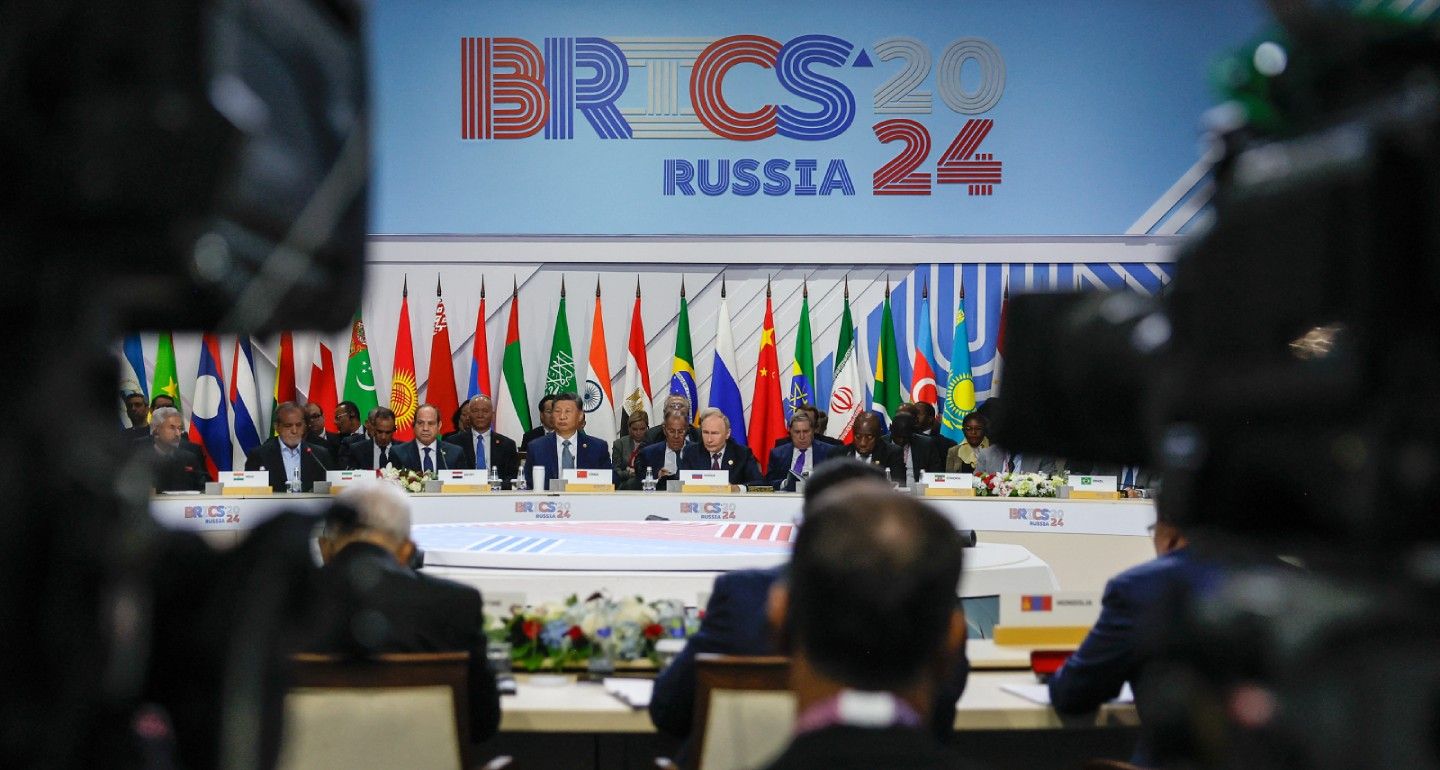
BRICS is emerging as a sandbox for experimentation with various non-USD instruments, including payment systems, cryptocurrencies, digitalized mechanisms for trade in national currencies or through barter, and hubs for commodities trading outside of dollar dominance.


Alexander Gabuev, Oliver Stuenkel

As one of the BRICS founders, Brazil’s new president will oppose pitting the BRICS against the West.
Pavel Tarasenko